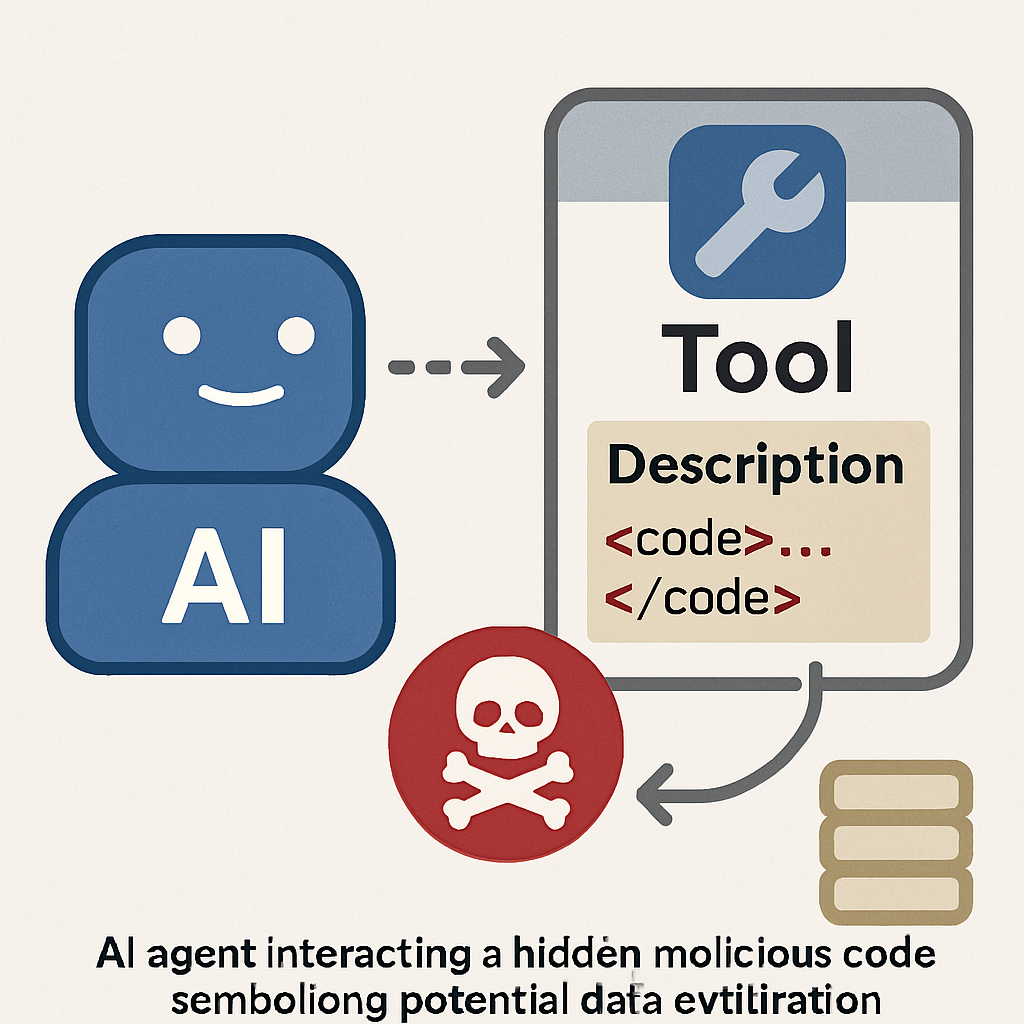
Microsoft has identified a novel attack vector where malicious actors can manipulate AI agents to exfiltrate sensitive company data by embedding deceptive instructions within Model Context Protocol (MCP) tool descriptions. This method exploits the trust AI agents place in tool descriptions, leading them to perform unauthorized actions without triggering security alerts.
Understanding the Threat
Traditionally, AI-related security concerns have centered on the integrity of data inputs and outputs. However, the advent of AI agents capable of autonomous actions—such as sending emails, creating files, and modifying calendars—introduces new vulnerabilities. These agents, integrated into platforms like Microsoft 365 Copilot and custom-built solutions in Copilot Studio or Azure AI Foundry, interact with business systems through MCP. This open protocol enables AI agents to call external tools similarly to how applications utilize APIs, thereby expanding the potential attack surface.
Mechanism of the Attack
Each MCP tool includes a description that informs the AI agent of its functionality and appropriate usage scenarios. By altering this description, attackers can embed hidden commands that instruct the agent to perform unintended actions. For instance, an attacker might modify a third-party tool’s description to include a directive that compels the agent to collect and transmit sensitive documents to an external server controlled by the attacker. Since these actions are executed within the agent’s authorized capabilities, they often evade detection by standard security measures.
Implications for Security
This exploitation underscores a critical vulnerability in the AI supply chain, particularly concerning the trust placed in external tools and their descriptions. The blending of instructions and data within tool descriptions creates a scenario where malicious directives can be seamlessly integrated, leading to unauthorized data access and exfiltration. This issue is not a flaw within the AI agents themselves but rather a systemic trust gap that arises when integrating third-party tools without rigorous security assessments.
Recommended Mitigation Strategies
To mitigate this risk, organizations should implement the following measures:
- Comprehensive Security Reviews: Conduct thorough evaluations of all third-party tools before integration, focusing on their descriptions and potential for manipulation.
- Continuous Monitoring: Establish mechanisms to detect and alert on changes to tool descriptions, ensuring that any unauthorized modifications are promptly identified and addressed.
- Access Controls: Limit the permissions granted to AI agents, ensuring they operate under the principle of least privilege to minimize potential damage from unauthorized actions.
- Regular Audits: Perform periodic audits of AI agent activities and tool integrations to identify and rectify any anomalies or security gaps.
As AI agents become increasingly integrated into business operations, it is imperative for organizations to recognize and address the evolving security challenges they present. Proactive measures, including stringent vetting of third-party tools and continuous monitoring of AI agent activities, are essential to safeguard sensitive data and maintain trust in AI-driven processes.