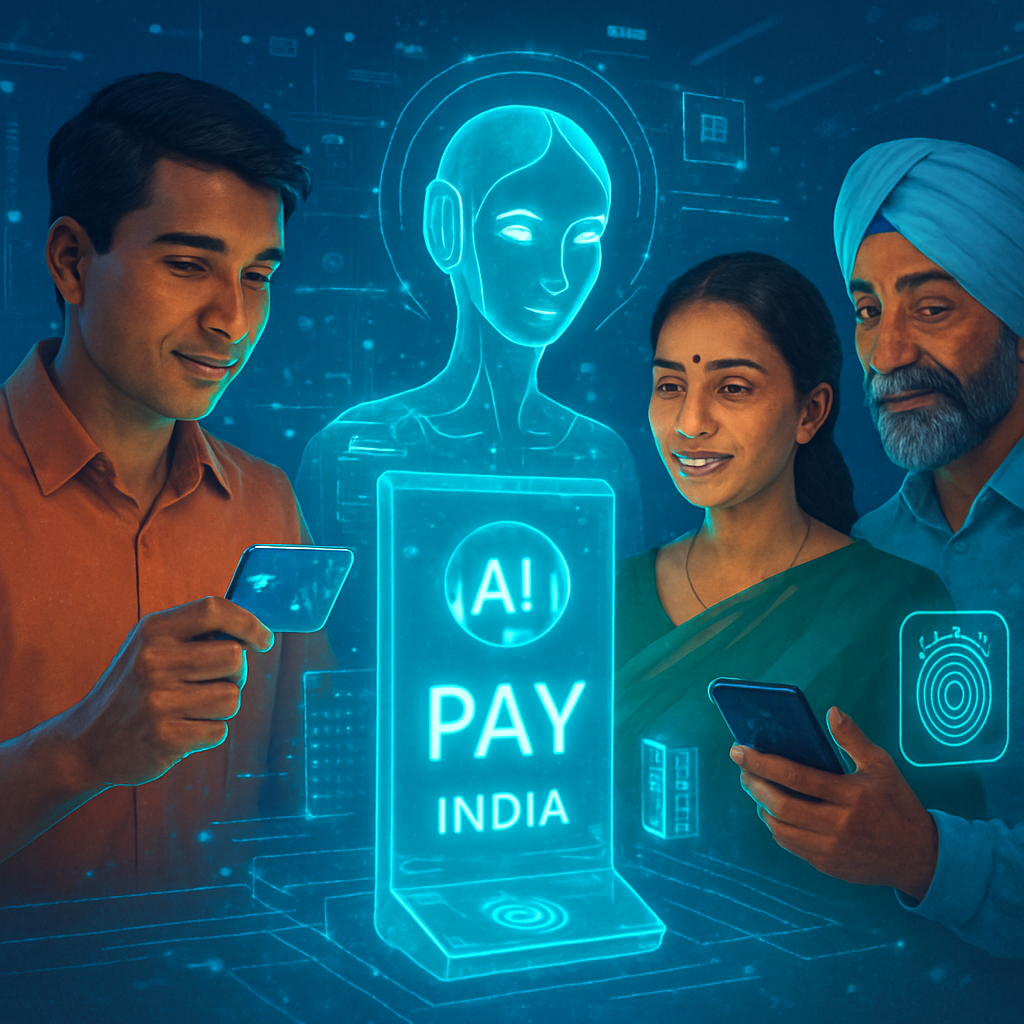
India’s digital payment landscape has experienced remarkable growth, with the Unified Payments Interface (UPI) now facilitating over 750 million daily transactions. As the nation sets its sights on surpassing one billion daily transactions, Dilip Asbe, Managing Director and CEO of the National Payments Corporation of India (NPCI), emphasizes the pivotal role of artificial intelligence (AI) in achieving this milestone.
In a recent discussion at Mumbai Tech Week 2026, Asbe highlighted AI’s potential to drive the next wave of UPI adoption. He envisions AI enhancing user acquisition, bolstering fraud prevention measures, and streamlining credit distribution. By leveraging AI, NPCI aims to collaborate with India’s central bank and government to onboard an additional 500 million users.
Asbe elaborated on AI’s multifaceted applications, stating that it will be instrumental in protecting current users by detecting fraudulent activities and identifying mule accounts. Furthermore, AI can facilitate credit provision to users and merchants by analyzing their digital footprints. To simplify the onboarding process, AI-driven voice and multilingual solutions are also under consideration.
While voice interfaces have been touted as transformative for user interactions in India, Asbe acknowledges that the technology is still in its nascent stages. He noted that existing voice models require improved accuracy to gain widespread adoption. NPCI’s 2023 launch of a voice assistant-based interactive system has yet to see significant traction, indicating the need for further refinement and the identification of compelling use cases.
AI Integration in Financial Services and Regulatory Considerations
Globally, financial institutions are rapidly integrating AI into their services. In the United States, platforms like Coinbase and Robinhood have introduced AI agents capable of trading on behalf of users. OpenAI has also enabled users to input personal account data into ChatGPT for financial advice. In India, NPCI has demonstrated agentic commerce and payment capabilities in collaboration with Razorpay, though widespread implementation remains pending.
Asbe believes that with robust regulatory frameworks, India can effectively adopt AI-powered financial services. He emphasizes the necessity of user protection and risk mitigation, ensuring that systems can accurately interpret user instructions and consent provided to AI agents.
Beyond utilizing existing models, Asbe sees an opportunity for India’s financial ecosystem to develop specialized small language models. He points out that the differentiation of these models will hinge on the unique datasets available within the ecosystem. With a wealth of data at their disposal, Indian banks, fintech companies, and other stakeholders are well-positioned to create precise and deterministic language models tailored to specific applications.
NPCI has already made strides in this direction with the launch of the Financial Inclusion and Management Interface (FIMI) model, designed to address user disputes. Asbe reports that FIMI is currently assisting over a million users in canceling mandates and resolving issues, with rapid scaling underway.
Fostering Competition in the UPI Ecosystem
NPCI has consistently advocated for healthy competition within the UPI ecosystem to drive innovation and enhance user experience. By integrating AI into various facets of digital payments, NPCI aims to not only expand its user base but also to fortify the security and efficiency of transactions.
The integration of AI into India’s digital payment infrastructure signifies a transformative shift. As the nation progresses toward its ambitious transaction targets, AI’s role in user engagement, fraud detection, and credit facilitation will be crucial. Stakeholders must collaborate to develop and implement AI solutions that are both effective and user-centric, ensuring that the benefits of digital payments are accessible to all segments of society.