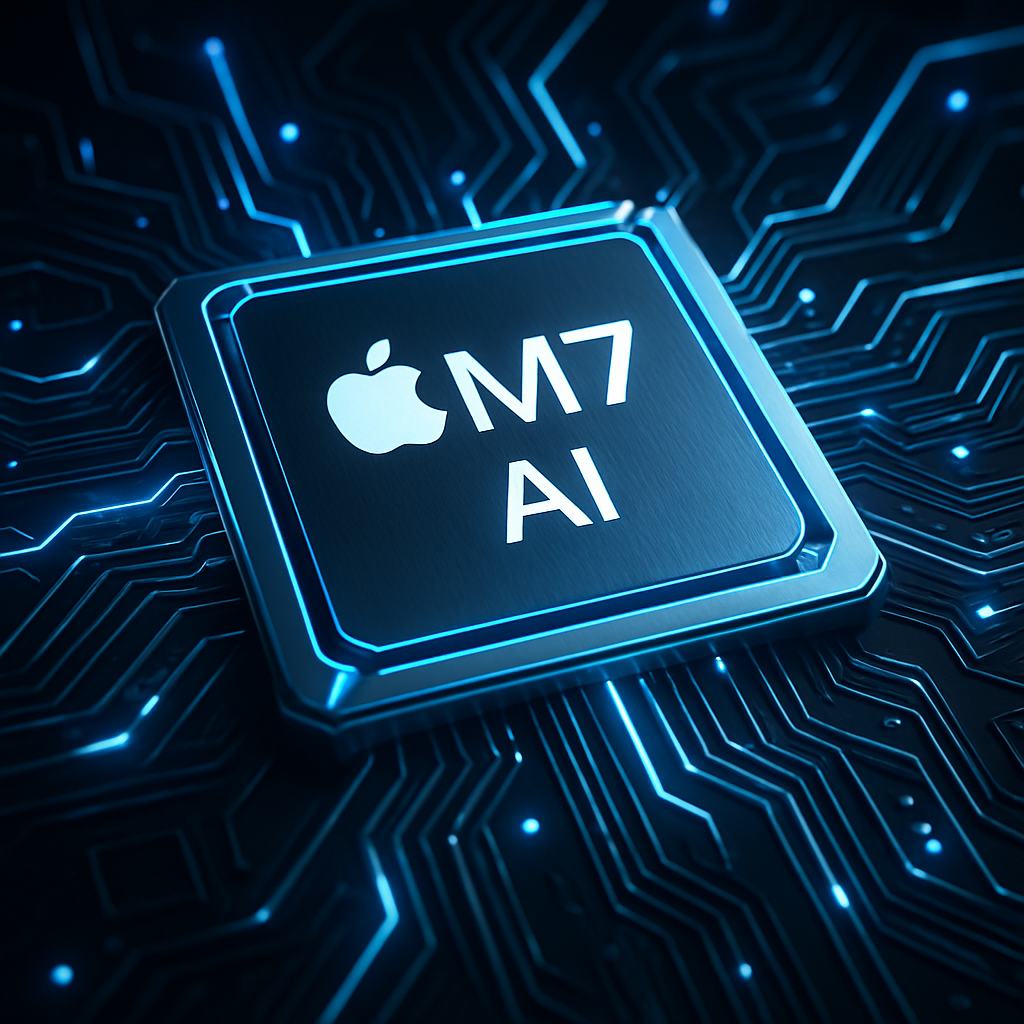
Apple is reportedly shifting its chip development strategy by opting to skip the M6 Pro and M6 Max processors, instead directing its efforts toward the forthcoming M7 chips, which are designed with a strong emphasis on artificial intelligence (AI) capabilities.
Traditionally, Apple has followed a pattern of releasing base models of its M-series chips, followed by more powerful Pro and Max variants. For instance, the M4 chip debuted in May 2024 with the iPad Pro, and subsequent Pro and Max versions were introduced in other devices. However, current reports suggest that Apple plans to deviate from this pattern by forgoing the M6 Pro and M6 Max iterations.
The decision to prioritize the M7 chips aligns with Apple’s increasing focus on AI integration across its product lineup. The M7 processors are expected to feature enhanced AI processing capabilities, catering to the growing demand for intelligent computing tasks. This move reflects a broader industry trend where AI performance is becoming a critical factor in hardware development.
In addition to the M7 chips, Apple is reportedly working on a new AI server processor, codenamed “Baltra,” aimed at bolstering its server infrastructure to handle more complex AI workloads. This initiative underscores Apple’s commitment to advancing its AI capabilities not only in consumer devices but also in its backend operations.
Furthermore, there are indications that Apple may collaborate with Intel to manufacture certain M7 processors. Reports suggest that Intel’s foundries could be utilized to produce entry-level M7 chips, potentially starting in 2027. This partnership would mark a significant development, considering Apple’s previous transition away from Intel processors in favor of its own silicon designs.
By focusing on the M7 chips and their AI-centric design, Apple is positioning itself to meet the evolving needs of users who increasingly rely on AI-driven applications. This strategic shift may also influence the competitive landscape, prompting other tech companies to accelerate their AI hardware initiatives.