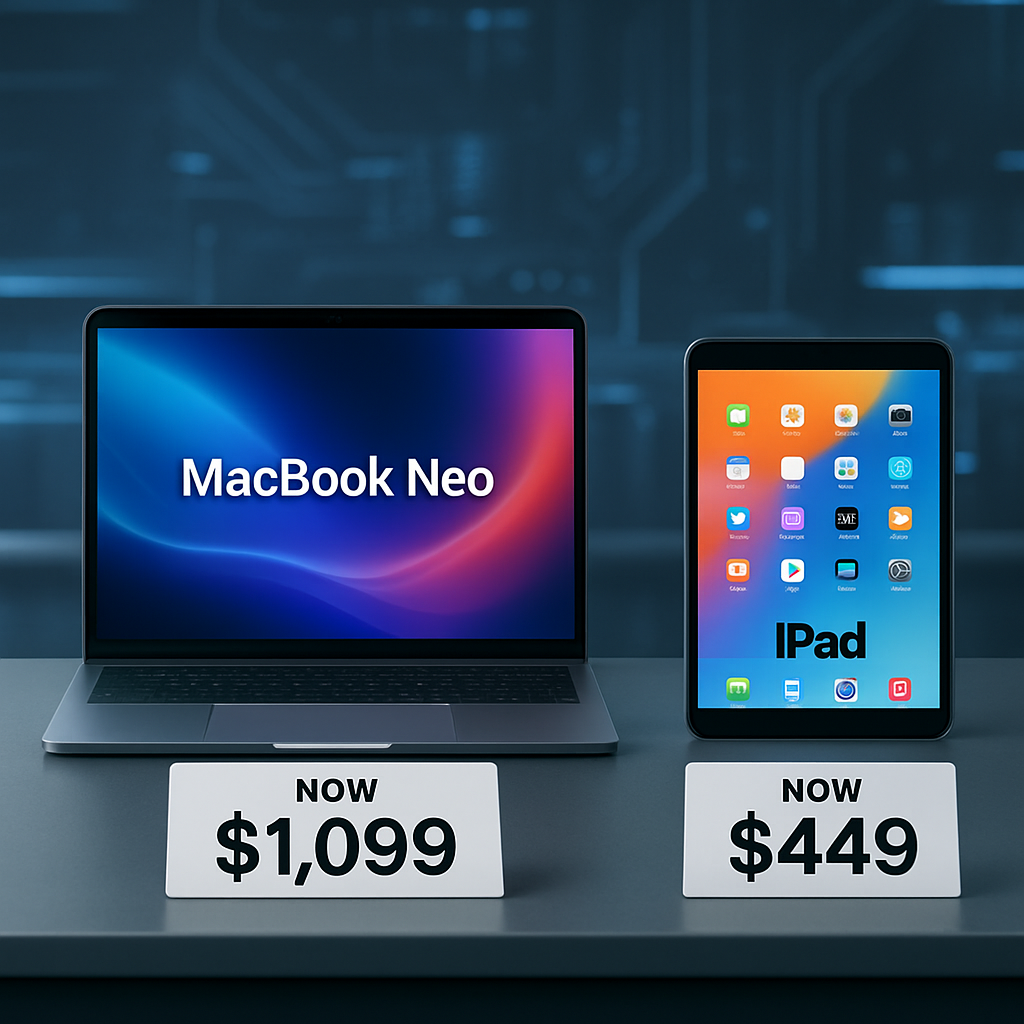
Apple has implemented significant price increases across its Mac and iPad product lines, attributing the hikes to escalating costs of memory and storage components. Notably, the MacBook Neo now starts at $699, up from its previous $599 price point, while the MacBook Air’s base model has risen to $1,299 from $1,099. Other products, including the MacBook Pro, iPad, and iPad Air, have also seen similar increases.
These adjustments come in response to a global shortage of memory chips, driven by heightened demand from AI data centers and computing infrastructure. This surge has led to a substantial rise in the prices of DRAM and NAND flash memory, essential components in many of Apple’s devices. CEO Tim Cook acknowledged the situation, stating that despite efforts to shield customers from these cost increases, the company finds the current scenario unsustainable.
Interestingly, Apple has maintained the existing prices for its iPhone, Apple Watch, AirPods, and AirTag lines. This decision suggests a strategic move to keep its most popular consumer products competitively priced, potentially to sustain market share and customer loyalty amid the broader industry challenges.
Historically, Apple has absorbed fluctuations in component costs to avoid passing them on to consumers. However, the current memory chip shortage, described by Cook as unprecedented in his four-decade career, has compelled the company to adjust its pricing strategy. The discontinuation of the $599 Mac mini model, making the $799 version the new entry-level option, exemplifies this shift.
Looking ahead, consumers should be prepared for potential further price adjustments, especially with upcoming product launches like the iPhone 18 Pro and the foldable iPhone Ultra, both expected to feature advanced memory configurations. As the tech industry grapples with these supply chain challenges, Apple’s pricing decisions will likely continue to reflect the evolving market dynamics.
In summary, while Apple’s decision to raise prices on certain products is a direct response to external pressures, its choice to keep flagship items like the iPhone and Apple Watch at current prices indicates a nuanced approach to balancing profitability with customer satisfaction. Observers will be keen to see how this strategy unfolds in the coming months.