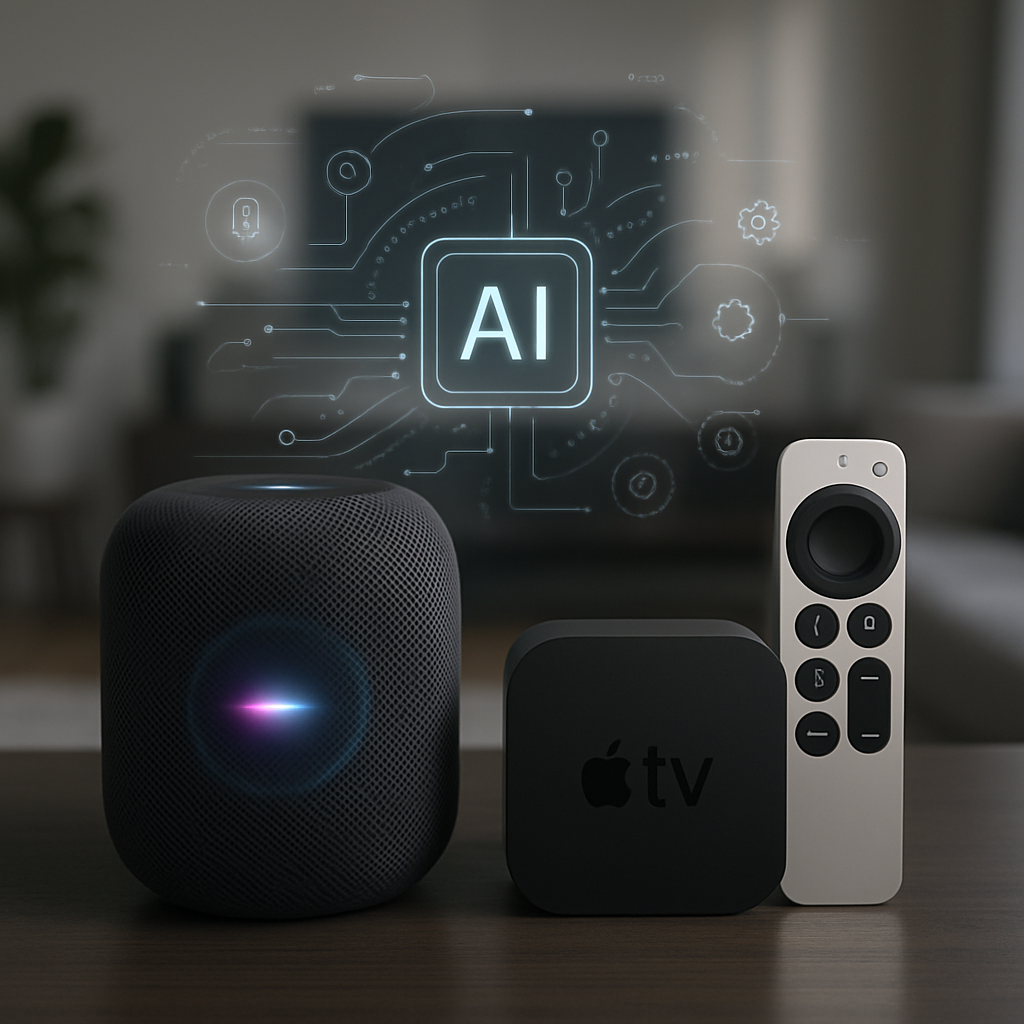
Recent developments in the tvOS 27 beta code suggest that Apple is preparing to integrate its Apple Intelligence features, including an enhanced Siri AI, into the HomePod and Apple TV platforms. This move aligns with longstanding expectations that these devices would eventually benefit from more advanced artificial intelligence capabilities.
At the Worldwide Developers Conference (WWDC) 2026, Apple introduced updates to tvOS, focusing primarily on a redesigned Podcasts app and AI-generated subtitles. Notably, both the Apple TV and HomePod were absent from the keynote’s spotlight, leading to speculation about forthcoming significant updates for these devices.
Analysis of the first developer beta of tvOS 27 reveals the inclusion of various Apple Intelligence frameworks. Given that both the HomePod and HomePod mini operate on a variant of tvOS, this discovery implies that Apple Intelligence features could soon be available on these devices. Particularly, code related to the initial setup process of the HomePod references Siri AI, indicating potential enhancements in user interaction and functionality.
Further examination of the tvOS 27 beta code uncovers references to new hardware components, specifically the N1 chip—Apple’s proprietary Bluetooth and Wi-Fi processor. This chip is not present in any current Apple TV or HomePod models, suggesting that upcoming hardware revisions may incorporate this technology to support advanced features like Siri AI.
These findings also lend credence to the long-rumored Apple Home Hub, a device anticipated to centralize smart home controls and integrate seamlessly with Apple’s ecosystem. The presence of such code indicates that Apple is actively testing these features, though it remains uncertain when they will be officially released. Reports suggest that Apple plans to roll out new home automation products, including the Home Hub, through 2028.
Integrating Apple Intelligence into the HomePod and Apple TV could significantly enhance user experience by providing more intuitive voice interactions, improved content recommendations, and seamless integration with other Apple devices. As Apple continues to develop its AI capabilities, the potential for more personalized and efficient smart home experiences becomes increasingly tangible.