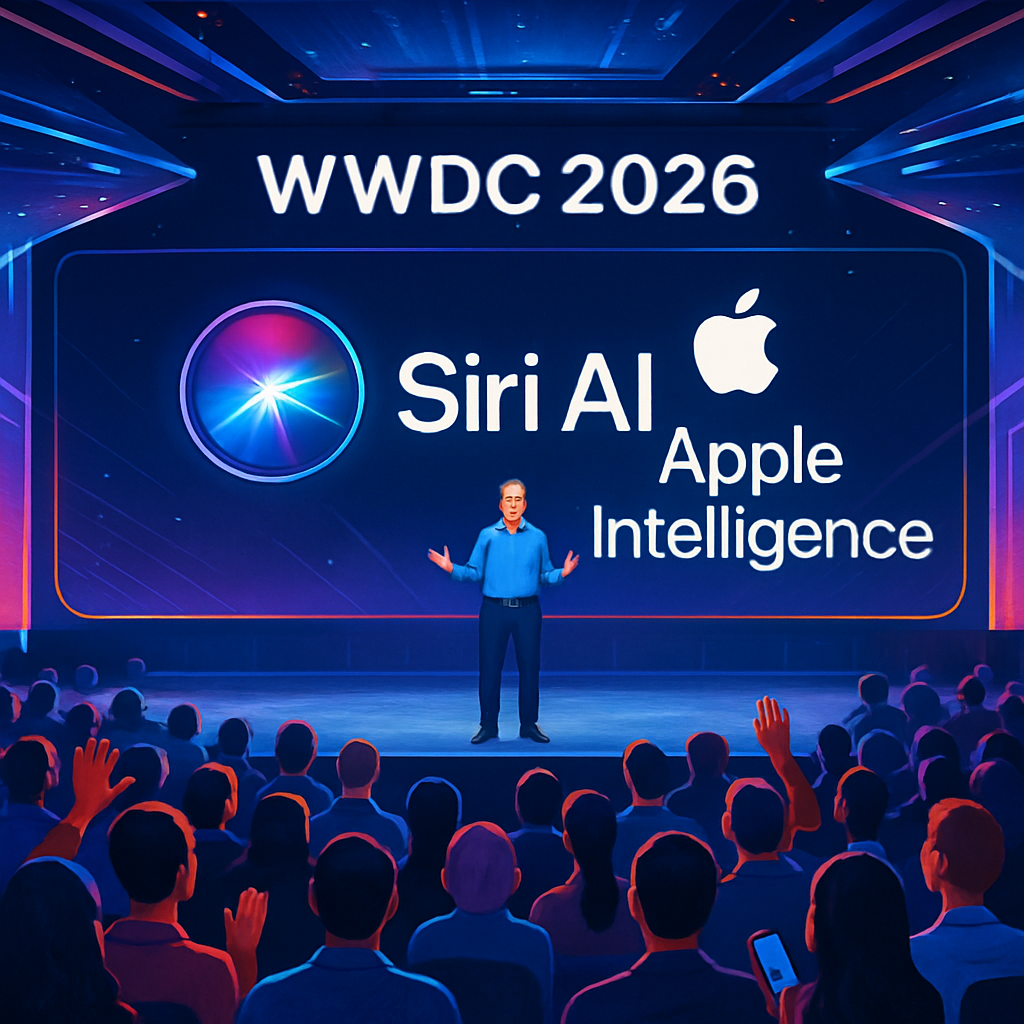
Apple’s Worldwide Developers Conference (WWDC) 2026 showcased a series of significant advancements, particularly in artificial intelligence (AI) and user experience across its product lineup. The event highlighted the company’s commitment to integrating AI more deeply into its ecosystem, enhancing both functionality and user engagement.
One of the standout announcements was the introduction of ‘Siri AI,’ a comprehensive overhaul of Apple’s voice assistant. This new iteration offers advanced capabilities such as multi-step task handling, contextual understanding, and chatbot-like interactivity. Integrated into iPhones via the Dynamic Island, Siri AI provides deeper app interactions and screen awareness. Notably, it will launch in public beta in July and roll out fully in September with iOS 27 and iPhone 18. However, due to regulatory issues, it won’t initially be available in the EU or China.
In addition to Siri AI, Apple unveiled ‘Apple Intelligence,’ a suite of AI-powered features embedded across iPhone, iPad, and Mac. These enhancements include smarter cross-app suggestions based on context, streamlined event creation through natural language, and Phone app improvements that surface relevant data mid-call. The Home app benefits from AI with summarized security footage and natural language search. Automation via Shortcuts now allows users to create complex workflows simply by typing in everyday language. Image creation has been overhauled through the redesigned Image Playground, supporting realistic image generation and custom aspect ratios. Photo editing sees AI tools that can reframe images and extend photo boundaries seamlessly.
macOS 27, codenamed ‘Golden Gate,’ introduces cross-platform improvements to AI, user experience, and visual design. The update includes enhanced Siri capabilities, deeper integration across macOS, iOS, iPadOS, and watchOS, and design refinements to the ‘Liquid Glass’ interface for clarity and consistency. Liquid Glass now offers adjustable transparency, unified toolbars, sidebar improvements, and refined window aesthetics. Key system upgrades improve CPU and memory efficiency, app launch speeds, and faster photo indexing. Siri gains more contextual awareness, a customizable conversational tone, on-device and cloud-based AI integration using Apple’s Foundation models and Gemini, and visual intelligence through the camera. ‘Apple Intelligence’ now spans Photos, Mail, Safari, Shortcuts, Messages, and Home, offering smarter search, content recommendations, automated workflows, and image generation. Writing aids like drafting and proofreading are embedded system-wide. Some features are limited to devices with newer Apple Silicon and sufficient memory. macOS 27 drops support for Intel-based Macs, encouraging native Apple Silicon apps. Trust and safety enhancements include child accounts, content restrictions, communication warnings, and expanded parental tools. Public beta launches July 2026, with official release in the fall.
These developments signify Apple’s strategic focus on AI integration and user-centric design. By embedding intelligence directly into familiar apps and enhancing cross-platform functionality, Apple aims to reduce friction and boost productivity. The emphasis on privacy and security, particularly with on-device processing, reflects the company’s commitment to user trust. As these features roll out, it will be crucial to monitor their real-world performance and user adoption, especially in regions facing regulatory challenges.