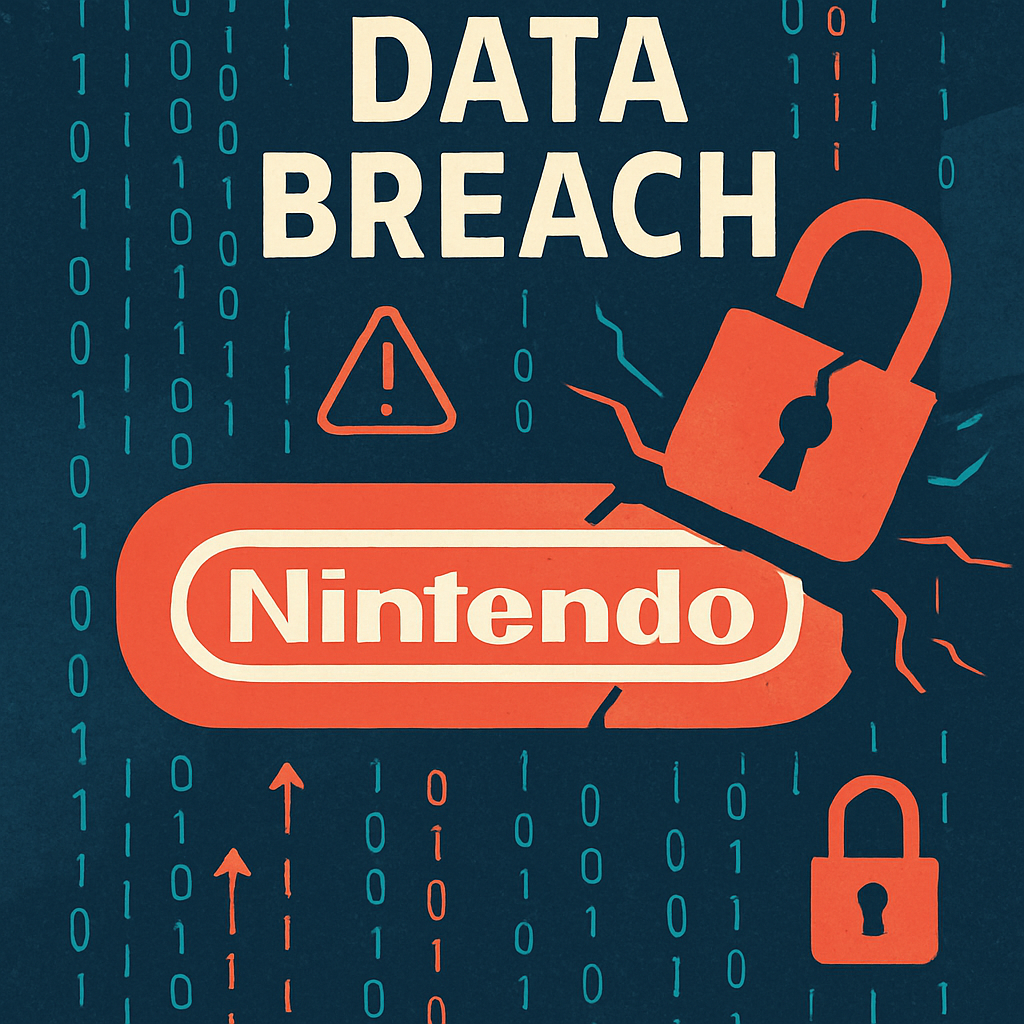
On June 13, 2026, reports emerged that the cybercriminal group SHADOWBYT3$ allegedly infiltrated Nintendo’s systems, claiming to have exfiltrated approximately 859 MB of sensitive internal data. While these claims remain unverified, initial information suggests that the breach may have compromised employee-related information.
The purported breach is associated with TINYpulse, a platform widely utilized by organizations for employee engagement, surveys, and internal feedback management. If substantiated, this would indicate that the breach occurred through a third-party service rather than a direct attack on Nintendo’s primary infrastructure.
Details of the Alleged Breach
The data reportedly stolen includes employee names, corporate email addresses, internal surveys, analytics reports, workplace feedback records, and employee progress-tracking data. More alarmingly, the dataset is said to contain financial documents such as bank statement PDFs and W-9 forms, which could significantly elevate the risk of identity theft and financial fraud.
Although the total size of the alleged leak is 859 MB—a relatively moderate volume compared to some large-scale breaches—the nature of the exposed data raises serious security and privacy concerns. Documents like W-9 forms often contain personally identifiable information (PII), including tax identification numbers, making them highly valuable to cybercriminals for activities such as phishing, social engineering, and financial fraud campaigns.
Implications and Recommendations
SHADOWBYT3$ is believed to be a financially motivated threat actor, though little public information is currently available regarding the group’s past activities or tactics. The ESIX score for this incident is 5.60, indicating a moderate potential impact based on early assessments.
It’s important to note that the breach claim is still pending verification, and Nintendo has not yet issued an official statement confirming or denying the incident. In similar cases, threat actors may exaggerate or misrepresent data to gain attention or increase pressure to pay a ransom. Therefore, validation of the dataset and its origin remains critical before drawing definitive conclusions.
If verified, this incident would underscore the ongoing risks associated with third-party platforms and employee management systems. Attackers increasingly target such services as they often store aggregated sensitive data while potentially lacking the same level of security controls as primary enterprise systems.
Security experts recommend that organizations using platforms like TINYpulse review their access controls, enforce multi-factor authentication, and monitor for unusual data access patterns. Additionally, employees should remain vigilant for phishing attempts that may leverage leaked personal or corporate information.
As the situation develops, further analysis is expected to provide more clarity on the scope and impact of the alleged breach.
This incident serves as a stark reminder of the vulnerabilities inherent in third-party services and the importance of robust security measures. Organizations must not only secure their primary systems but also ensure that their partners and service providers adhere to stringent security protocols. As cyber threats continue to evolve, a comprehensive approach to cybersecurity that includes regular audits, employee training, and incident response planning is essential to mitigate potential risks.