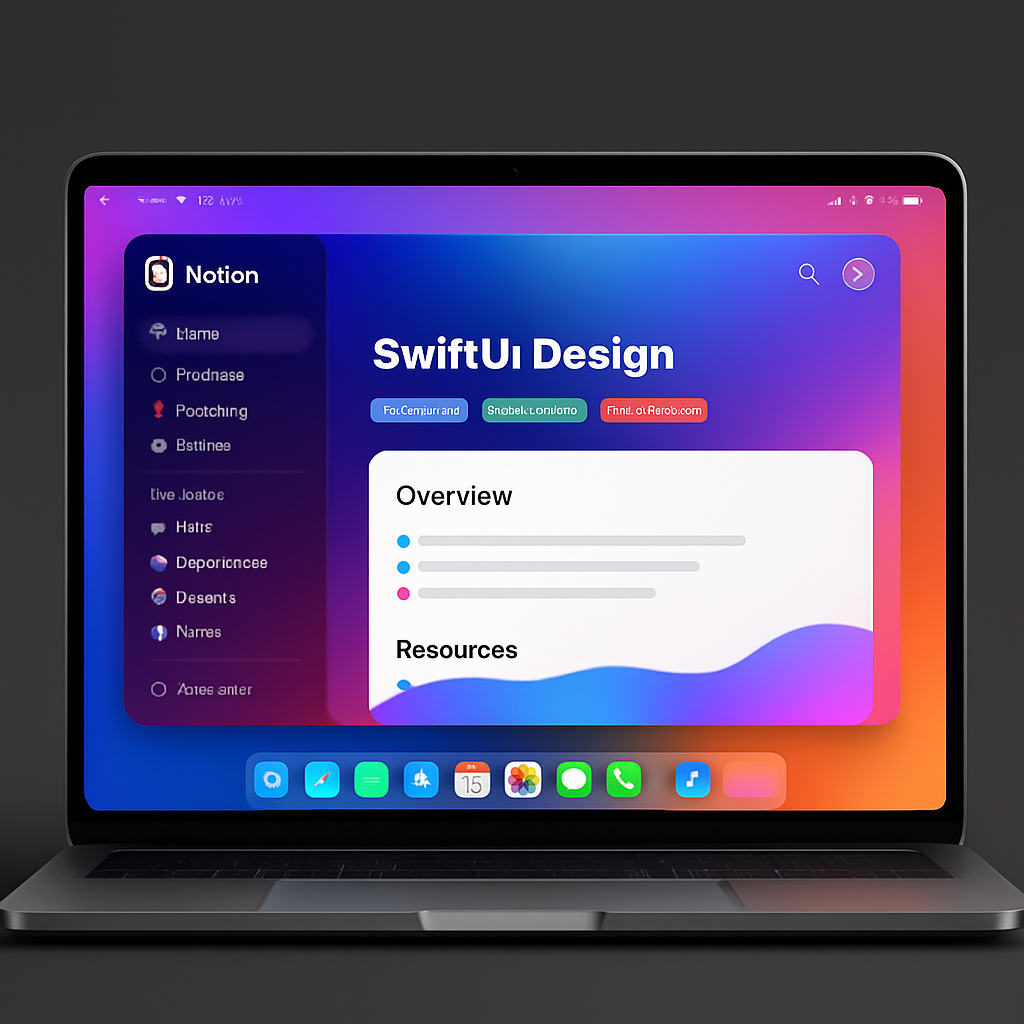
During Apple’s recent Worldwide Developers Conference (WWDC), it was announced that Notion, the widely-used productivity application, is transitioning its user interface to SwiftUI. This move aims to improve performance and ensure a more consistent user experience, addressing previous concerns associated with its web-based architecture.
Notion integrates various productivity tools, including note-taking, document creation, databases, and project management, into a single platform. Users can craft pages featuring text, tables, kanban boards, calendars, and more, organizing them within a flexible hierarchy.
The announcement was highlighted during Apple’s SwiftUI segment in the Platforms State of the Union address. Notion was showcased as a prime example of an application shifting from cross-platform and web technologies to native Apple frameworks. This transition is particularly noteworthy given Notion’s prominence among Mac users and the longstanding critiques regarding the sluggishness attributed to its Electron-based framework.
Prior to this development, Notion had already begun moving its iOS and Android applications away from web-based rendering in 2025. By that time, most of the mobile experience had been transitioned to native code, with the editor being a notable exception. The recent WWDC mention indicates a more comprehensive effort to adopt SwiftUI across platforms.
Apple also highlighted advancements in coding tools that facilitate such migrations. The company emphasized that transitioning code to Swift has become more accessible, pointing to AI-assisted development workflows that lower the barriers for teams considering a move away from cross-platform stacks.
In addition to Notion’s migration, the SwiftUI session introduced several framework enhancements. Apple is unifying SwiftUI, AppKit, and UIKit around a common foundation, ensuring that improvements made for Apple’s own applications automatically benefit third-party developers. Notable updates include:
- Nested stack layouts now resize up to twice as fast.
- State objects initialize lazily.
- AsyncImage gains automatic HTTP caching.
Further enhancements to SwiftUI encompass:
- Reorderable containers, allowing drag-to-reorder functionality in any container type.
- Swipe actions within any container.
- Full-fidelity text selection on iOS.
On macOS, the Text component now supports custom renderers, text vibrancy, and vertical text. Toolbar control has been refined with a new visibilityPriority modifier, an overflow menu for deprioritized actions, and a topBarPinnedTrailing placement to anchor items to the trailing edge. Additionally, a new document infrastructure introduces first-class URL access for reading and writing to disk, along with the capability to write only changed file portions upon saving.
Notion’s decision to migrate to SwiftUI signifies a broader trend among developers to embrace native frameworks for enhanced performance and user experience. This shift not only addresses previous performance concerns but also positions Notion to leverage the latest advancements in Apple’s development ecosystem. As more applications follow suit, users can anticipate more responsive and cohesive experiences across their devices.