Apple’s Strategic AI Evolution: A Calculated Approach to Innovation
For years, Apple has been perceived as lagging in the artificial intelligence (AI) race, with critics suggesting that its lack of a clear AI strategy could erode its competitive edge and potentially impact iPhone sales. However, recent developments indicate that Apple’s deliberate and measured approach to AI integration is beginning to pay dividends.
At the Worldwide Developers Conference (WWDC) 2026, Apple unveiled Siri AI, marking its most significant AI initiative to date. This enhancement embeds advanced automated capabilities, powered by a partnership with Google’s Gemini, directly into Apple’s software ecosystem. This move prompts a reevaluation of Apple’s position in the AI landscape.
A Thoughtful Approach to AI Integration
Craig Federighi, Apple’s Senior Vice President of Software Engineering, addressed the company’s AI philosophy during the conference. He remarked, Some appear to be racing forward, seemingly pursuing AI for the sake of AI, without clear regard for the people — all of us — that it’s ultimately meant to serve. At Apple, our mission has always been to turn the potential of advanced technology into helpful and intuitive products for everyone.
This statement underscores Apple’s commitment to user-centric innovation, distinguishing its strategy from competitors who may prioritize rapid AI deployment over user experience. By focusing on practical applications that enhance daily interactions, Apple aims to integrate AI in a manner that resonates with its user base.
Siri AI: Enhancing User Experience
The revamped Siri AI introduces several features designed to streamline user interactions:
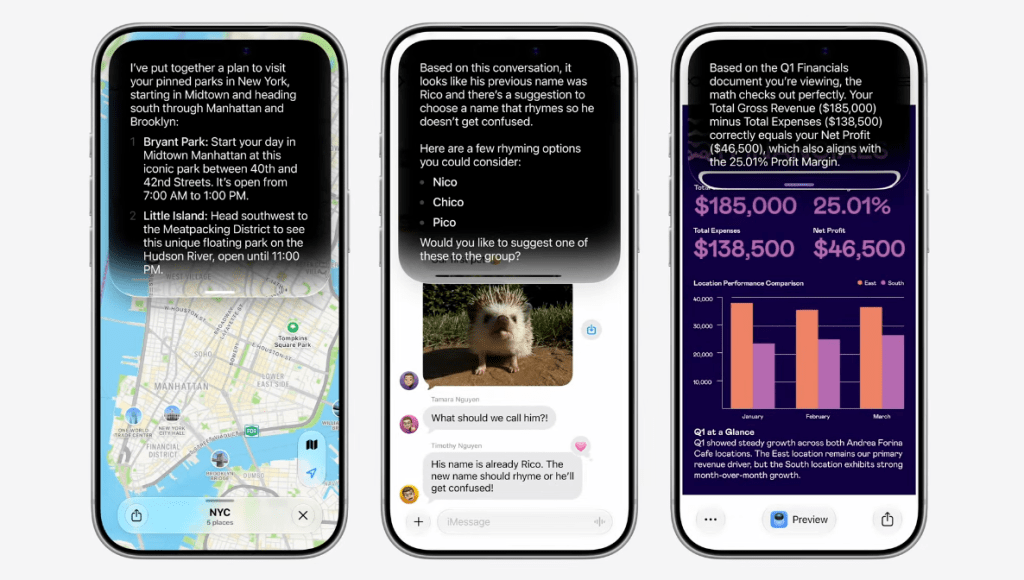
– Contextual Awareness: Siri can now access and interpret information from emails and text messages, providing relevant suggestions and insights based on the content.
– Onscreen Awareness: The assistant can analyze the current screen content to offer context-specific assistance, enhancing productivity and user engagement.
– Real-Time Information Retrieval: Leveraging the Gemini partnership, Siri delivers up-to-date information from the web directly to the user’s device, ensuring timely and accurate responses.
These enhancements position Siri as a more intuitive and responsive assistant, aligning with Apple’s goal of creating technology that serves the user effectively.
Strategic Financial Investments
Apple’s cautious approach extends to its financial investments in AI. While competitors have committed approximately $900 billion to AI development, Apple plans to allocate around $14 billion in capital expenditures this year. This conservative spending reflects a strategy focused on sustainable growth and prudent resource management.
Despite lower expenditures, Apple continues to generate substantial revenue from the AI sector, particularly through its App Store, which hosts numerous AI-driven applications. This model allows Apple to benefit from the AI boom without overextending its resources.
Empowering Developers
Recognizing the importance of a robust developer community, Apple has introduced initiatives to support smaller developers:
– Foundation Models Access: Developers with fewer than 2 million first-time App Store downloads can utilize Apple’s Foundation Models within Private Cloud Compute at no additional cloud API cost. This initiative lowers the barrier to entry for indie developers, fostering innovation and diversity within the App Store ecosystem.
– Systemwide Dictation: Integrated into iOS 27, this feature offers advanced dictation capabilities across applications, correcting spelling, punctuation, and capitalization. By providing these tools natively, Apple enhances the development environment for creators and developers alike.
A Unified AI Ecosystem
Apple’s AI strategy emphasizes seamless integration across its product lineup. The introduction of a dedicated Siri app allows users to manage and revisit past interactions, creating a cohesive experience across iOS, macOS, and iPadOS. This synchronization ensures that users can access AI functionalities consistently, regardless of the device in use.
Looking Ahead
As Apple continues to refine its AI offerings, the focus remains on delivering practical, user-friendly solutions that enhance the overall experience. The forthcoming beta release of Siri AI later this year will provide valuable insights into user adoption and satisfaction, informing future developments.
In conclusion, Apple’s deliberate and user-focused approach to AI integration reflects a commitment to thoughtful innovation. By prioritizing practical applications and sustainable growth, Apple positions itself as a leader in delivering technology that genuinely serves its users.