Cybercriminals Exploit Trusted Cloud Services to Conceal Malicious Activities
In recent years, cybercriminals have increasingly exploited reputable cloud services such as Amazon Web Services (AWS), Google Cloud, Microsoft Azure, Cloudflare, and GitHub to mask their malicious activities. By leveraging these trusted platforms, attackers can evade detection, establish resilient command and control (C2) infrastructures, and conduct sophisticated phishing campaigns.
Abuse of Cloud Services for Malicious Traffic
Threat actors are capitalizing on the widespread trust in cloud services to host and distribute malicious content. By embedding their operations within these platforms, they can bypass traditional security measures that often whitelist traffic from such reputable sources. This tactic not only enhances the credibility of their attacks but also complicates efforts to identify and mitigate malicious activities.
Cobalt Strike Leveraging Trusted Cloud Providers
A notable example of this trend involves the use of Cobalt Strike, a legitimate penetration testing tool that has been repurposed by malicious actors. Investigations have revealed that Cobalt Strike beacons are being hosted across platforms like Microsoft, GitHub, Google, Amazon, and Cloudflare. These beacons often communicate over HTTPS (port 443), blending seamlessly into normal network traffic and making detection challenging. The use of JA3S TLS fingerprinting has been instrumental in identifying these malicious communications, providing a behavioral signature that persists even as attackers rotate domains and IP addresses.
Phishing Campaigns Targeting Brazilian Organizations
In Brazil, cybercriminals have been observed leveraging subdomains of globally recognized services to conduct phishing campaigns. By hosting malicious content on these subdomains, attackers lend an air of legitimacy to their operations, increasing the likelihood of successful credential theft. This strategy also complicates domain takedown efforts, as the malicious content is hosted within reputable platforms.
Business Email Compromise (BEC) Campaigns Utilizing Cloud Storage
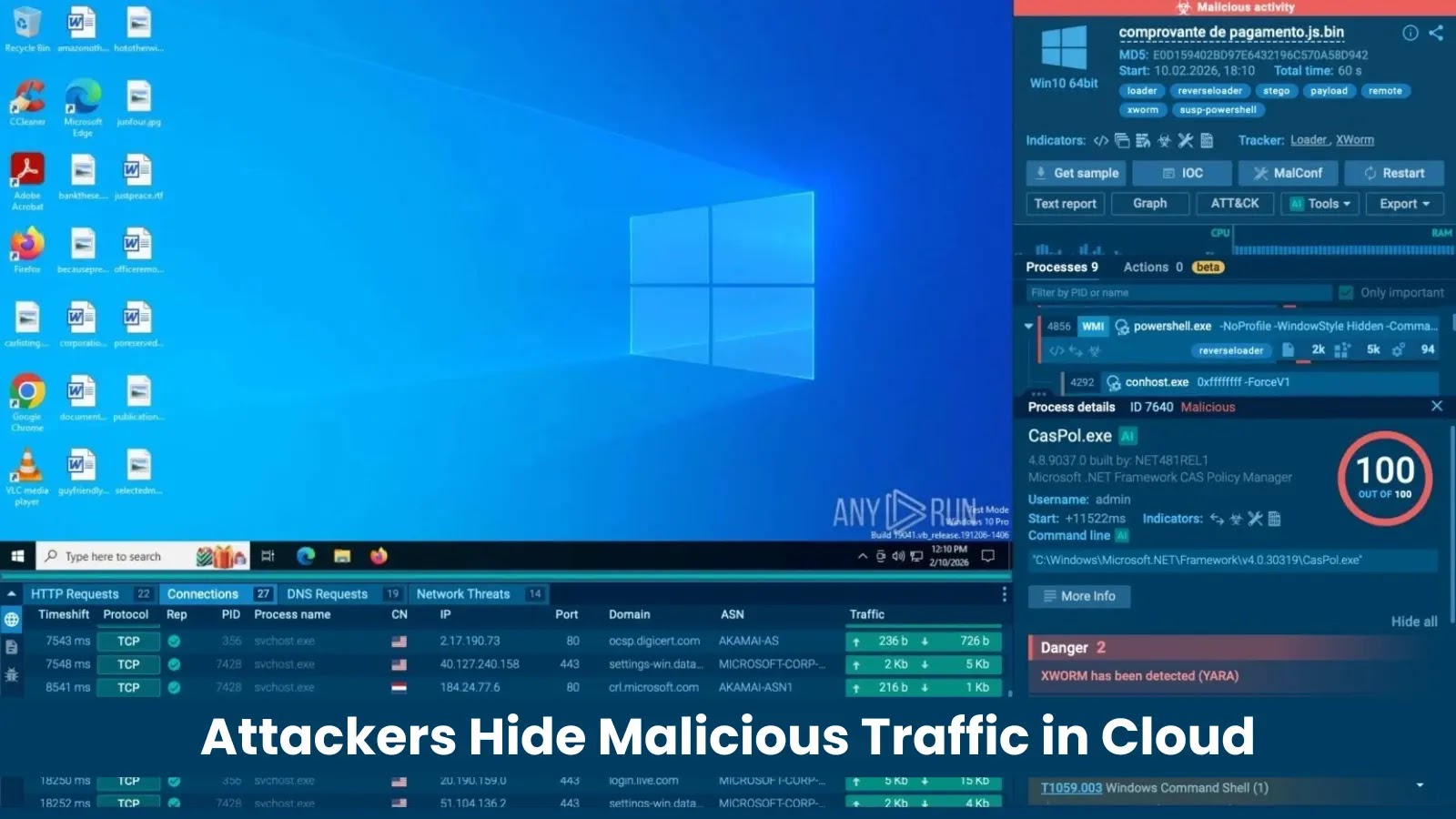
Business Email Compromise (BEC) campaigns have also evolved to exploit cloud services. Attackers distribute fake invoice PDFs, such as invoice.pdf and pagamento.pdf (Portuguese for payment), hosted on Amazon S3 buckets. This method enhances the perceived legitimacy of the emails, increasing the chances that recipients will open the malicious attachments and fall victim to the scam.
Recommendations for Mitigating Cloud Service Abuse
To combat the abuse of cloud services by cybercriminals, organizations should consider the following measures:
1. Enhanced Monitoring and Detection: Implement advanced monitoring tools capable of analyzing network traffic for anomalies, including the use of JA3S fingerprinting to detect malicious TLS communications.
2. Zero Trust Architecture: Adopt a Zero Trust security model that does not automatically trust traffic from reputable sources. Instead, verify all requests and monitor for suspicious activities.
3. Employee Training: Educate employees about the risks associated with phishing campaigns and the importance of verifying the authenticity of emails, especially those containing attachments or links to cloud-hosted content.
4. Regular Audits: Conduct regular audits of cloud service configurations and access controls to ensure that they are not being exploited by malicious actors.
5. Collaboration with Cloud Providers: Work closely with cloud service providers to report and mitigate instances of abuse, ensuring that malicious content is promptly removed.
By implementing these strategies, organizations can enhance their defenses against the growing threat of cybercriminals exploiting trusted cloud services to conceal malicious activities.