SpaceX’s Starship Reusability: Navigating Uncertain Terrain
SpaceX’s ambitious Starship program, designed to revolutionize space travel through full and rapid reusability, faces significant challenges as recent developments cast doubt on its feasibility. The company’s recent Initial Public Offering (IPO) and the latest Starship test flight have provided critical insights into the program’s current trajectory and its implications for SpaceX’s broader business model.
Starlink’s Dominance and Financial Implications
At the heart of SpaceX’s revenue stream is Starlink, the satellite communications network that generated $11.4 billion last year, accounting for the majority of the company’s earnings. However, maintaining this service requires substantial capital investment. Approximately 20% of Starlink’s satellites need annual replacement to sustain current service levels, leading to significant expenditures. Since early 2023, SpaceX has invested $11.4 billion in its satellite business, surpassing the $8.4 billion allocated to Starship development and launch infrastructure.
The company’s S-1 filing with the U.S. Securities and Exchange Commission acknowledges that while costs are expected to rise, technological advancements are anticipated to mitigate these expenses relative to revenue. Elon Musk has emphasized that Starship is crucial for reducing Starlink’s operational costs, even suggesting that without Starship’s cost-effective satellite deployment capabilities, SpaceX could face financial jeopardy.
Reusability: A Pivotal Yet Elusive Goal
A notable revelation from the S-1 filing is the admission that full reusability of Starship is not essential for launching the next generation of Starlink satellites. This concession raises concerns about the anticipated cost reductions associated with reusability. Satellite market analyst Tim Farrar highlights that without achieving full reusability, Starship’s launch costs may not significantly undercut those of the Falcon 9. He estimates that per-launch expenses could reach $100 million, translating to $1,000 per kilogram, especially if manufacturing and refurbishment rates remain constrained.
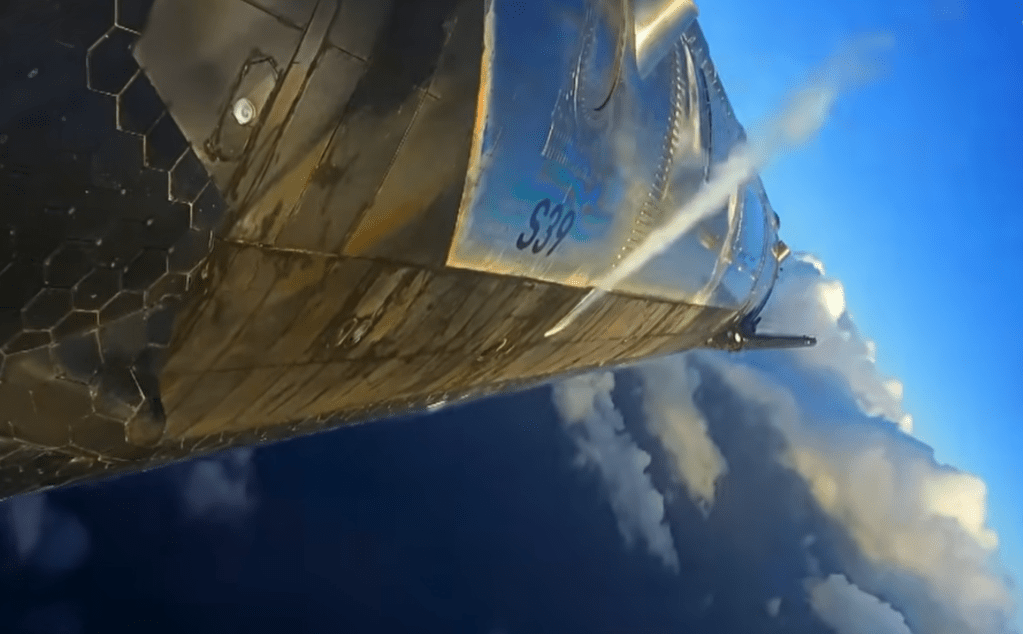
The recent test flight of Starship Version 3 underscored these challenges. While the rocket successfully deployed dummy satellites and test vehicles, it encountered issues with relighting the Raptor engines on both the booster and the Starship itself—a critical capability for controlled re-entry and reuse. These setbacks suggest that achieving full reusability remains a formidable hurdle.
Starlink’s Growth Trajectory and Market Dynamics
Despite its current success, Starlink’s growth rate is showing signs of deceleration. With over 10 million subscribers, it leads the satellite communications sector. However, the first quarter of 2026 saw a slowdown in user growth. Projections indicate that reaching 16.8 million subscribers by year’s end would require doubling the current quarterly growth rate—a challenging prospect, especially following recent price increases.
Additionally, the average revenue per user has declined from $99 in 2023 to $66 in early 2026. This decrease is attributed to Starlink’s expansion into international markets where pricing power is limited. Without a rapidly growing user base, each new satellite contributes less to overall revenue, complicating the financial outlook.
The competitive landscape is also intensifying. Amazon’s Leo network is nearing the scale necessary to challenge SpaceX, pending regulatory approvals. If SpaceX, the current market leader, is experiencing slowing demand, it may indicate that the overall market for space-based broadband is smaller than anticipated.
Technical and Engineering Hurdles
Achieving full reusability involves overcoming significant technical challenges. The Starship system’s massive scale, with the Super Heavy booster powered by up to 33 Raptor engines, amplifies engineering complexities. Ensuring that both the booster and the Starship upper stage can return safely for rapid reuse requires advancements in materials science, propulsion, and thermal management.
Historically, first-stage recovery has become more routine, as demonstrated by the Falcon 9. However, recovering the upper stage remains a formidable goal. The industry is divided between pursuing full recovery and adopting modular recovery strategies, each with its own set of trade-offs.
Conclusion
SpaceX’s vision of a fully reusable Starship capable of reducing space travel costs and enabling missions to Mars is ambitious. However, recent developments suggest that achieving this vision is fraught with challenges. The company’s reliance on Starlink for revenue, coupled with the technical and financial hurdles of Starship’s reusability, underscores the complexity of transforming space travel. As SpaceX continues to innovate, the path to a fully reusable Starship remains uncertain, requiring both technological breakthroughs and strategic adaptations to navigate the evolving aerospace landscape.