iPhone’s Crash Detection: A Lifesaver in Mountainous Accidents
In a remarkable testament to technological innovation, a woman in Denbighshire, UK, owes her survival to the iPhone’s Crash Detection feature. While navigating a winding mountain road, she lost control of her vehicle, which plummeted 330 feet down a steep hillside. Miraculously, she managed to escape the car moments before it erupted into flames. The iPhone’s Crash Detection automatically alerted emergency services, leading to a swift rescue operation that included mountain rescue teams and firefighters arriving within 20 minutes. Reflecting on the incident, she expressed profound gratitude: I’m grateful to Apple for what the iPhone did. I don’t think that I would have been able to get help that quickly.
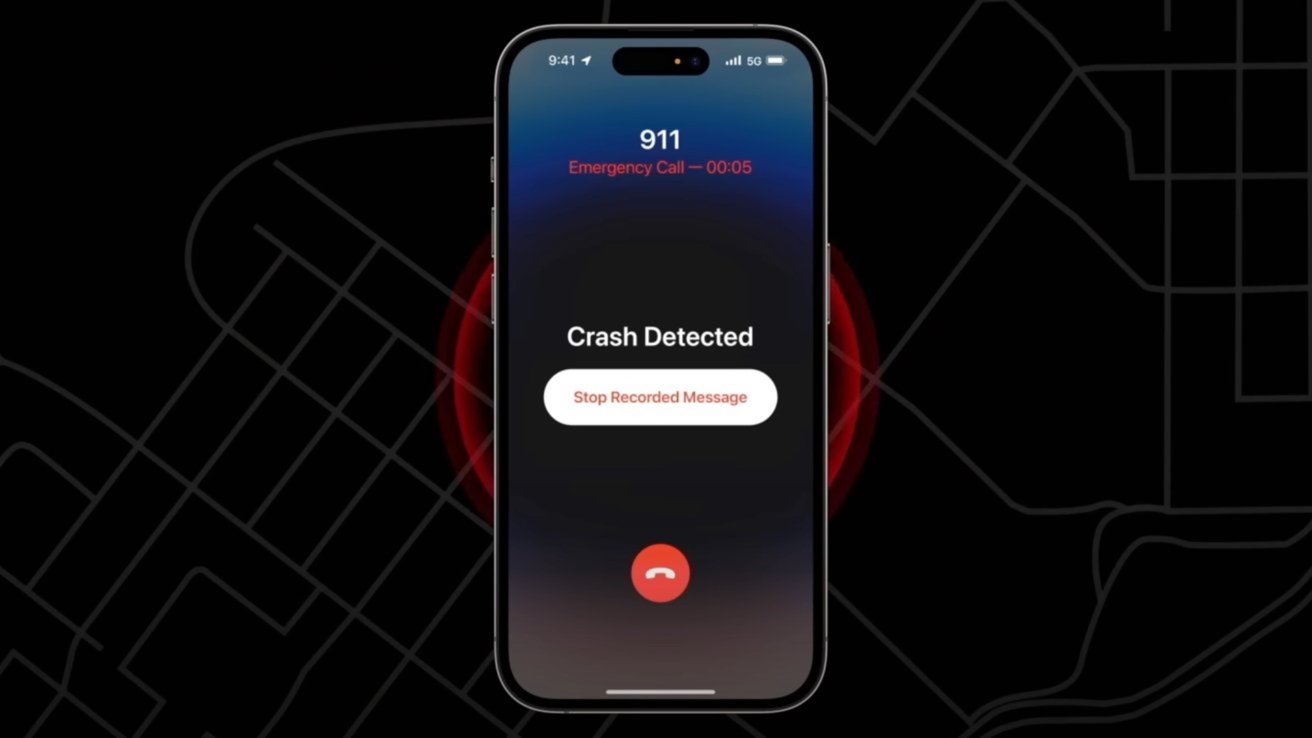
This incident underscores the critical role of Crash Detection in emergency situations. Introduced with the iPhone 14, Apple Watch Series 8, and Apple Watch Ultra, the feature utilizes advanced sensors to detect severe car crashes. Upon detection, it sounds an alarm and displays an on-screen alert for 10 seconds. If the user doesn’t respond, the device automatically contacts emergency services, sharing the device’s location and the owner’s Medical ID if available. This functionality is particularly vital when the driver is incapacitated, ensuring timely assistance.
The Denbighshire case is not isolated. In January 2024, two men in British Columbia were rescued after their SUV veered off a logging road into deep snow. The iPhone’s Emergency SOS via Satellite feature transmitted their exact coordinates to local authorities, facilitating a prompt rescue. Similarly, in October 2022, an Indianapolis driver credited his Apple Watch with saving his life after a high-speed collision with a telephone pole. The device’s Crash Detection feature alerted emergency services, leading to a timely rescue.
Apple’s commitment to user safety is evident in the continuous enhancement of these features. The company emphasizes that Crash Detection relies on a combination of sensors, including a high dynamic range gyroscope, accelerometer, GPS, barometer, and microphone. This multi-sensor approach ensures accurate detection of severe crashes, minimizing false positives.
Beyond vehicular incidents, Apple’s safety features have proven invaluable in various emergencies. In December 2025, a hiker in Colorado was saved after a fall down a mountainside. The Apple Watch’s Fall Detection feature detected the fall and initiated a call to emergency services, leading to a successful rescue. Similarly, in January 2025, skiers in Washington were rescued after a 1,000-foot fall, with the Apple Watch’s SOS alert playing a crucial role in their rescue.
These real-life instances highlight the profound impact of integrating advanced technology with personal safety. Apple’s Crash Detection and related features exemplify how innovation can transcend convenience, becoming essential tools that safeguard lives in critical moments.