xAI’s Strategic Shift: Partnering with Anthropic to Monetize Colossus 1 Data Center
In a significant development within the artificial intelligence (AI) industry, xAI, the AI venture founded by Elon Musk, has entered into a partnership with Anthropic, a leading AI research company. This collaboration involves Anthropic acquiring the full compute capacity of xAI’s Colossus 1 data center located in Memphis, Tennessee. This move marks a strategic pivot for xAI, transitioning from solely developing AI models to becoming a provider of AI infrastructure.
The Colossus 1 Data Center: A Technological Marvel
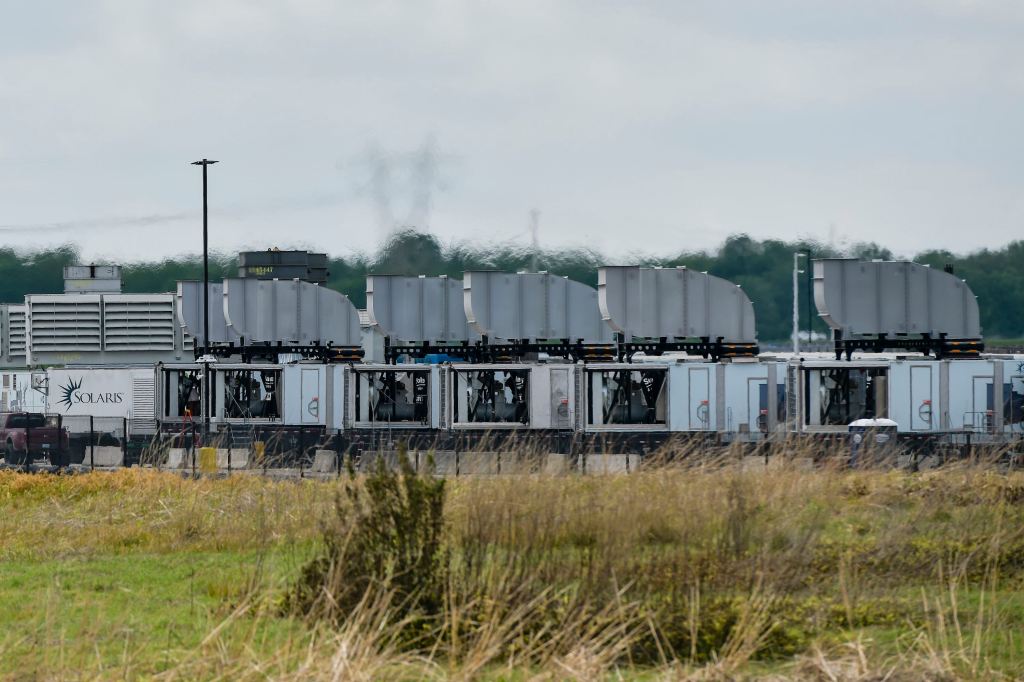
Constructed in 2024, Colossus 1 stands as one of the world’s most formidable AI supercomputers. The facility boasts over 220,000 NVIDIA GPUs, including advanced models like the H100, H200, and the next-generation GB200 accelerators. This extensive hardware setup delivers more than 300 megawatts of compute power, enabling rapid training and deployment of large-scale AI models. Initially built to support xAI’s Grok models, the data center’s capabilities have now been redirected to bolster Anthropic’s AI initiatives.
Anthropic’s Expansion and Enhanced Capabilities
Anthropic’s acquisition of Colossus 1’s compute resources is set to significantly enhance its AI operations. The company plans to utilize this additional capacity to improve services for its Claude AI platform subscribers. Notable enhancements include:
– Increased Usage Limits: Doubling the five-hour rate limits for Pro, Max, Team, and Enterprise plans, allowing users to engage more extensively with the platform.
– Removal of Peak-Hour Restrictions: Eliminating throttling during peak usage times for Pro and Max users, ensuring consistent performance regardless of demand fluctuations.
– Expanded API Rate Limits: Substantially increasing API rate limits for Claude Opus models, facilitating more robust integration and utilization by developers and enterprises.
These improvements are poised to provide Anthropic’s users with a more seamless and efficient AI experience, catering to the growing demands of various industries.
xAI’s Strategic Realignment and Financial Implications
For xAI, this partnership signifies a strategic realignment. By leasing out Colossus 1’s compute capacity, xAI is effectively monetizing its substantial infrastructure investments. This move suggests a shift in focus from exclusively developing AI models to offering high-performance computing resources to other AI entities. Such a transition positions xAI as a neocloud provider, supplying essential compute power to the rapidly expanding AI sector.
Financially, this deal is expected to be highly lucrative for xAI, potentially generating billions of dollars in revenue. This influx of capital could bolster xAI’s financial standing, especially as its parent company, SpaceX, prepares for a public offering. However, this shift also raises questions about xAI’s long-term strategic direction and its commitment to developing proprietary AI models.
Industry Reactions and Environmental Considerations
The partnership has elicited mixed reactions within the tech community. Some industry observers view the deal as a pragmatic move, allowing xAI to capitalize on its infrastructure investments while supporting the broader AI ecosystem. Others express skepticism, interpreting the move as a departure from xAI’s original mission of pioneering AI development.
Additionally, environmental concerns have been raised regarding the operation of large-scale data centers like Colossus 1. The facility’s substantial energy consumption has attracted scrutiny, with environmental groups advocating for more sustainable practices in the tech industry. xAI is currently facing an environmental lawsuit related to Colossus 1, highlighting the ongoing tension between technological advancement and environmental responsibility.
Future Prospects: Orbital AI Compute and Beyond
Looking ahead, xAI and Anthropic have expressed interest in exploring the development of orbital AI compute capacity. This ambitious concept involves deploying data-processing infrastructure in space to overcome terrestrial limitations related to power, land, and cooling. SpaceX’s expertise in space operations positions it uniquely to pursue this initiative, potentially revolutionizing the AI compute landscape.
However, the feasibility of such projects remains uncertain, with significant engineering challenges to address. The success of orbital AI compute would depend on overcoming technical hurdles and ensuring economic viability. If realized, this innovation could provide near-limitless sustainable power for AI operations, reducing the environmental impact associated with traditional data centers.
Conclusion
The partnership between xAI and Anthropic represents a notable shift in the AI industry, highlighting the evolving dynamics between AI development and infrastructure provision. While the deal offers immediate benefits to both parties, it also prompts broader discussions about strategic priorities, environmental responsibility, and the future of AI compute capabilities. As the industry continues to evolve, the outcomes of such collaborations will likely shape the trajectory of AI development and deployment in the years to come.