Google Chrome Introduces Approximate Location Sharing for Enhanced Privacy
In a significant move to bolster user privacy, Google Chrome for Android now offers the option to share approximate location data with websites, rather than precise coordinates. This feature empowers users with greater control over their personal information, aligning with Google’s ongoing commitment to privacy enhancements.
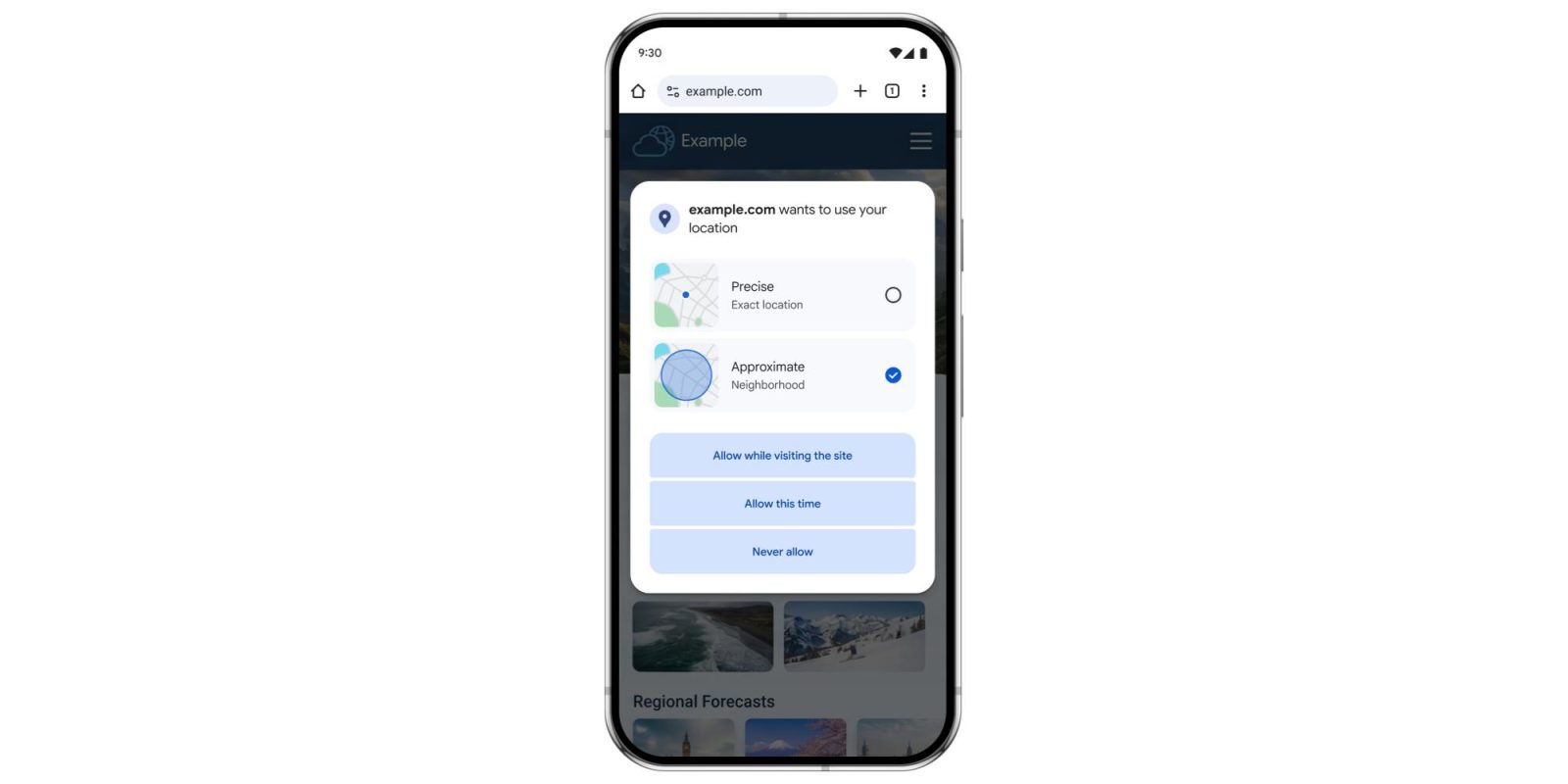
Traditionally, when websites requested location access, users had to choose between granting full access or denying it entirely. With the new update, Chrome introduces a nuanced permission prompt, presenting three options:
– Precise (Exact location): Shares your exact geographical position.
– Approximate (Neighborhood): Shares a general area, such as your neighborhood or city.
– Deny: Declines any location sharing.
This tiered approach allows users to tailor their location sharing based on the context. For instance, accessing local weather updates or news articles typically requires only an approximate location. Conversely, services like food delivery or ATM locators may necessitate precise location data to function effectively.
The rollout of this feature begins with Chrome for Android and is slated to extend to the desktop version in the coming months. This phased implementation ensures a smooth transition across platforms, providing a consistent user experience.
In tandem with this update, Google plans to release new APIs for web developers. These APIs will enable websites to specify whether they require approximate or precise location data. Developers are encouraged to assess their applications’ needs and request precise location only when absolutely necessary, thereby minimizing unnecessary data collection.
This development follows a series of location privacy enhancements introduced in Android 17. Notably, the update includes a one-time location button for apps, allowing users to grant temporary location access without permanent permissions. Additionally, the system’s Quick Settings indicator has been redesigned for better visibility, and the permissions prompt has been updated to provide clearer information. A new approximate location algorithm has also been implemented to enhance privacy, especially in areas with lower population density.
By integrating approximate location sharing into Chrome, Google aims to strike a balance between functionality and user privacy. This feature empowers users to make informed decisions about their data, ensuring that personal information is shared only when necessary and appropriate.