Choosing the Right Exposure Management Platform: Key Considerations and Common Pitfalls
In the realm of cybersecurity, organizations often find themselves in a paradoxical situation: despite closing numerous vulnerabilities and achieving favorable dashboard metrics, the fundamental question remains—are we genuinely more secure? This uncertainty arises because traditional metrics like patch counts and CVSS scores lack the contextual depth necessary to assess actual risk reduction. Exposure management platforms aim to bridge this gap by providing comprehensive insights into an organization’s security posture. However, with a plethora of platforms available, discerning which one truly enhances security can be challenging.
Understanding Exposure Management Platform Architectures
Exposure management platforms generally fall into four categories, each defined by its architecture and data processing approach:
1. Stitched Portfolio Platforms: These are assembled through acquisitions, where a vendor integrates various point solutions—such as cloud security, vulnerability scanning, and identity analytics—under a unified brand. Despite a shared console, each module operates on its own data model, leading to minimal correlation between findings.
2. Data Aggregation Platforms: These platforms collect and normalize data from existing scanners and third-party tools, presenting it in a unified interface. Their functionality is limited to the data they receive, making it difficult to correlate exposures across different domains.
3. Single-Domain Specialist Platforms: Focusing deeply on a specific area—such as cloud misconfigurations, network vulnerabilities, or identity exposures—these platforms excel within their niche but struggle to address interconnected exposures spanning multiple domains.
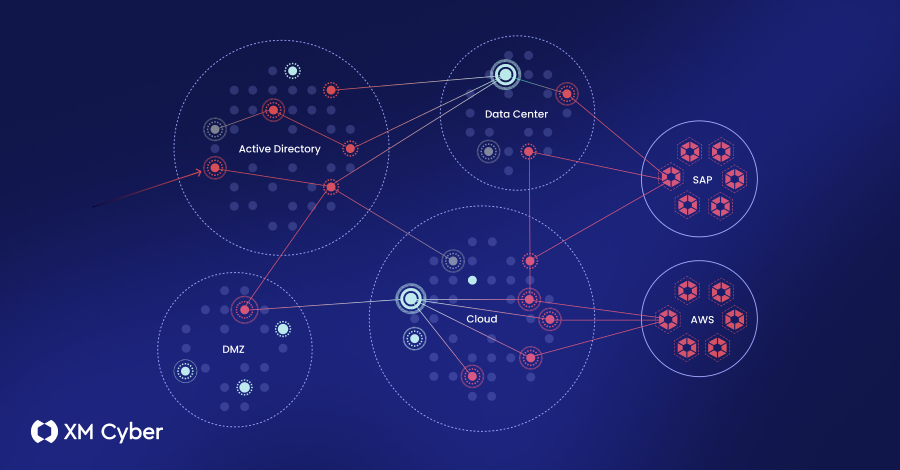
4. Integrated Platforms: Built from the ground up, these platforms natively discover and correlate various exposure types—including credentials, misconfigurations, CVEs, identity issues, and cloud configurations—within a single engine. They create a digital twin of the environment, mapping potential lateral movements of attackers across on-premises, cloud, and hybrid infrastructures.
Evaluating Exposure Management Platforms: Five Critical Questions
To effectively assess an exposure management platform’s capabilities, consider the following questions:
1. What Range and Depth of Exposure Types Does the Platform Detect?
While CVEs constitute approximately 25% of exploited exposures, the majority stem from misconfigurations, cached credentials, excessive permissions, and identity weaknesses. Platforms limited to specific exposure types or reliant on third-party data may leave significant blind spots. An effective platform should comprehensively cover both existing and emerging exposure types, such as AI workloads and machine identities, with in-depth analysis.
2. Can the Platform Map Attack Paths Across Diverse Environments?
Understanding how attackers can traverse from one exposure to another across different environments is crucial. Some platforms may depict attack paths based solely on network topology without modeling actual lateral movements. A robust platform should trace paths across various environments, identifying how an external vulnerability could lead to critical internal assets.
3. Does the Platform Validate the Exploitability of Exposures?
Beyond identifying exposures, it’s essential to assess their exploitability within the specific context of your environment. This involves testing multiple conditions, such as whether a vulnerable library is actively used by a running process or if a port is open and accessible. The platform should provide definitive answers regarding the exploitability and reachability of exposures.
4. How Does the Platform Account for Existing Security Controls?
An exposure’s risk level can be significantly influenced by existing security measures. For instance, a high-severity vulnerability blocked by a firewall poses less risk, whereas a lower-severity identity exposure with direct access to critical systems is more concerning. Platforms that overlook security controls may misguide prioritization efforts, leading to inefficient resource allocation.
5. Does the Platform Offer Actionable Remediation Guidance?
Identifying exposures is only part of the solution; providing clear, actionable remediation steps is equally important. The platform should offer specific guidance tailored to your environment, enabling efficient and effective mitigation of identified risks.
Conclusion
Selecting the appropriate exposure management platform is pivotal for enhancing an organization’s cybersecurity posture. By understanding the different platform architectures and critically evaluating their capabilities through the outlined questions, organizations can make informed decisions that align with their unique security needs. An effective platform should offer comprehensive exposure detection, contextual analysis, validation of exploitability, consideration of existing security controls, and actionable remediation guidance.