From Alert Overload to Rapid Response: Leveraging Threat Intelligence to Accelerate MTTR
In today’s cybersecurity landscape, Security Operations Centers (SOCs) are inundated with thousands of alerts daily, many of which are low-priority, repetitive, or false positives. This overwhelming volume leads to slower reaction times, missed threats, staff burnout, and escalating operational costs. Every wasted minute translates into a weaker security posture, potential financial loss, and reduced return on security investments. Alert overload doesn’t just impact the SOC; it hampers the entire organization’s ability to respond, recover, and produce revenue.
The Cost of Alert Overload
When analysts are buried under thousands of notifications, they spend more time triaging noise than responding to real incidents. This inefficiency results in:
– Slower Reaction Times: Critical threats may go unnoticed or unaddressed due to the sheer volume of alerts.
– Missed Threats: Important alerts can be overlooked amidst the noise, leading to potential breaches.
– Staff Burnout: Continuous exposure to high volumes of alerts without effective tools can lead to analyst fatigue and turnover.
– Increased Operational Costs: Inefficient processes require more resources, leading to higher costs without corresponding improvements in security.
Ineffective Solutions to Alert Overload
Organizations often attempt to tackle alert overload through various means, but these approaches frequently fall short:
– Hiring More Analysts: While increasing headcount may seem like a solution, it doesn’t address the root cause of the problem and can lead to higher costs without improving efficiency.
– Strict Filtering Rules: Implementing rigid filtering can inadvertently suppress critical alerts, increasing the risk of missing significant threats.
– Adding More Tools: Introducing additional tools can create more data sources and dashboards, complicating the workflow and potentially increasing alert volume.
– Automating Without Context: Automation without proper context can lead to incorrect decisions, as it may accelerate the processing of false positives or irrelevant alerts.
These methods address the symptoms rather than the cause: the lack of context around alerts. Without understanding what triggered an alert and its relevance, teams remain stuck in a reactive mode, constantly firefighting instead of investigating.
The Power of Contextual Threat Intelligence
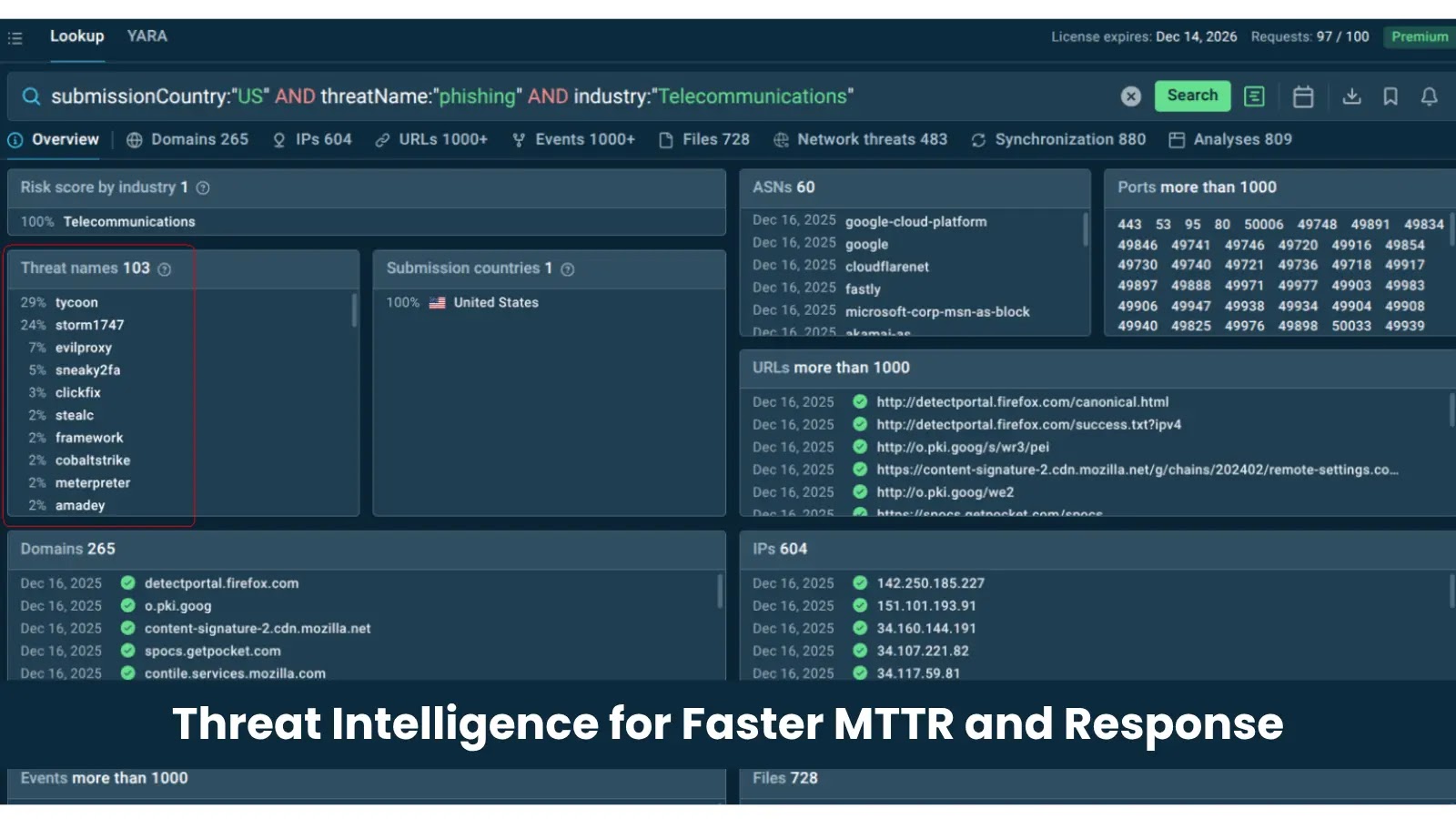
A sustainable solution to alert overload lies in enhancing alert quality through contextual threat intelligence. When analysts can instantly enrich alerts with reliable, up-to-date data on Indicators of Compromise (IOCs), malware families, and infrastructure, they can prioritize faster and make confident decisions.
This is where solutions like ANY.RUN’s Threat Intelligence Lookup come into play—a tool designed to balance the speed of investigation with data completeness, freshness, and accuracy.
Transforming SOC Efficiency and Profitability
Integrating contextual threat intelligence into SOC operations accelerates the entire detection and response cycle. Analysts spend less time on noise, and decision-making becomes data-driven rather than reactive. This transformation leads to measurable business value:
– Reduced Mean Time to Detect (MTTD) and Respond (MTTR): Faster identification and remediation of threats minimize potential damage.
– Enhanced Analyst Productivity: With better tools and information, analysts can handle more incidents effectively without expanding the team.
– Cost Savings: Effective automation, when combined with human intelligence, leads to tangible savings by reducing manual workload and improving response times.
Eliminating alert overload isn’t just about improving the work environment for the SOC team; it’s a strategic financial decision that strengthens resilience, reduces risk exposure, and safeguards the organization’s bottom line.
Conclusion
Alert overload cannot be resolved by merely increasing personnel or adding more tools; it requires smarter data. By empowering your SOC with contextual threat intelligence from solutions like ANY.RUN’s Threat Intelligence Lookup, you transform chaos into clarity, convert alerts into actionable insights, and turn effort into measurable value.