Apple’s SQUIRE: Revolutionizing UI Prototyping with AI Precision
Apple’s research team has unveiled SQUIRE, an innovative AI-driven tool designed to enhance the user interface (UI) prototyping process for developers. This tool addresses common challenges associated with AI-generated interfaces by offering a more controlled and interactive design experience.
Addressing Ambiguities in Natural Language Processing
Traditional AI coding tools often rely on natural language inputs, which can be ambiguous and lead to unpredictable outcomes. Developers may find themselves in iterative cycles of trial and error to achieve the desired results. SQUIRE mitigates these issues by providing a visual interface that allows for step-by-step construction and refinement of UI prototypes, ensuring greater precision and control.
How SQUIRE Operates
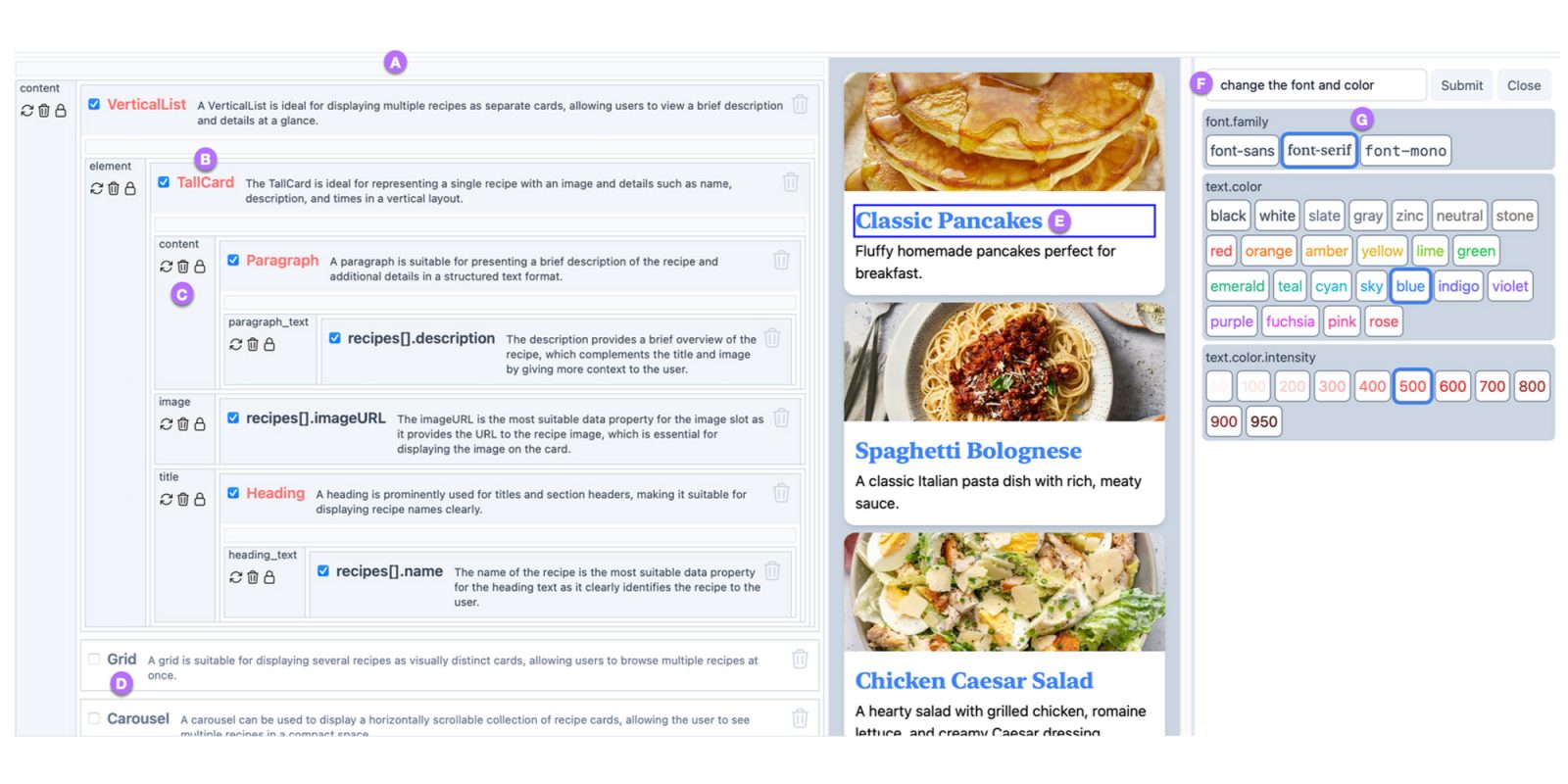
Developers initiate a project in SQUIRE by providing a prompt that outlines their UI objectives, accompanied by sample data for reference. The UI is then constructed as a hierarchical tree of components. Developers can prompt SQUIRE to fill in missing functionalities, resulting in a list of suitable alternatives for each specific section of the UI. Selecting an alternative instantly updates a live preview and the underlying code, facilitating immediate visualization of changes.
Furthermore, developers can request modifications to specific UI areas, with the assurance that only the targeted code will be altered. SQUIRE generates temporary controls that enable quick, semantically related adjustments without the need for re-prompting. Throughout this process, the large language model (LLM) acts as a collaborative partner, presenting viable options for evaluation while allowing developers to accept or reject suggestions, thereby maintaining creative agency.
Empirical Validation and Developer Feedback
In a study involving 11 frontend developers utilizing SQUIRE for UI prototyping, participants reported an enhanced ability to explore and iterate on various designs with a strong sense of control. The system received high ratings for usability and overall satisfaction. Notably, the increased control encouraged developers to experiment with design paths they might have previously avoided, as changes were straightforward to implement, predict, and reverse.
Technical Underpinnings of SQUIRE
Unlike conventional methods that generate interface code directly from user prompts, SQUIRE first creates an intermediate representation known as SquireIR. This representation models the UI as a tree of components with named slots that can be incrementally filled. This structure accommodates placeholders for undefined parts, such as button labels or images, and supports multiple UI alternatives, like displaying content as a list or a grid.
SQUIRE then translates this intermediate representation into code using HTML, CSS, and JavaScript, with Web Components managing the final UI structure. A key feature of SQUIRE is its localized handling of changes. When a developer requests a tweak to a button or layout, only the specified part is updated, leaving the rest of the codebase untouched. This approach prevents the trial-and-error loops common in many AI coding tools, where unintended changes can occur beyond the developer’s intent.
Additionally, SQUIRE’s structure allows it to suggest multiple options at each development stage, enabling developers to compare different versions efficiently without losing previous work. While the study does not delve into specifics regarding model training, architecture, or data, it notes that SQUIRE is powered by OpenAI’s GPT-4o, focusing on system design and interaction models.
Future Prospects and Integration
Currently, SQUIRE is not publicly available and has been tested exclusively by the 11 developers participating in the study. However, its potential integration into future versions of Xcode or other Apple development tools is conceivable, offering a more intuitive and controlled approach to UI prototyping for a broader developer audience.