Mahsa Alert: Empowering Iranians with Real-Time Airstrike Warnings Through Crowdsourced Data
In the midst of escalating tensions and ongoing conflict between Iran and the United States, Iranian citizens have turned to innovative technological solutions to safeguard themselves and their communities. One such solution is the Mahsa Alert app, a crowdsourced platform designed to provide real-time warnings about airstrikes and military movements. This application has become a vital tool for many, offering timely information that can mean the difference between safety and peril.
The Genesis of Mahsa Alert
The inception of Mahsa Alert was driven by the urgent need for reliable and swift communication regarding military activities. Traditional channels often fall short in delivering timely warnings, leaving civilians vulnerable. Recognizing this gap, a group of Iranian developers collaborated to create an application that leverages the power of crowdsourcing to disseminate critical information rapidly.
How Mahsa Alert Functions
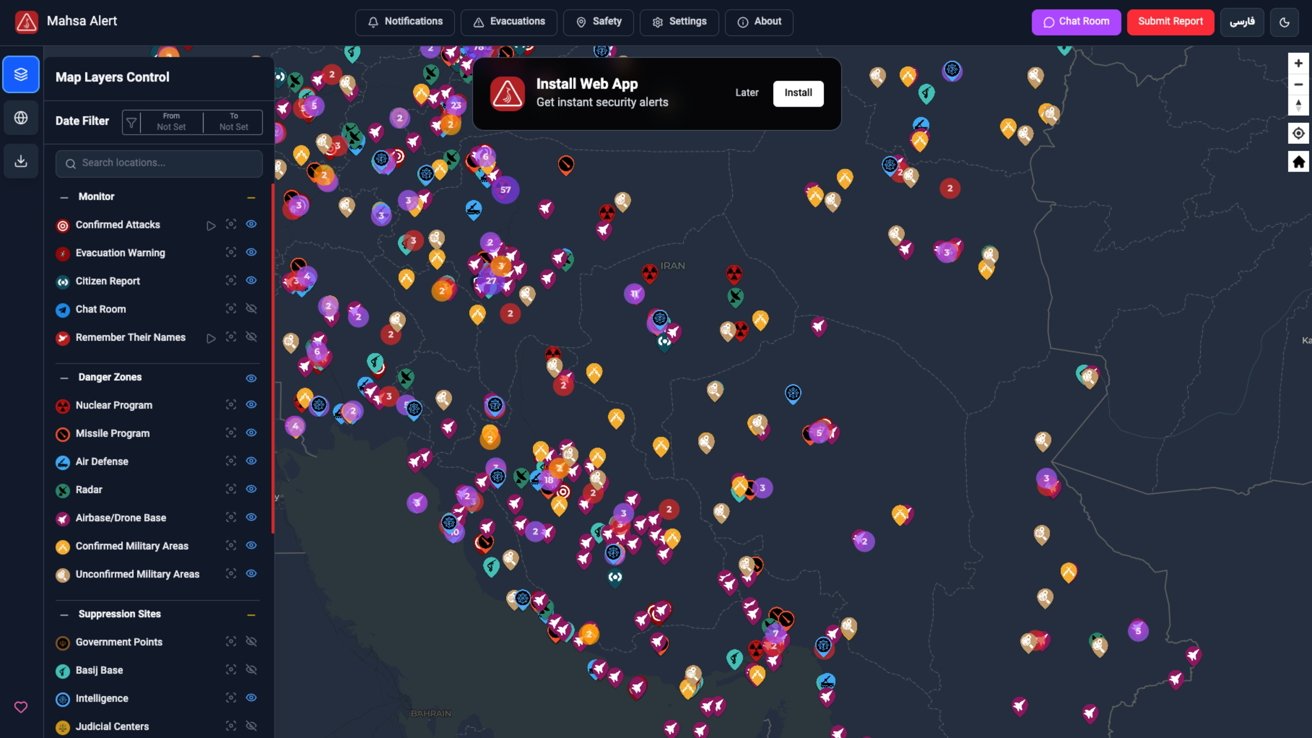
Mahsa Alert operates on a simple yet effective principle: users report sightings of military aircraft, explosions, or troop movements, and this data is then shared in real-time with the entire user base. The app’s interface allows for easy reporting and viewing of incidents, ensuring that even those with limited technological proficiency can participate and benefit.
Key features of Mahsa Alert include:
– Real-Time Notifications: Users receive instant alerts about nearby threats, enabling them to take immediate action.
– Interactive Map: A dynamic map displays reported incidents, allowing users to visualize the proximity and nature of threats.
– Community Engagement: The app fosters a sense of community, as users contribute to the collective safety by sharing information.
User Demographics and Reach
While Mahsa Alert was developed with the intention of serving those within Iran, a significant portion of its user base resides outside the country’s borders. This diaspora includes individuals who have family and friends in Iran and wish to stay informed about the situation on the ground. Additionally, expatriates and international observers use the app to monitor developments in real-time.
Challenges and Limitations
Despite its utility, Mahsa Alert faces several challenges:
– Data Verification: Ensuring the accuracy of user-reported data is paramount. The app employs algorithms to cross-reference reports and filter out potential misinformation.
– Internet Accessibility: In conflict zones, internet access can be sporadic or restricted, limiting the app’s effectiveness.
– Security Concerns: Users may fear repercussions for reporting sensitive information. The developers have implemented encryption and anonymity features to protect user identities.
The Role of Technology in Conflict Zones
Mahsa Alert exemplifies the critical role technology plays in modern conflict zones. Similar to how apps like Waze have transformed navigation through crowdsourced data, Mahsa Alert utilizes collective input to enhance safety during wartime. This approach underscores a broader trend where civilians harness technology to adapt to and navigate the challenges posed by conflict.
Comparative Analysis: Crowdsourced Data in Other Contexts
The concept of using crowdsourced data for safety and navigation is not new. For instance, Apple Maps introduced features that allow users to report accidents, hazards, and speed checks, enhancing the app’s utility through community input. Similarly, Waze has long relied on user reports to provide real-time traffic updates and route suggestions. These applications demonstrate the effectiveness of crowdsourced data in improving situational awareness and decision-making.
Future Prospects and Enhancements
Looking ahead, the developers of Mahsa Alert aim to incorporate additional features to enhance the app’s functionality:
– Integration with Other Platforms: Collaborations with other safety and communication apps could broaden the reach and effectiveness of Mahsa Alert.
– Multilingual Support: Adding support for multiple languages would make the app accessible to a more diverse user base.
– Offline Capabilities: Developing features that allow the app to function without internet connectivity would be invaluable in areas with unstable networks.
Conclusion
Mahsa Alert stands as a testament to the resilience and ingenuity of civilians in conflict zones. By leveraging crowdsourced data, the app provides real-time, life-saving information to those in need. While challenges remain, the continued development and adoption of such technologies offer hope for safer communities amidst the uncertainties of war.