Enhancing Security Teams’ Oversight and Control with Ceros in Claude Code Environments
In the evolving landscape of enterprise security, traditional identity and access controls have been meticulously designed to manage human users and service accounts. However, the advent of autonomous coding agents like Anthropic’s Claude Code introduces a new dimension to security challenges. Operating with the full permissions of the initiating developer, Claude Code executes tasks such as reading files, running shell commands, and interfacing with external APIs and third-party integrations, all on the developer’s local machine. This autonomous operation occurs before any network-layer security tools can detect or log these activities, leaving a significant gap in the security infrastructure.
The Challenge: Claude Code’s Autonomous Operations
Claude Code’s ability to perform actions independently, utilizing existing tools and permissions on a developer’s machine, poses a unique challenge. Its operations, which include executing complex sequences without explicit human programming and accessing sensitive data, remain invisible to traditional network-layer security tools. These tools typically monitor traffic post-execution, meaning by the time an event is logged, the action has already been completed. This results in a critical oversight in monitoring and controlling the activities of such autonomous agents.
Introducing Ceros: An AI Trust Layer
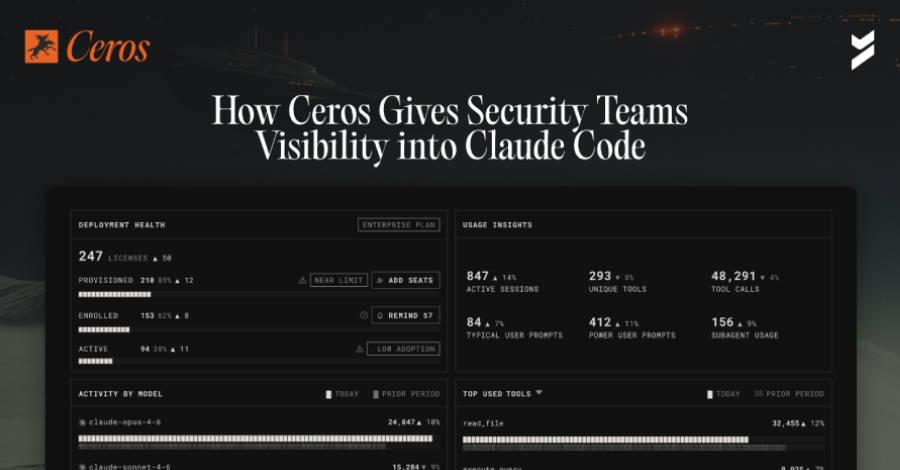
To address this oversight, Beyond Identity has developed Ceros, an AI Trust Layer that integrates directly with the developer’s machine alongside Claude Code. Ceros provides real-time visibility, enforces runtime policies, and maintains a cryptographic audit trail of every action taken by the agent. This integration ensures that all activities performed by Claude Code are monitored and controlled effectively, bridging the gap left by traditional security measures.
Seamless Integration and Deployment
Ceros is designed for easy deployment without disrupting developer workflows. Installation involves two simple commands:
“`
curl -fsSL https://agent.beyondidentity.com/install.sh | bash
ceros claude
“`
The first command installs the Ceros CLI, while the second launches Claude Code through Ceros. Upon execution, a browser window prompts the user for an email address and a six-digit verification code. Once verified, Claude Code operates as usual, with the added security layer of Ceros. For organization-wide deployments, administrators can configure Ceros to prompt developers for enrollment automatically when launching Claude Code, ensuring seamless adoption without disrupting existing workflows.
Comprehensive Device Context and Identity Verification
Before Claude Code generates any tokens, Ceros captures comprehensive device context, including operating system details, kernel version, disk encryption status, Secure Boot state, and endpoint protection status, all within milliseconds. It also records the complete process ancestry of how Claude Code was invoked, including binary hashes of every executable in the chain. Furthermore, Ceros ties each session to a verified human identity through Beyond Identity’s platform, utilizing hardware-bound cryptographic keys to ensure authenticity and integrity.
Enhanced Visibility and Control for Security Teams
With Ceros, security teams gain unprecedented visibility into the actions of autonomous coding agents like Claude Code. This includes real-time monitoring of file accesses, command executions, API calls, and interactions with third-party integrations. By providing a detailed audit trail and enforcing runtime policies, Ceros empowers security teams to detect and respond to potential security incidents proactively, ensuring that the introduction of AI coding agents does not compromise the organization’s security posture.
Conclusion
As AI-driven tools like Claude Code become integral to software development processes, it is imperative for security teams to adapt and implement measures that provide visibility and control over these autonomous agents. Ceros offers a robust solution by integrating directly with the developer’s environment, ensuring that all actions performed by such agents are monitored, controlled, and logged. This proactive approach enables organizations to harness the benefits of AI in development while maintaining a strong security framework.