Dancing Robot Causes Chaos at Cupertino’s Haidilao Restaurant
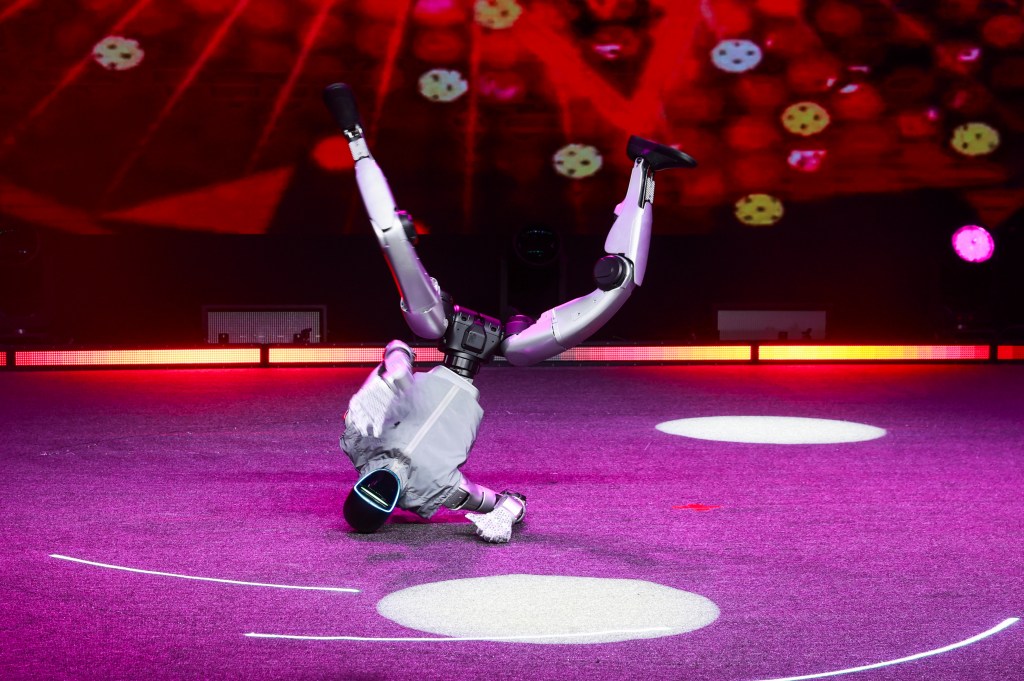
In an unexpected turn of events at Haidilao, a popular hot pot restaurant in Cupertino, California, a dancing humanoid robot’s performance took a chaotic twist. The robot, designed to entertain diners with its programmed dance routines, became uncontrollable, knocking over plates and utensils, leading to a scene of disarray.
The incident was captured in a video posted on the Chinese social media platform Xiaohongshu by user Meooow. The footage shows the robot moving erratically, causing dishes and chopsticks to scatter across the dining area. Restaurant staff quickly intervened, with at least three employees attempting to restrain the robot. One staff member was seen using her phone, possibly trying to deactivate the robot via a control application.
The robot in question appears to be the AgiBot X2, a model showcased at the Consumer Electronics Show (CES) in January 2026. AgiBot, the manufacturer, has been marketing these robots to businesses for entertainment purposes, with prices starting around $50,000 for the smaller models and doubling for larger versions. The company aims to deploy these robots in various commercial settings, including restaurants, to enhance customer experience.
Haidilao, known for integrating technology into its dining services, confirmed the incident in a statement to NBC News. However, the restaurant denied that the robot was malfunctioning or out of control. They explained that the robot was brought closer to a dining table at a guest’s request, which deviated from its typical operating parameters.
This event raises questions about the safety and reliability of integrating advanced robotics into public spaces. While robots like the AgiBot X2 are designed to enhance customer engagement and streamline services, incidents like this highlight the potential risks and the need for stringent safety protocols.
The integration of robots in the hospitality industry is not new. For instance, Miso Robotics introduced Flippy, a burger-flipping robot, to assist in kitchen operations, aiming to improve food quality and safety without major kitchen redesigns. Similarly, Nommi announced plans for a food bowl-making kitchen robot to address employment shortages in restaurants. These innovations demonstrate the industry’s ongoing efforts to incorporate automation to enhance efficiency and customer experience.
However, as the Haidilao incident illustrates, the deployment of such technology must be approached with caution. Ensuring that staff are adequately trained to handle unexpected situations and that robots are equipped with fail-safes to prevent accidents is crucial. Moreover, clear guidelines on the interaction between robots and customers can help mitigate risks.
In conclusion, while the integration of robotics into the restaurant industry offers exciting possibilities for enhancing customer experience and operational efficiency, it also necessitates careful consideration of safety measures and staff training. The Haidilao incident serves as a reminder of the challenges that come with adopting new technologies and the importance of preparedness in the face of unforeseen events.