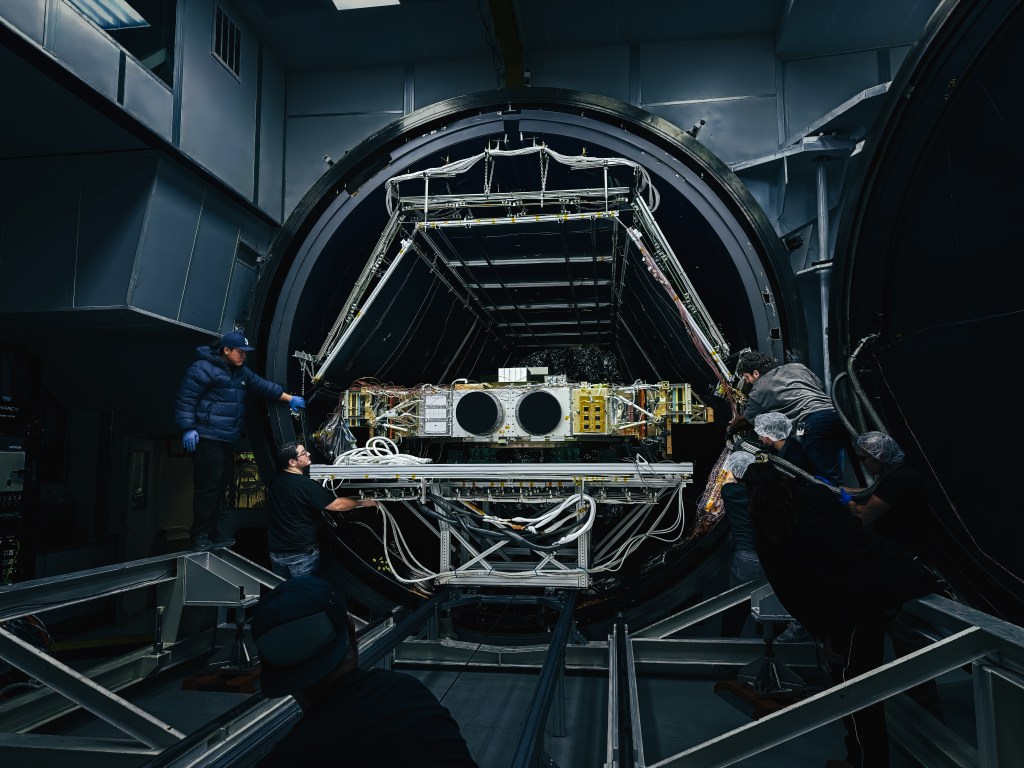
K2 Space’s Gravitas: Pioneering High-Powered Satellites for Orbital Data Centers
K2 Space, an innovative satellite manufacturer founded by former SpaceX engineers Karan and Neel Kunjur in 2022, is set to launch its groundbreaking satellite, Gravitas, marking a significant advancement in space-based computing capabilities. Scheduled for deployment aboard a SpaceX Falcon 9 rocket by the end of this month, Gravitas is poised to demonstrate technologies essential for establishing data centers in orbit.
Gravitas: A Leap in Satellite Power
Weighing two metric tons and boasting a 40-meter wingspan when its solar panels are fully extended, Gravitas is engineered to generate an impressive 20 kilowatts (kW) of electrical power. This output is substantial compared to most current satellites, which typically produce only a few kilowatts. For context, the larger and more costly ViaSat-3 spacecraft generates over 25 kW, while Elon Musk has indicated that Starlink V3 satellites will also produce 20 kW. The enhanced power capacity of Gravitas is designed to support advanced payloads, including high-performance sensors, transceivers, and computing systems.
The Vision Behind K2 Space
CEO Karan Kunjur emphasizes that the future is higher power, reflecting the company’s commitment to enabling more complex and energy-intensive operations in space. With $450 million in funding and a valuation of $3 billion as of December 2025, K2 Space is well-positioned to realize this vision. The upcoming launch of Gravitas represents the company’s inaugural foray into active space operations and is considered the beginning of an iterative development process.
Mission Objectives and Technological Innovations
The Gravitas mission is set to carry 12 undisclosed payload modules from various clients, including the Department of Defense. A key feature of the mission is the deployment of a 20 kW electric thruster, anticipated to be the most powerful of its kind ever utilized in space. The mission’s success will be evaluated based on several criteria:
1. Deployment and Power Generation: Ensuring the satellite is correctly deployed and begins generating the expected power output.
2. Payload Activation and Thruster Testing: Initiating operations of onboard payloads and conducting tests of the high-powered electric thruster.
3. Orbital Maneuvering: Utilizing the thruster to elevate the satellite to a higher orbital position, thereby demonstrating its capability for significant orbital adjustments.
In-House Development and Future Plans
A remarkable aspect of Gravitas is that 85% of its components have been designed and manufactured internally by K2 Space. This approach underscores the company’s dedication to innovation and quality control. Kunjur acknowledges the challenges inherent in launching new spacecraft and the industry’s swift response to any anomalies. Therefore, comprehensive data collection during the mission is prioritized to inform and refine future satellite designs.
Looking ahead, K2 Space plans to launch 11 additional satellites over the next two years, encompassing both demonstration and commercial missions. By 2028, the company aims to produce satellites for clients seeking to establish networks of high-powered space vehicles, thereby expanding the possibilities for space-based operations.
Implications for the Space Economy
As satellites become increasingly integral to the global economy, enhanced power capabilities like those offered by Gravitas are crucial for supporting more sophisticated and energy-demanding applications. Kunjur anticipates that this advancement will open new business opportunities and drive further innovation in the sector.