Revolutionizing Enterprise Software: Eragon’s AI-Powered Prompt Interface
In the rapidly evolving landscape of enterprise technology, a groundbreaking startup named Eragon is poised to redefine how businesses interact with software. Founded in August 2025 by Josh Sirota, Eragon has recently secured $12 million in funding, valuing the company at $100 million post-investment. The company’s mission is to develop an agentic AI operating system that transforms traditional enterprise software interfaces into intuitive, prompt-based interactions.
The Vision Behind Eragon
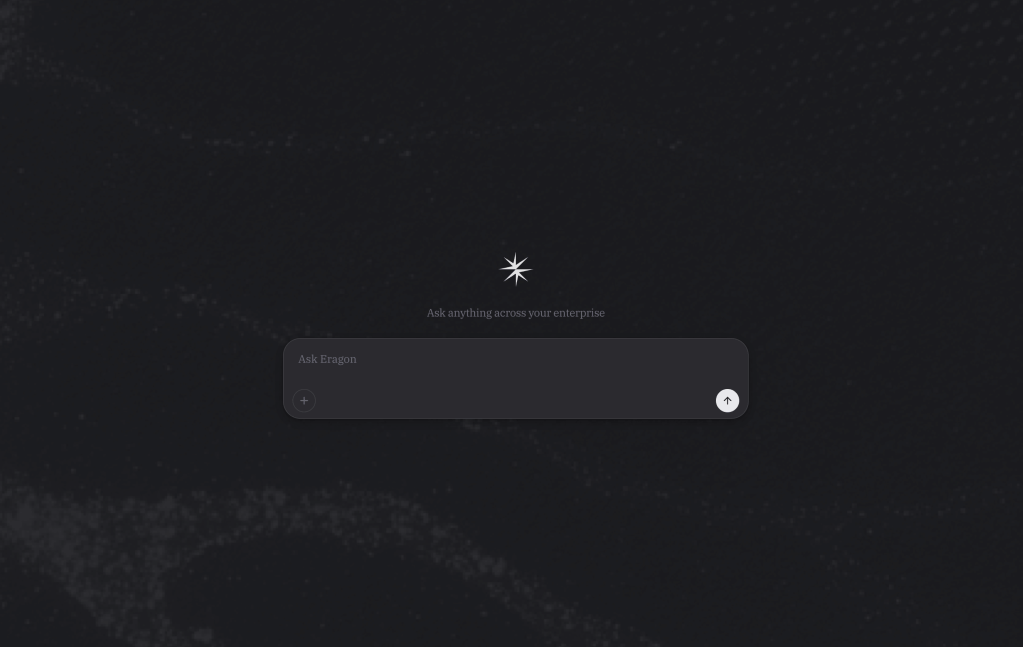
Josh Sirota, with a background in go-to-market strategies at tech giants Oracle and Salesforce, envisions a future where conventional software interfaces—comprising buttons, dialog boxes, and pull-down menus—become obsolete. Instead, he proposes a system where business operations are conducted through natural language prompts, streamlining processes and enhancing user experience. This innovative approach aims to integrate various business applications, such as Salesforce, Snowflake, Tableau, and Jira, into a cohesive platform accessible via a large language model (LLM) interface.
The Genesis of Eragon
The inception of Eragon was influenced by Sirota’s personal journey and professional experiences. After a period of introspection, he relocated to San Francisco and established Eragon with a dedicated team operating from a live-work loft near the city’s baseball park. The startup’s name draws inspiration from the fantasy novel Eragon by Christopher Paolini, aligning with the tradition of tech companies like Palantir and Anduril that adopt names from fictional realms.
Investor Confidence and Support
Eragon’s innovative concept and Sirota’s industry expertise have attracted significant investment from notable entities, including Arielle Zuckerberg at Long Journey Ventures, Soma Capital, Axiom Partners, and strategic angels like Mike Knoop and Elias Torres. Sandhya Venkatachalam of Axiom Partners expressed confidence in Eragon’s potential, stating, We see enormous potential for Eragon to become the connective tissue for how modern teams operate and make decisions.
Technical Prowess and Development
The technical foundation of Eragon is built by a team of accomplished individuals, including Rishabh Tiwari, a PhD student in computer science at Berkeley, and Vin Agarwal, an MIT PhD graduate. Their combined expertise is instrumental in developing the company’s technology stack, which involves post-training open-source models like Qwen and Kimi on client datasets. This process enables seamless integration with company email accounts and other resources, facilitating efficient onboarding and operational workflows.
Practical Application and Demonstration
Eragon’s commitment to its vision is evident in its internal practices. Sirota demonstrated the platform’s capabilities by initiating the onboarding process for a new client, Dedalus Labs. Through a simple natural language prompt, the software autonomously assigned user credentials, deployed a new Eragon instance in the cloud, and commenced an onboarding workflow. This example underscores the platform’s potential to simplify and automate complex business processes.
The Broader Context of AI in Enterprise Software
Eragon’s approach is part of a larger trend where AI is increasingly integrated into enterprise software to enhance functionality and user experience. For instance, AWS introduced App Studio, a tool that allows users to create enterprise applications through written prompts, eliminating the need for professional developers. Similarly, companies like Nothing have launched AI tools enabling users to build mini-apps using simple text prompts, reflecting a shift towards more accessible and user-friendly software development.
Challenges and Considerations
While the transition to prompt-based interfaces offers numerous advantages, it also presents challenges. Ensuring security, maintaining data integrity, and providing adequate user training are critical factors that need to be addressed. Moreover, the effectiveness of AI-driven interfaces depends on the quality and relevance of the underlying data models, necessitating continuous refinement and adaptation.
Future Prospects
As Eragon continues to develop its platform, the company aims to expand its client base and refine its technology to meet the diverse needs of modern enterprises. The successful implementation of prompt-based interfaces could lead to increased efficiency, reduced operational costs, and a more intuitive user experience across various industries.
Conclusion
Eragon’s innovative approach to enterprise software signifies a potential paradigm shift in how businesses interact with technology. By leveraging AI to create prompt-based interfaces, the company aims to simplify complex processes and enhance operational efficiency. As the landscape of enterprise software continues to evolve, Eragon’s vision offers a glimpse into a future where natural language prompts become the primary mode of interaction, making software more accessible and user-friendly.