Accelerating Tier 1 Triage: Enhancing SOC Efficiency and Reducing Risks
In the dynamic landscape of cybersecurity, Security Operations Centers (SOCs) are the frontline defense against a myriad of threats. However, many SOCs encounter significant delays during the Tier 1 triage process, leading to increased operational costs, prolonged attacker dwell times, and heightened business risks. By equipping Tier 1 analysts with advanced tools and streamlined workflows, organizations can transform this initial layer into a rapid and effective decision-making hub.
The Challenges of Traditional Tier 1 Triage
Traditional Tier 1 triage often involves manual processes where analysts gather context from multiple tools to assess alerts. Modern cyber threats, characterized by encrypted communications, fileless attacks, and sophisticated evasion techniques, complicate this process. When Tier 1 teams struggle to promptly distinguish between benign and malicious activities, the entire SOC’s efficiency is compromised. This inefficiency manifests in several ways:
– Escalated Operational Costs: Inefficient triage leads to unnecessary escalations, misallocation of skilled personnel, and increased expenses.
– Extended Attacker Dwell Time: Delayed identification and containment of threats provide adversaries with more time to inflict damage.
– Reduced Overall Efficiency: Analysts spending excessive time on false positives detract from addressing genuine threats.
– Increased Business Disruption Risk: Slow triage hampers the SOC’s ability to respond decisively, elevating the potential for significant business impacts.
Strategies to Enhance Tier 1 Triage Efficiency
To address these challenges, organizations can implement several strategies to empower Tier 1 analysts and expedite the triage process:
1. Implement Interactive Sandboxing
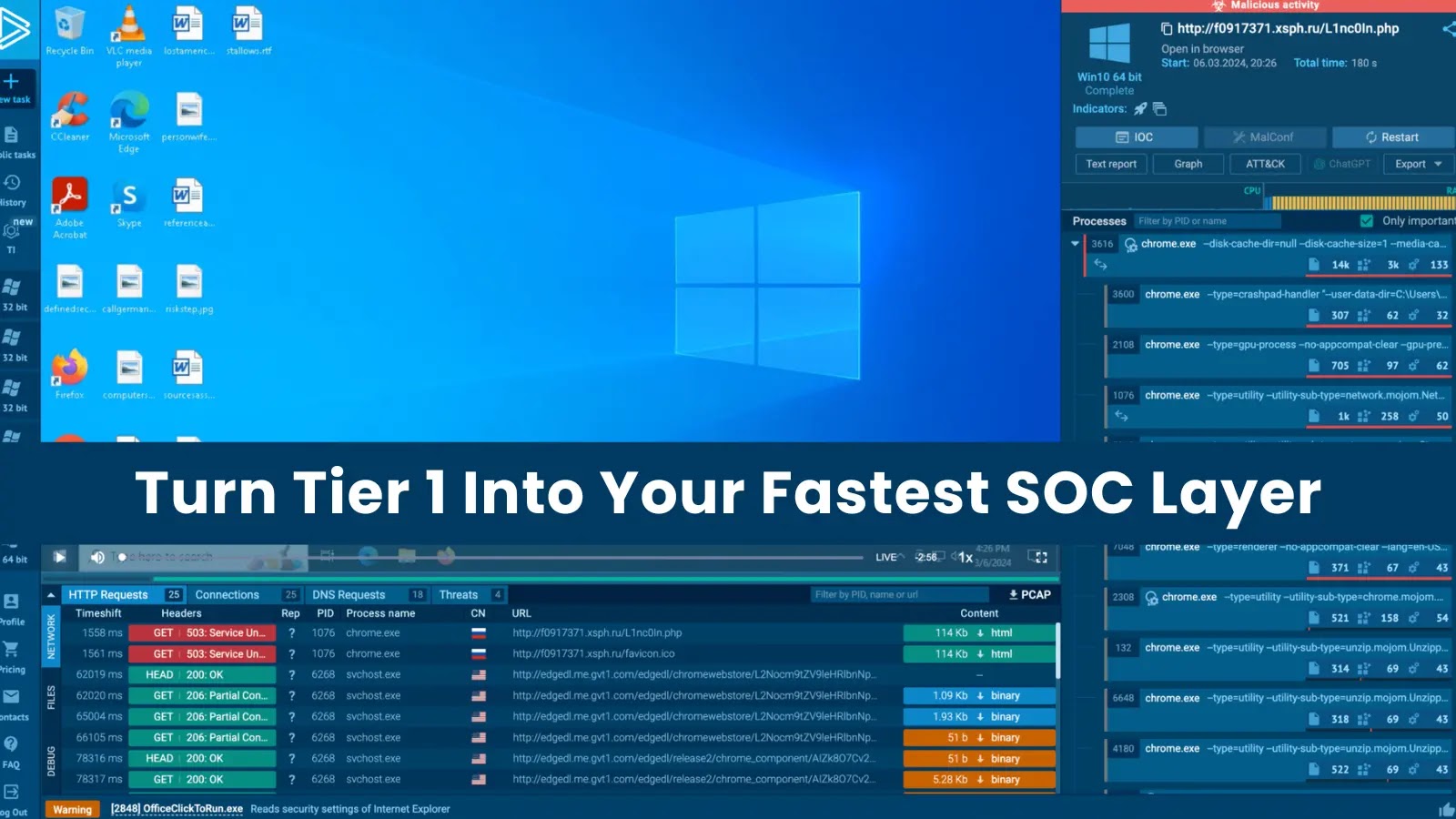
Interactive sandboxing solutions, such as ANY.RUN, allow analysts to safely execute and observe suspicious files or URLs in a controlled environment. This approach provides real-time behavioral insights, enabling rapid determination of an alert’s nature. For instance, ANY.RUN’s platform automatically decrypts HTTPS traffic, offering visibility into encrypted communications that might conceal malicious activities. In a case involving the Salty2FA phishing kit targeting Microsoft 365 accounts, analysts were able to confirm the phishing attempt within 56 seconds using this method.
2. Automate Routine Tasks
Automation can significantly reduce the manual workload on Tier 1 analysts. By automating repetitive tasks such as data collection, initial analysis, and correlation of indicators of compromise (IOCs), analysts can focus on more complex investigations. This not only speeds up the triage process but also minimizes human error.
3. Enhance Contextual Awareness
Providing analysts with enriched context about alerts can lead to faster and more accurate decision-making. Integrating threat intelligence feeds, historical data, and contextual information into the triage workflow enables analysts to assess alerts with a comprehensive understanding of the potential threat landscape.
4. Foster Continuous Training and Development
Investing in the continuous education and training of Tier 1 analysts ensures they are equipped with the latest knowledge and skills to handle evolving threats. Regular training sessions, workshops, and simulations can enhance their ability to make swift and informed decisions during the triage process.
5. Integrate Advanced Threat Detection Tools
Utilizing advanced threat detection tools that leverage machine learning and artificial intelligence can aid in the rapid identification of anomalies and potential threats. These tools can analyze vast amounts of data in real-time, providing analysts with actionable insights and reducing the time required for manual analysis.
6. Establish Clear Escalation Protocols
Defining clear and concise escalation protocols ensures that Tier 1 analysts know when and how to escalate incidents to higher tiers. This clarity reduces hesitation and delays, facilitating a more efficient triage process.
7. Monitor and Optimize Performance Metrics
Regularly monitoring performance metrics such as Mean Time to Detect (MTTD) and Mean Time to Respond (MTTR) allows organizations to identify bottlenecks in the triage process. Analyzing these metrics enables continuous optimization of workflows and resource allocation.
Real-World Impact of Enhanced Tier 1 Triage
Organizations that have implemented these strategies report significant improvements in their SOC operations:
– Reduced Triage Time: Analysts can reach verdicts on alerts more quickly, reducing the overall time spent on each case.
– Lower False Positive Rates: Enhanced tools and contextual information help in accurately identifying genuine threats, reducing the number of false positives.
– Improved Analyst Satisfaction: Automation and better tools reduce the manual workload, leading to higher job satisfaction and lower burnout rates among analysts.
– Enhanced Security Posture: Faster triage and response times contribute to a more robust security posture, minimizing the risk of significant breaches.
Conclusion
Transforming Tier 1 triage into a swift and efficient process is crucial for the overall effectiveness of a SOC. By leveraging interactive sandboxing, automation, enriched context, continuous training, advanced detection tools, clear protocols, and performance monitoring, organizations can empower their Tier 1 analysts to make rapid and accurate decisions. This not only reduces operational costs and risks but also strengthens the organization’s defense against the ever-evolving cyber threat landscape.