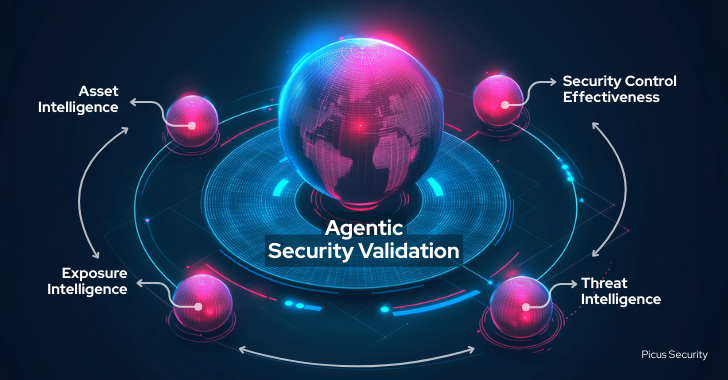
Elevating Enterprise Security: The Imperative of Agentic Security Validation
In the rapidly evolving digital landscape, enterprises face increasingly sophisticated cyber threats that exploit vulnerabilities across interconnected systems. Traditional security validation methods, often operating in isolation, are proving inadequate against these multifaceted attacks. The emergence of agentic security validation offers a transformative approach, enabling continuous, context-aware, and autonomous defense mechanisms that align with the complexity of modern cyber threats.
The Limitations of Traditional Security Validation
Historically, organizations have relied on a combination of tools such as Breach and Attack Simulation (BAS), penetration testing, and vulnerability scanners to assess their security posture. These tools, while valuable, often function independently, providing fragmented insights that fail to capture the holistic nature of potential attack vectors. This siloed approach overlooks the interconnectedness of systems, leaving organizations vulnerable to attacks that exploit multiple weaknesses simultaneously.
For instance, an attacker might exploit an exposed identity, leverage a cloud misconfiguration, bypass detection mechanisms, and exploit an unpatched vulnerability in a single, coordinated operation. Traditional validation methods, operating in isolation, are ill-equipped to identify and mitigate such complex attack chains.
The Emergence of Agentic Security Validation
Agentic security validation represents a paradigm shift by integrating various validation disciplines into a cohesive, autonomous system. This approach leverages advanced AI agents capable of planning, executing, and reasoning across complex workflows, thereby providing a comprehensive assessment of an organization’s security posture.
This integrated approach addresses three critical perspectives:
1. Adversarial Perspective: Evaluates potential attack vectors by simulating real-world attack scenarios to identify exploitable vulnerabilities and map potential routes to critical assets.
2. Defensive Perspective: Assesses the effectiveness of existing security controls, such as firewalls, intrusion prevention systems, and endpoint detection and response solutions, ensuring they perform as expected against simulated threats.
3. Risk Perspective: Prioritizes vulnerabilities based on their actual risk, considering compensating controls and the specific context of the organization’s environment, thereby focusing remediation efforts on the most critical issues.
By converging these perspectives, agentic security validation offers a dynamic and continuous assessment that mirrors the complexity of modern cyber threats.
The Role of Agentic AI in Security Validation
The integration of agentic AI into security validation processes marks a significant advancement. Unlike traditional AI applications that may assist with specific tasks, agentic AI autonomously manages entire validation workflows. It identifies necessary actions, executes them, evaluates outcomes, and adjusts strategies as needed without human intervention.
This autonomy enables organizations to:
– Achieve Continuous Validation: Maintain an ongoing assessment of security controls, ensuring they are effective against evolving threats.
– Enhance Contextual Awareness: Understand the interplay between different vulnerabilities and controls within the organization’s unique environment.
– Improve Response Times: Rapidly identify and address security gaps, reducing the window of opportunity for attackers.
By adopting agentic AI-driven validation, enterprises can proactively strengthen their defenses, aligning their security strategies with the dynamic nature of cyber threats.
Implementing Agentic Security Validation
Transitioning to agentic security validation involves several key steps:
1. Integration of Validation Tools: Consolidate existing security validation tools into a unified platform that supports agentic AI capabilities.
2. Deployment of Autonomous Agents: Implement AI agents capable of executing comprehensive validation tasks across the organization’s infrastructure.
3. Continuous Monitoring and Adaptation: Establish processes for ongoing monitoring, allowing the system to adapt to new threats and changes within the environment.
4. Stakeholder Collaboration: Engage cross-functional teams to ensure the validation process aligns with organizational objectives and compliance requirements.
By following these steps, organizations can effectively implement agentic security validation, enhancing their resilience against complex cyber threats.
Conclusion
As cyber threats continue to evolve in complexity and sophistication, traditional security validation methods are insufficient. Agentic security validation offers a comprehensive, autonomous approach that aligns with the interconnected nature of modern enterprise environments. By adopting this strategy, organizations can proactively identify and mitigate vulnerabilities, ensuring a robust defense against the ever-changing threat landscape.