Global Microsoft Exchange Online Mailbox Access Disruption: What You Need to Know
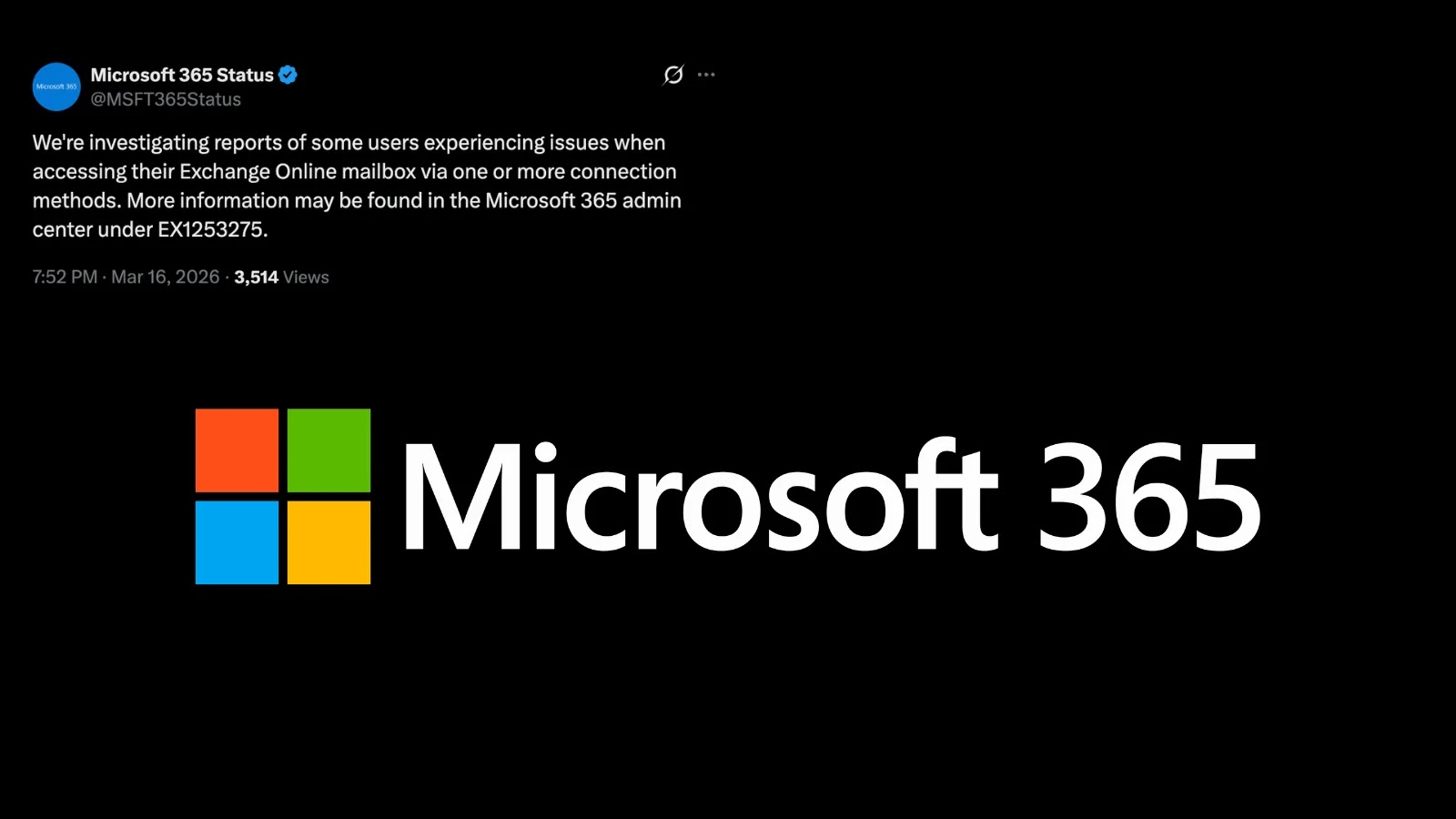
On March 16, 2026, Microsoft began investigating a significant service disruption affecting Exchange Online users worldwide. Many users reported difficulties accessing their mailboxes through various connection methods, including Microsoft Outlook (desktop and mobile), Outlook on the Web (OWA), and third-party email clients utilizing protocols like MAPI, IMAP, or EWS.
Incident Overview
The issue, identified under Microsoft 365’s service health dashboard as EX1253275, prompted multiple status updates throughout the day. Microsoft’s initial acknowledgment came at 4:26 PM IST, with subsequent updates at 4:53 PM and 7:49 PM IST, indicating active efforts by engineering teams to diagnose and resolve the problem.
Exchange Online, Microsoft’s cloud-based email and calendaring platform, serves millions of enterprise and business customers globally. The disruption’s scope suggests that not all access pathways were uniformly affected, with some users experiencing intermittent connectivity issues while others faced persistent failures.
Microsoft’s Response
Microsoft’s 365 service health portal provided continuous updates as the situation evolved. The company advised users and IT administrators to monitor the Microsoft 365 admin center’s Service Health section for real-time information. As of the latest update, Microsoft had not disclosed the exact number of affected tenants or specific geographic regions impacted.
Recommendations for IT Administrators
In response to the outage, IT administrators are advised to:
– Monitor Service Health: Regularly check the Microsoft 365 admin center under Health > Service Health for the latest incident updates.
– Identify Impacted Connection Methods: Determine which specific connection methods are affected within your organization to implement targeted solutions.
– Communicate with End Users: Provide clear and timely information to users about the service status to manage expectations and reduce helpdesk inquiries.
– Implement Workarounds: Encourage users to switch to alternative access methods that remain operational, such as using Outlook on the Web if desktop clients are affected.
– Document the Impact: Keep detailed records of the disruption’s scope and duration for compliance and service level agreement (SLA) purposes.
Historical Context
This incident is part of a series of outages that have affected Microsoft’s cloud services in recent years. Notably, in January 2026, a significant outage impacted multiple Microsoft 365 services, including Outlook, Exchange Online, and Teams, primarily affecting users in North America. The root cause was identified as a portion of service infrastructure that failed to process traffic correctly, leading to widespread disruptions. Microsoft’s engineering teams worked to restore the affected infrastructure and implemented load balancing and traffic redistribution to stabilize the platform. ([pureinfotech.com](https://pureinfotech.com/microsoft-365-outage/?utm_source=openai))
In another instance, on January 8, 2026, Microsoft addressed an Exchange Online service outage that intermittently prevented users from accessing their mailboxes via the Internet Mailbox Access Protocol 4 (IMAP4). The issue was traced to a code conflict that introduced an authentication misconfiguration. Microsoft deployed a fix to resolve the problem and advised users that retries might help regain access to their emails. ([bleepingcomputer.com](https://www.bleepingcomputer.com/news/microsoft/microsoft-exchange-online-outage-blocks-access-to-mailboxes-via-imap4/?utm_source=openai))
Conclusion
As Microsoft continues to investigate and address the current Exchange Online mailbox access issues, users and administrators are encouraged to stay informed through official channels. Implementing recommended workarounds and maintaining open communication with end users can help mitigate the impact of such disruptions. Organizations should also consider reviewing their contingency plans and exploring alternative communication platforms to ensure business continuity during service outages.