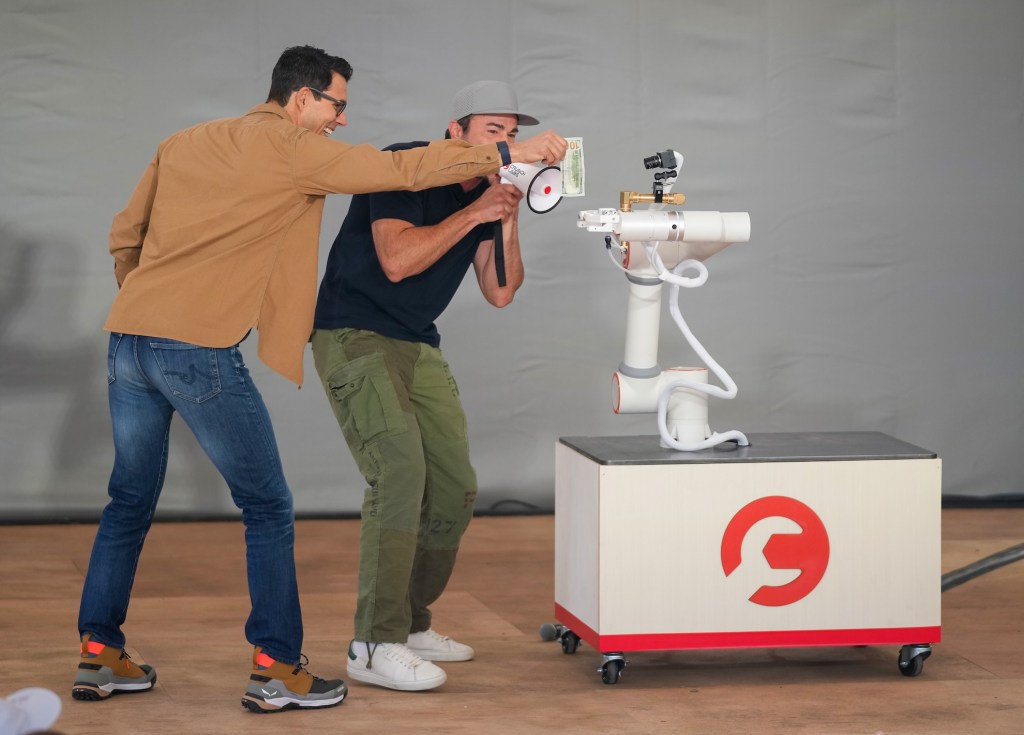
Rethinking Robotics: RJ Scaringe’s Vision for Mind Robotics
RJ Scaringe, the visionary founder and CEO of Rivian, is expanding his entrepreneurial endeavors into the realm of robotics with the establishment of Mind Robotics. This new venture aims to revolutionize industrial automation by addressing the limitations of current robotic systems and introducing more adaptable, human-like dexterity into manufacturing processes.
The Genesis of Mind Robotics
Mind Robotics emerged from Scaringe’s recognition of a significant gap in industrial automation. Traditional robots excel at performing repetitive, dimensionally stable tasks but struggle with operations requiring adaptability and nuanced physical reasoning—capabilities inherent to human workers. Scaringe identified this shortfall as an opportunity to innovate and enhance manufacturing efficiency.
Strategic Independence and Collaboration
Unlike Rivian’s previous spin-offs, such as the micromobility startup Also, which originated within Rivian’s ecosystem, Mind Robotics was conceived as an independent entity. This strategic decision allows for focused development and agility in addressing the specific challenges of industrial robotics. Despite its independence, Mind Robotics maintains a collaborative relationship with Rivian, leveraging data from Rivian’s electric vehicle manufacturing processes to inform and refine its robotic solutions.
Substantial Financial Backing
Since its inception in November 2025, Mind Robotics has secured significant financial support, raising a total of $615 million. This includes a $500 million Series A funding round co-led by prominent venture capital firms Accel and Andreessen Horowitz. This substantial investment underscores the confidence in Mind Robotics’ potential to transform industrial automation.
A Pragmatic Approach to Robotics
In contrast to the industry’s fascination with humanoid robots capable of performing complex maneuvers, Scaringe advocates for a more pragmatic approach. He emphasizes the importance of developing robots that deliver tangible value in manufacturing settings, stating, Doing cartwheels does not create value in manufacturing. This perspective reflects a commitment to functionality and efficiency over spectacle.
Technological Synergies and Future Prospects
Mind Robotics stands to benefit from Rivian’s technological advancements, particularly in custom silicon development. Rivian has been working on proprietary processors designed to enhance autonomous vehicle software. Scaringe envisions these processors being utilized by Mind Robotics, noting, It’s a robotics processor, so it could work really well for that. This synergy highlights the potential for cross-industry applications of Rivian’s technological innovations.
Conclusion
RJ Scaringe’s foray into industrial robotics with Mind Robotics signifies a strategic effort to address existing limitations in automation. By focusing on developing robots with human-like adaptability and dexterity, Mind Robotics aims to enhance manufacturing processes and set new standards in industrial automation. With substantial financial backing and a pragmatic approach, Mind Robotics is poised to make significant contributions to the field of robotics.