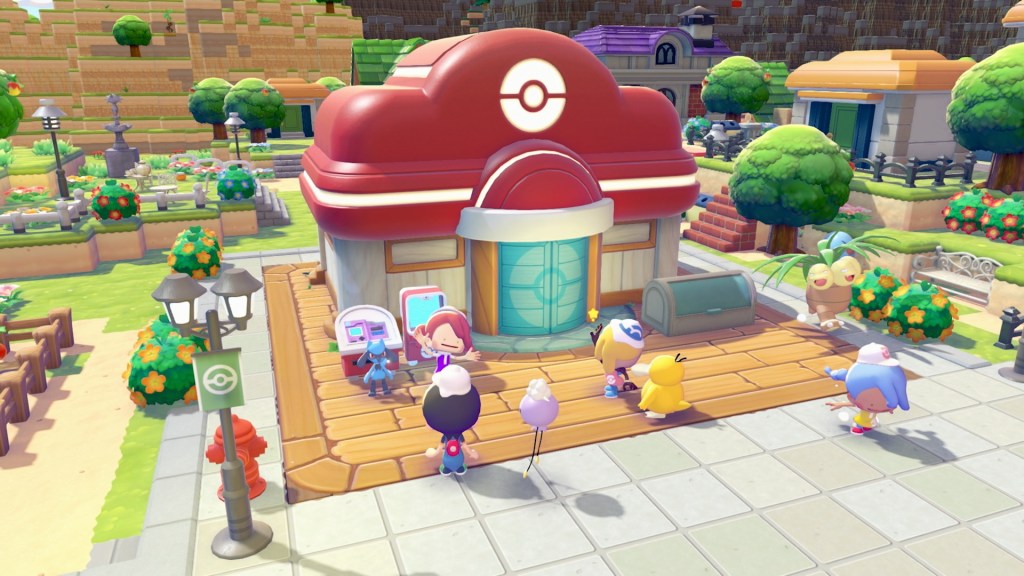
Pokémon Pokopia: Reviving Kanto in a Post-Apocalyptic Adventure
In the latest installment of the Pokémon franchise, Pokémon Pokopia, players are transported to a desolate Kanto region, now a barren wasteland. This innovative life simulation game combines elements reminiscent of Animal Crossing, Stardew Valley, and Minecraft, offering a fresh and immersive experience for both veteran trainers and newcomers.
A New Beginning in a Familiar Land
Upon starting the game, players assume the role of a Ditto that has transformed into its former trainer, who has mysteriously vanished along with all other humans. The journey begins in a secluded cave alongside Professor Tangrowth, a vine Pokémon who hasn’t encountered another being in years. The primary objective is to rehabilitate the devastated Kanto region by constructing habitats and restoring ecosystems to attract and comfort Pokémon.
Engaging Gameplay Mechanics
The game introduces unique mechanics that require players to collaborate with Pokémon to overcome environmental challenges. For instance, to rescue an Onix trapped behind hardened cave walls, players must orchestrate a rainstorm by throwing a celebration, softening the rocks and freeing the Pokémon. This task involves consulting Professor Tangrowth to understand the concept of a party and working with Pokémon like Squirtle to execute the plan.
Another scenario involves protecting a Charmander from rain that extinguishes its tail flame. Players must construct a shelter with the assistance of Timburr and Hitmonchan, showcasing the game’s emphasis on teamwork and problem-solving.
Immersive World-Building
Pokémon Pokopia features four expansive regions, each offering unique environments and challenges. Additionally, a sandbox version of Pallet Town is available for group play, allowing friends to collaborate in rebuilding efforts. The game’s depth is evident, with players reporting over 20 hours of gameplay without completing the main storyline, indicating a rich and engaging experience.
A Narrative Rooted in Environmental Themes
As players progress, they uncover fragments of diary entries, newspaper articles, and letters that piece together the events leading to Kanto’s desolation. These narratives reveal a catastrophic climate event that resulted in the disappearance of humans, leaving Pokémon to fend for themselves. Encounters with altered Pokémon, such as a pale Peakychu that has lost its electrical abilities and a moss-covered Snorlax blending into the landscape, underscore the game’s environmental themes.
The game also includes satirical elements, like a note from an old Poké Mart discussing the shutdown of music streaming services due to rising server costs, leading to a resurgence of CDs. This commentary reflects real-world concerns about technology’s impact on the environment and society.
Critical Acclaim and Commercial Success
Pokémon Pokopia has received widespread acclaim for its innovative gameplay and compelling narrative. The game’s popularity has led to increased demand, with physical copies selling for up to $80 and prompting many to upgrade to the Nintendo Switch 2 to experience the game.
In contrast to recent main series Pokémon games like Pokémon Scarlet and Pokémon Violet, which faced criticism for bugs and lackluster open-world designs, Pokopia stands out for its polished and thoughtfully crafted world. The game’s success suggests a promising direction for future Pokémon titles, blending traditional elements with new mechanics and storytelling approaches.
Conclusion
Pokémon Pokopia offers a refreshing take on the beloved franchise, challenging players to restore a broken world through collaboration and creativity. Its engaging gameplay, rich narrative, and environmental themes make it a standout title that resonates with players on multiple levels.