Apple’s M5 Pro and M5 Max MacBook Pro: Incremental Upgrades at a Premium Price
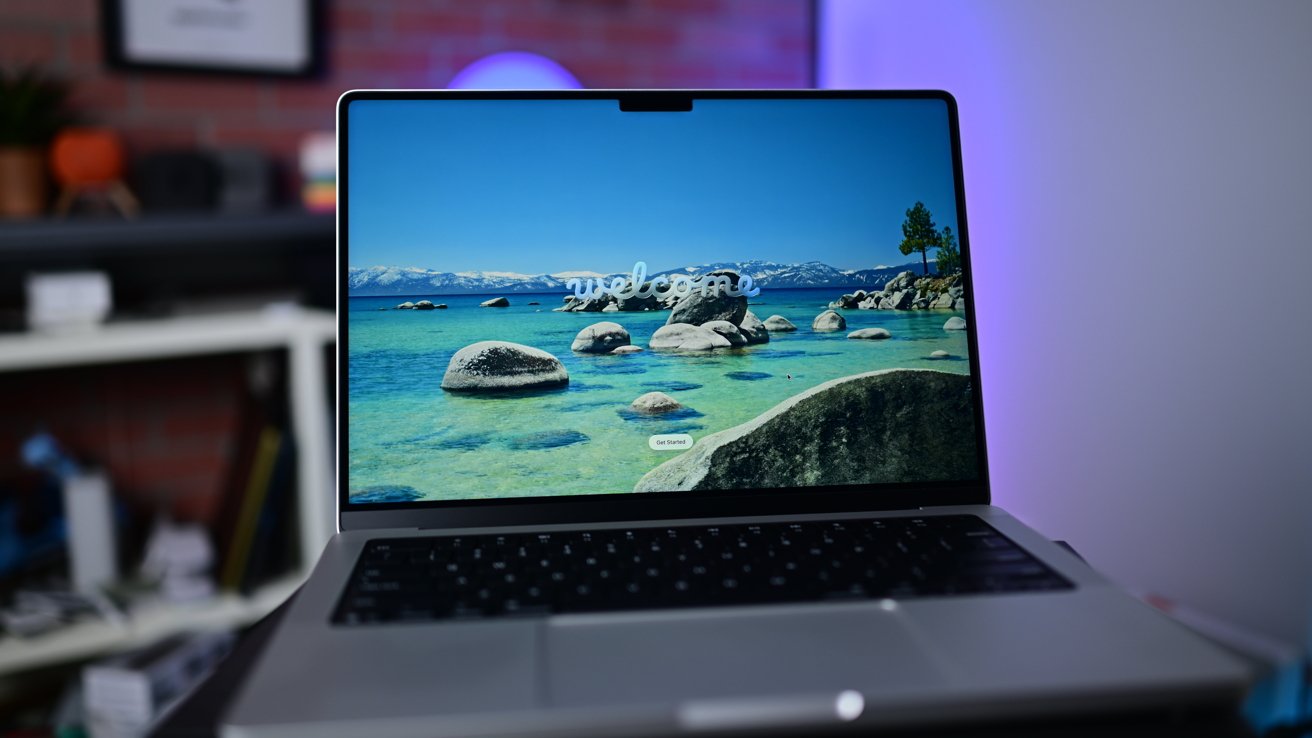
Apple’s latest MacBook Pro models, featuring the M5 Pro and M5 Max chips, have hit the market, bringing with them enhanced performance and a notable price increase. Early reviews suggest that while the performance improvements are commendable, the higher cost and lack of significant design changes may not justify an upgrade for all users.
Performance Enhancements
The M5 Pro and M5 Max chips introduce a dual-die Fusion Architecture, combining two third-generation 3-nanometer dies into a single system on a chip. This design expands CPU performance, GPU compute capabilities, and unified memory bandwidth, positioning the MacBook Pro for AI-intensive professional workflows. Apple claims up to a 30% performance increase in professional tasks compared to the previous M4 Pro and M4 Max models. ([appleinsider.com](https://appleinsider.com/articles/26/03/03/how-m5-pro-and-m5-max-push-macbook-pro-into-high-bandwidth-ai-era?utm_source=openai))
In GPU performance, the M5 Pro supports up to a 20-core GPU, while the M5 Max scales up to 40 GPU cores. Each GPU core includes a Neural Accelerator, contributing to more than four times the peak GPU compute for AI tasks compared to their predecessors. Additionally, the dedicated 16-core Neural Engine has been updated to handle system-level machine learning tasks separately from GPU-based AI computations. ([appleinsider.com](https://appleinsider.com/articles/26/03/03/how-m5-pro-and-m5-max-push-macbook-pro-into-high-bandwidth-ai-era?utm_source=openai))
Memory and Storage Configurations
The M5 Pro supports up to 64GB of unified memory with bandwidth up to 307GB per second, while the M5 Max increases this to 128GB of unified memory and up to 614GB per second of bandwidth. These enhancements are crucial for tasks like large language models, high-resolution video editing, and complex 3D rendering. ([appleinsider.com](https://appleinsider.com/articles/26/03/03/how-m5-pro-and-m5-max-push-macbook-pro-into-high-bandwidth-ai-era?utm_source=openai))
Apple has also updated the base storage configurations. The entry-level M5 14-inch MacBook Pro now starts with 1TB of storage, eliminating the previous 512GB option and increasing the starting price by $100. This change aligns the base model with higher-tier configurations but raises the entry cost for consumers. ([appleinsider.com](https://appleinsider.com/articles/26/03/03/m5-macbook-pro-drops-512gb-gets-100-hike-and-1tb-storage?utm_source=openai))
Pricing Concerns
The pricing of the new MacBook Pro models has been a point of contention. The 16-inch MacBook Pro with the M5 Max chip can be configured up to $7,349, including 128GB of unified memory and 8TB of SSD storage. While Apple has maintained consistent pricing for memory upgrades despite rising DRAM costs, the overall price increase has raised eyebrows among consumers and reviewers alike. ([appleinsider.com](https://appleinsider.com/articles/26/03/03/m5-macbook-pro-maxxed-out-will-cost-you-7349-but-could-have-been-a-lot-worse?utm_source=openai))
Design and Repairability
Externally, the M5 MacBook Pro models retain the design of their predecessors. However, internal refinements have been made to improve repairability. For instance, accessing the battery has become slightly easier, and many ports and the cooling fan are now modular, allowing for independent replacement if damaged. Despite these improvements, the overall repairability score remains modest, reflecting the balance between Apple’s precise engineering and the difficulty of accessing most parts. ([appleinsider.com](https://appleinsider.com/articles/25/10/24/new-macbook-pro-is-slightly-more-repairable-than-before?utm_source=openai))
Review Roundup
Early reviews highlight the performance gains but question the value proposition given the price increase and lack of significant design changes.
– CNET notes that upgrading from 64GB to 128GB of RAM costs an additional $800. They suggest that 48GB of RAM with the M5 Pro model should suffice for most users, and that the base M5 Pro configuration with 24GB of RAM and 1TB of storage offers adequate performance for graphics processing or AI-related tasks. They also point out that the 16-core Neural Engine is consistent across the M5 MacBook lineup, including the M5 MacBook Air, indicating comparable AI performance in everyday situations for students and light users. ([appleinsider.com](https://appleinsider.com/articles/26/03/09/m5-pro-m5-max-macbook-pro-review-roundup-more-of-the-same-at-a-higher-price?utm_source=openai))
– Tom’s Guide describes the M5 Pro MacBook Pro as an iteration rather than a revolution, noting a 15 to 20% performance increase and slightly longer battery life compared to the M4 Pro model. They observed that in gaming tests, running Assassin’s Creed Shadows at 1200p resolution and medium graphical settings delivered 40fps, while Cyberpunk 2077 at the same resolution delivered 22fps, increasing to 65fps with the For this Mac setting enabled. In a battery test involving web surfing over Wi-Fi with the display set to 150 nits of brightness, the laptop lasted 21 hours and 10 minutes, falling short of Apple’s advertised 24-hour battery life but showing improvement over the M4 Pro. They also criticized the $200 price increase, suggesting that the M5 Pro MacBook Pro is suitable for heavy video editing or gaming, while others might be better off with an M5 MacBook Air or the base model 14-inch M5 MacBook Pro. ([appleinsider.com](https://appleinsider.com/articles/26/03/09/m5-pro-m5-max-macbook-pro-review-roundup-more-of-the-same-at-a-higher-price?utm_source=openai))
– Gizmodo focused on gaming performance with the 14-inch MacBook Pro equipped with the M5 Max chip. They reported smooth gameplay in titles like Resident Evil 4, Baldur’s Gate III, and Death Stranding, with Resident Evil 4 delivering 60 fps, increasing to 70 fps in indoor areas, and Death Stranding offering a steady 80 fps in outdoor environments. However, they noted that the M5 Max MacBook Pro is held back by its aging design and lack of meaningful upgrades beyond processing hardware. ([appleinsider.com](https://appleinsider.com/articles/26/03/09/m5-pro-m5-max-macbook-pro-review-roundup-more-of-the-same-at-a-higher-price?utm_source=openai))
Conclusion
The M5 Pro and M5 Max MacBook Pro models offer notable performance enhancements, particularly for AI-intensive and professional workflows. However, the higher price point and minimal design changes may not justify an upgrade for current M4 Pro and M4 Max users. Potential buyers should weigh the performance gains against the increased cost and consider whether the improvements align with their specific needs.