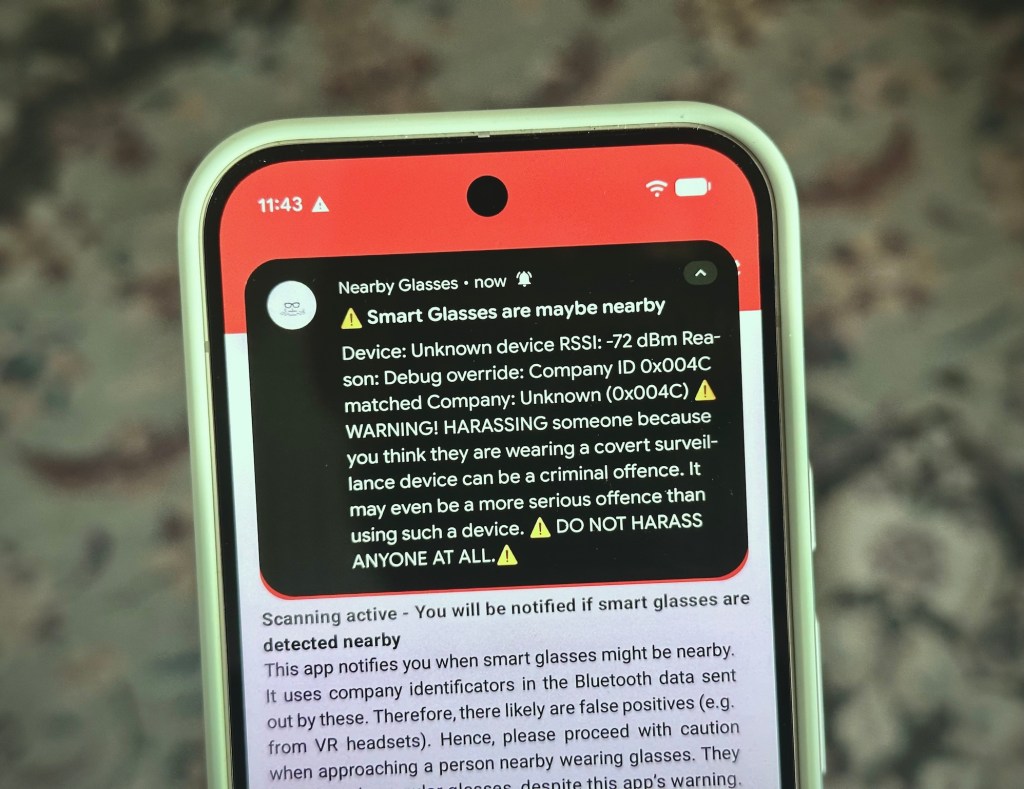
Nearby Glasses App: Your Personal Alert System for Detecting Smart Glasses Surveillance
In an era where technology seamlessly integrates into daily life, the proliferation of smart glasses equipped with recording capabilities has raised significant privacy concerns. These devices, often indistinguishable from regular eyewear, can record audio and video without the knowledge or consent of those being captured. Addressing this issue, developer Yves Jeanrenaud has introduced Nearby Glasses, an Android application designed to alert users when such devices are in proximity.
Understanding the Privacy Implications of Smart Glasses
Smart glasses, such as those produced by Meta and Snap, have become increasingly popular due to their advanced features, including real-time video recording, live language translation, and AI integration. For instance, Meta’s Ray-Ban Meta smart glasses offer functionalities like real-time AI video processing and live language translation, enhancing user experience but also posing potential privacy risks. ([techcrunch.com](https://techcrunch.com/2024/09/25/meta-updates-ray-ban-smart-glasses-with-real-time-ai-video-reminders-and-qr-code-scanning/?utm_source=openai))
The primary concern lies in the covert nature of these devices. Unlike traditional cameras or smartphones, smart glasses can record discreetly, making it challenging for individuals to be aware when they are being filmed. This lack of transparency has led to instances where smart glasses have been misused, such as recording individuals without consent or being employed in sensitive situations without proper authorization.
Introducing the Nearby Glasses App
Nearby Glasses is an innovative solution that continuously scans for Bluetooth signals emitted by wearable devices, specifically targeting those from manufacturers like Meta and Snap. When the app detects a signal from a nearby smart glasses device, it promptly notifies the user, allowing them to be aware of potential recording devices in their vicinity.
The app operates by identifying unique Bluetooth identifiers assigned to specific manufacturers. Users also have the option to add custom identifiers, enabling the detection of a broader range of devices. This feature ensures that the app remains adaptable to new devices entering the market.
Developer’s Motivation and Privacy Advocacy
Yves Jeanrenaud developed Nearby Glasses in response to growing concerns over the misuse of smart glasses. Reports of these devices being used inappropriately, such as during immigration raids or to film individuals without consent, highlighted the need for a tool that empowers individuals to protect their privacy. Jeanrenaud emphasized the importance of consent and the right to privacy, stating that the app aims to provide users with the means to be aware of and respond to potential surveillance.
Addressing Potential Limitations
While Nearby Glasses offers a proactive approach to privacy protection, it is not without limitations. The app may occasionally produce false positives, detecting devices like virtual reality headsets that share similar Bluetooth identifiers with smart glasses. However, given the distinct appearance of VR headsets, users can typically discern between the two. Additionally, the app’s effectiveness is contingent on the Bluetooth signal strength and the device’s broadcasting settings, which can vary among manufacturers.
The Broader Context of Wearable Surveillance
The introduction of Nearby Glasses comes at a time when the public is increasingly wary of always-on recording devices. The integration of facial recognition technology into smart glasses, as reported in recent developments, further amplifies these concerns. ([techcrunch.com](https://techcrunch.com/2026/02/13/meta-plans-to-add-facial-recognition-to-its-smart-glasses-report-claims/?utm_source=openai))
Moreover, the popularity of smart glasses has surged, with reports indicating that Meta’s smart glasses have outsold traditional Ray-Bans in certain regions. ([techcrunch.com](https://techcrunch.com/2024/10/21/metas-smart-glasses-outsell-traditional-ray-bans-in-some-stores-even-before-ai-features-roll-out/?utm_source=openai)) This trend underscores the need for tools like Nearby Glasses to help individuals navigate the evolving landscape of wearable technology and its implications for personal privacy.
Conclusion
As wearable technology continues to advance, balancing innovation with privacy becomes paramount. Nearby Glasses serves as a crucial tool in this endeavor, offering users the ability to detect and respond to potential surveillance by smart glasses. By raising awareness and providing actionable alerts, the app empowers individuals to take control of their privacy in an increasingly connected world.