Salesforce’s Strategic Response to the ‘SaaSpocalypse’ and AI Evolution
In the face of growing concerns about the impact of artificial intelligence (AI) on the software-as-a-service (SaaS) industry, Salesforce has demonstrated resilience and strategic foresight. During its recent fourth-quarter earnings announcement, the company reported a robust $10.7 billion in revenue, marking a 13% increase from the previous year. This growth was bolstered by the acquisition of data management firm Informatica for $8 billion in May. For the fiscal year, Salesforce achieved $41.5 billion in revenue, a 10% year-over-year increase, and projected future revenues between $45.8 billion and $46.2 billion, indicating continued confidence in its growth trajectory.
Despite these positive financial indicators, the SaaS sector has been under pressure due to investor apprehensions that AI agents could disrupt traditional per-employee-seat business models, a phenomenon some have termed the SaaSpocalypse. Addressing these concerns, CEO Marc Benioff acknowledged the challenges but emphasized Salesforce’s adaptability and experience in navigating industry upheavals. He humorously remarked, If there is a SaaSpocalypse, it may be eaten by the Sasquatch because there are a lot of companies using a lot of SaaS because it just got better with agents.
To reinforce its market position and reassure stakeholders, Salesforce announced several strategic initiatives:
– Dividend Increase: The company raised its dividend by nearly 6% to $0.44 per share, reflecting its commitment to delivering shareholder value.
– Share Buyback Program: A new $50 billion share repurchase plan was introduced, aiming to reduce the number of shares in circulation and potentially boost stock prices.
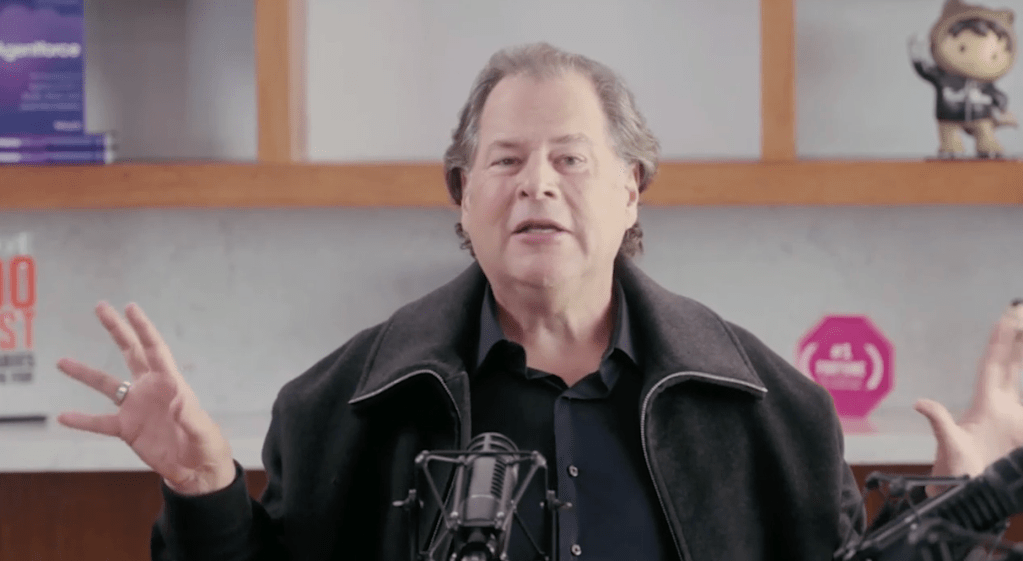
– Innovative Earnings Call Format: Departing from traditional formats, the earnings call featured Benioff interviewing three customers—CEOs from SharkNinja, Wyndham Hotels and Resorts, and SaaStr—who shared positive experiences with Salesforce’s AI agent products.
Furthermore, Salesforce introduced a new metric, Agentic Work Units (AWU), designed to measure the effectiveness of AI agents in completing tasks beyond mere text generation. This metric aims to provide a more meaningful assessment of AI’s impact on enterprise operations.
In response to concerns about AI’s potential to disrupt the SaaS industry, Benioff has previously expressed skepticism about overhyped AI claims, particularly criticizing competitors like Microsoft for setting unrealistic expectations. He emphasized the importance of practical AI applications that deliver tangible value to customers.
Salesforce’s proactive measures and strategic investments underscore its commitment to innovation and adaptability in an evolving technological landscape. By embracing AI advancements and addressing industry challenges head-on, the company aims to maintain its leadership position in the SaaS market.