OpenAI’s ChatGPT Sees Surge Among Young Indian Professionals
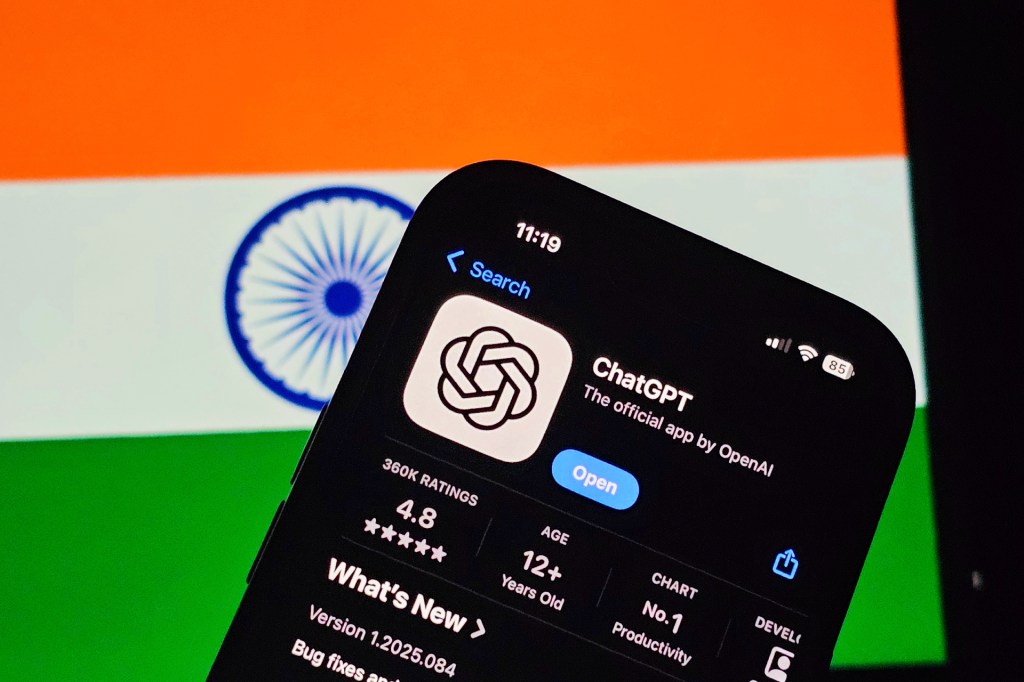
OpenAI’s ChatGPT has experienced a significant surge in usage among young adults in India, with individuals aged 18 to 24 accounting for nearly 50% of the platform’s interactions. Expanding the demographic slightly, users under 30 represent an impressive 80% of ChatGPT’s user base in the country.
A substantial portion of this engagement is work-related, as 35% of all messages from Indian users pertain to professional tasks, surpassing the global average of 30%. This trend underscores the platform’s growing role as a valuable tool for India’s burgeoning workforce.
OpenAI’s coding assistant, Codex, has also gained remarkable traction in India. Indian users engage with Codex three times more than the global median, and its weekly usage has quadrupled since the release of its Mac application two weeks ago. Additionally, Indian users pose three times as many coding-related queries compared to the global average, highlighting the country’s robust interest in software development and technological innovation.
These findings align with data from Anthropic, which reported that 45.2% of tasks handled by their AI assistant, Claude, in India are related to software development.
Beyond professional applications, Indian users turn to ChatGPT for various purposes:
– Guidance: 35% of messages seek advice or direction.
– General Information: 20% of interactions involve inquiries about general knowledge.
– Writing Assistance: Another 20% request help with content creation or writing tasks.
India has emerged as OpenAI’s second-largest market, boasting over 100 million weekly users. To cater to this expanding user base, OpenAI has introduced a subscription tier priced below $5, making its services more accessible to a broader audience. In a strategic move to further encourage adoption, the company offered a one-year free subscription to the ChatGPT Go plan for Indian users who signed up during a limited promotional period starting November 4, 2025.
OpenAI’s Chief Economist, Ronnie Chatterji, emphasized the rapid pace of AI adoption in India, stating, AI adoption is moving faster than our ability to measure it – and that’s a challenge for anyone trying to make smart decisions. Signals is our way of putting real-world evidence on the table, so India’s AI debate can be grounded in facts, not hype.
The company’s commitment to the Indian market is evident through its recent activities:
– AI Impact Summit: OpenAI participated in a major AI Impact Summit held in New Delhi, engaging with industry leaders and policymakers to discuss the future of AI in India.
– Expansion Plans: The company announced plans to open new offices in Mumbai and Bengaluru, aiming to strengthen its presence and foster closer collaboration with local talent and businesses.
– Strategic Partnerships: OpenAI has entered into a significant partnership with the Tata Group to secure 100 megawatts of AI compute capacity. This collaboration also involves distributing ChatGPT Enterprise within Tata Consultancy Services (TCS), Tata’s IT services subsidiary.
Furthermore, OpenAI has forged agreements with several prominent Indian companies, including fintech firm Pine Labs, travel platforms Ixigo and MakeMyTrip, and food and grocery delivery service Eternal. These partnerships aim to integrate OpenAI’s AI tools into various sectors, enhancing efficiency and innovation.
In the educational domain, OpenAI has collaborated with institutions to provide its tools to over 100,000 students over the next six years, demonstrating a commitment to nurturing the next generation of AI professionals in India.
The surge in ChatGPT’s popularity among young Indian professionals reflects a broader trend of increasing AI adoption in the country. As AI technologies become more integrated into daily life and work, India’s youthful and tech-savvy population is poised to play a pivotal role in shaping the future of AI on a global scale.