PentAGI: Revolutionizing Penetration Testing with AI-Driven Automation and Comprehensive Security Tool Integration
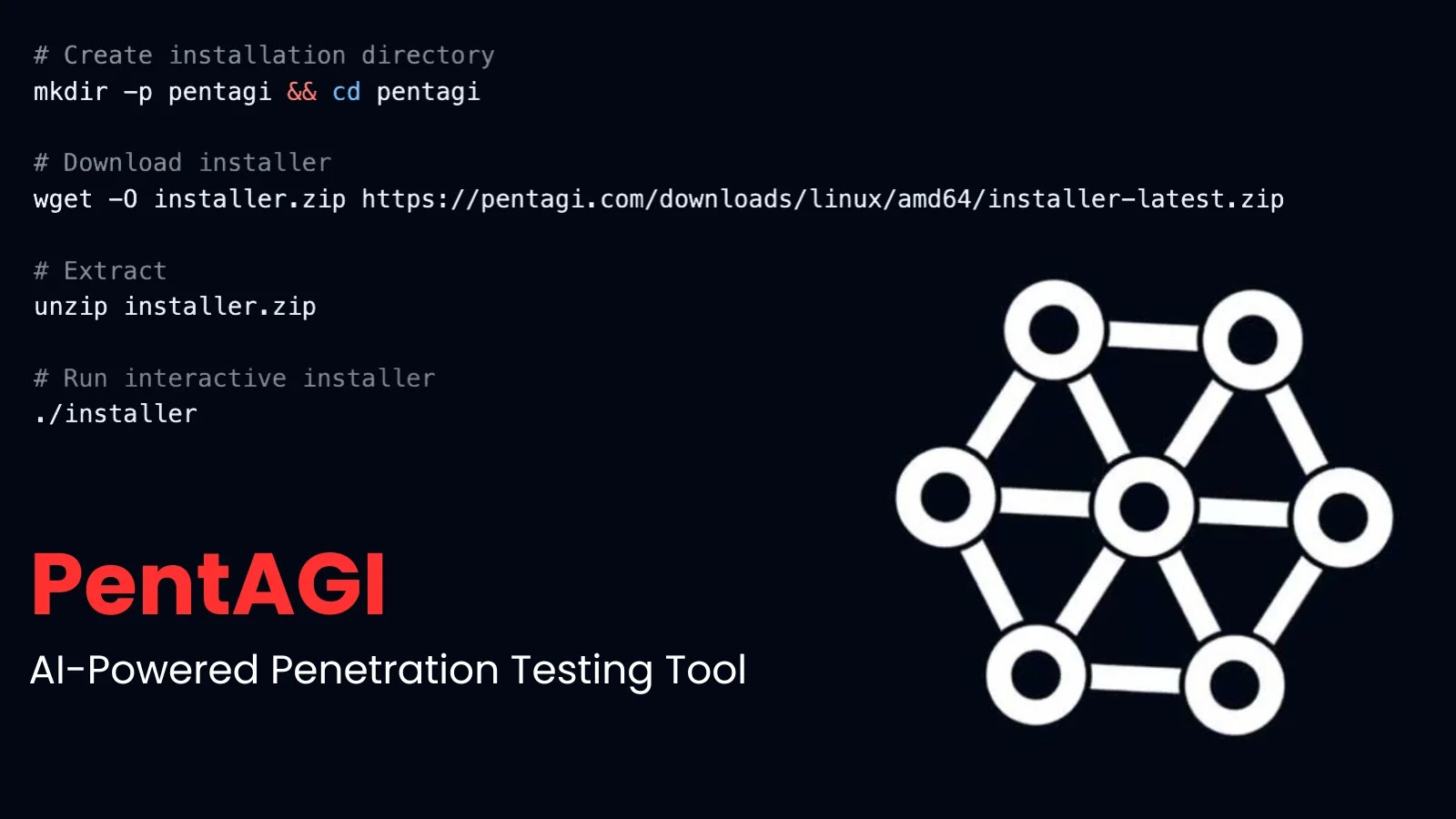
In the rapidly evolving field of cybersecurity, the demand for efficient and comprehensive penetration testing solutions has never been greater. Addressing this need, VXControl introduced PentAGI in early 2025, an open-source platform that leverages artificial intelligence to automate complex penetration testing workflows. By integrating over 20 professional security tools, including Nmap for network discovery, Metasploit for exploitation, and sqlmap for database attacks, PentAGI empowers security professionals to conduct thorough assessments with unprecedented efficiency.
Autonomous Multi-Agent System
At the heart of PentAGI lies a sophisticated multi-agent system comprising three distinct roles:
1. Researcher: Gathers intelligence and identifies potential vulnerabilities.
2. Developer: Crafts tailored exploits based on the researcher’s findings.
3. Executor: Deploys the exploits and assesses their impact.
This collaborative approach enables dynamic planning and execution of penetration tests, eliminating the need for manual scripting. The system’s long-term memory allows it to recall past successes and adapt strategies accordingly, ensuring continuous improvement in testing methodologies.
Integration with Leading Language Models
PentAGI’s intelligence is further enhanced through integration with leading large language models (LLMs) such as OpenAI’s GPT-5, Anthropic’s Claude Sonnet, Google’s Gemini, and local models like Ollama. This flexibility allows for deployment across various environments, from cloud-based APIs to on-premises inference systems. Additionally, external search APIs like Tavily, Perplexity, and DuckDuckGo provide real-time web intelligence, while a built-in scraper securely gathers target-specific data.
Comprehensive Reporting and Data Management
The platform excels in generating detailed reports that include exploitation guides, which are persistently stored in PostgreSQL databases with pgvector for semantic querying. Visualization of agent performance is facilitated through Grafana dashboards, offering clear insights into the testing process. To prevent context overflow in LLMs, PentAGI employs a sophisticated chain summarization mechanism that preserves critical conversation history through configurable QA pairs and byte-limited sections. This ensures coherent multi-turn reasoning, even during extended penetration tests.
Technical Architecture and Deployment
PentAGI’s robust architecture is built on a microservices framework featuring:
– Frontend: Developed with React and TypeScript for a responsive user interface.
– Backend: Utilizes Go-based REST/GraphQL services to handle complex operations.
– Task Queues: Implements asynchronous task queues to manage scalability effectively.
Knowledge graphs via Neo4j and Graphiti track entity relationships, enhancing the contextual understanding of vulnerabilities. The monitoring stack, comprising OpenTelemetry, Jaeger, Loki, and VictoriaMetrics, provides end-to-end observability, while Langfuse analyzes LLM traces to optimize performance.
Deployment is streamlined through Docker Compose, allowing users to clone the repository, configure environment variables with API keys, and launch the platform with a single command. The system becomes accessible at localhost:8443, facilitating easy integration into existing workflows. For production environments, PentAGI supports horizontal scaling, OAuth authentication (including GitHub and Google), and worker nodes for air-gapped execution. Security features such as network isolation, TLS encryption, and proxy support for LLM and search traffic ensure a secure operational environment.
Addressing Key Challenges in AI-Powered Penetration Testing
As AI continues to transform penetration testing, PentAGI addresses several critical challenges:
– Tool Chaining: By integrating multiple security tools into a cohesive system, PentAGI simplifies the testing process and reduces the complexity associated with managing disparate tools.
– Report Automation: The platform’s ability to generate comprehensive reports with exploitation guides streamlines documentation, saving time and enhancing the clarity of findings.
– Data Control: Security teams can self-host PentAGI, ensuring complete control over sensitive data and compliance with organizational policies.
Users should be mindful of managing LLM costs and rate limits, particularly when utilizing services like AWS Bedrock. By proactively monitoring and adjusting usage, organizations can optimize performance while controlling expenses.
Conclusion
PentAGI represents a significant advancement in the field of penetration testing, combining AI-driven automation with a comprehensive suite of security tools. Its autonomous multi-agent system, integration with leading LLMs, and robust technical architecture make it a valuable asset for security professionals seeking to enhance their testing capabilities. As the cybersecurity landscape continues to evolve, tools like PentAGI will play a crucial role in identifying and mitigating vulnerabilities, ultimately contributing to a more secure digital environment.