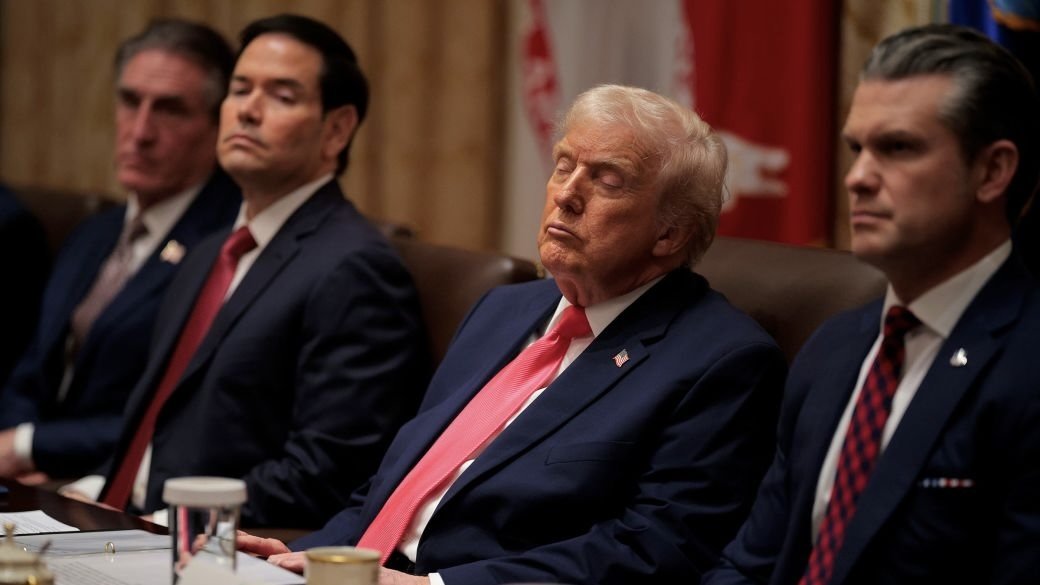
President Trump Implements 10% Global Import Tax Following Supreme Court Ruling
In a swift response to the Supreme Court’s recent decision invalidating the administration’s reciprocal tariffs, President Donald Trump has announced the imposition of a 10% global import tax. This move comes after the Court’s 6-3 ruling that the previous tariffs, enacted under the International Emergency Economic Powers Act, exceeded presidential authority and required congressional approval.
The now-overturned tariffs had significant economic implications, costing companies like Apple approximately $2 billion. In light of the Court’s decision, the administration is leveraging Section 122 of the Trade Act of 1974 to implement the new tariff. This statute permits the President to impose temporary tariffs of up to 15% for a duration of 150 days, unless Congress votes to extend them.
Implications for the Economy and Businesses
While Section 122 offers a narrower legal framework compared to the previous approach, the economic impact remains substantial. The statute’s design as a short-term balance-of-payments tool means that, despite its temporary nature, the 10% global tariff functions as an immediate tax increase on imports.
Businesses are now faced with the challenge of adjusting pricing strategies, renegotiating contracts, and managing investor relations amidst this sudden change in trade policy. Companies like Apple, which have already invested heavily in reorganizing manufacturing and logistics to adapt to prior tariffs, now confront renewed uncertainty. The new levy introduces additional complexities before the financial repercussions of previous tariffs have been fully addressed.
Uniform Tariff Rate and Supply Chain Considerations
A key aspect of Section 122 is its requirement for non-discriminatory treatment, mandating a uniform tariff rate across all countries. This stipulation eliminates the administration’s earlier strategy of applying tariffs on a country-by-country basis, thereby removing the ability to selectively influence trading partners. Consequently, the 10% tariff applies equally to imports from nations integral to global supply chains, including China, India, Vietnam, and South Korea.
Efforts by companies to diversify supply chains to mitigate geopolitical risks are now undermined by this global tariff. Regardless of the origin of imports, businesses are subject to the same tax, effectively penalizing those that have adapted to previous trade disruptions by shifting production to different countries.
Impact on Consumers and Domestic Economy
It’s important to note that tariffs are paid by U.S. importers at the point of entry, and these costs are typically passed on to consumers through higher prices or absorbed by businesses through reduced profit margins. The 10% levy is expected to affect a wide range of products, including smartphones, computers, televisions, networking equipment, and everyday consumer goods.
Economic analyses have consistently shown that previous tariff rounds have been borne by American businesses and households, with minimal impact on foreign exporters beyond reduced order volumes. Companies like Apple have previously managed to avoid significant retail price increases by absorbing costs and adjusting production strategies. However, the introduction of a global tariff tests the sustainability of this approach, especially if Congress opts to extend the measure beyond its initial 150-day limit.
Legislative and Judicial Oversight
Under Section 122, the imposed tariffs are set to expire after 150 days unless Congress intervenes to extend them. Lawmakers are now faced with the decision to allow the tariff to lapse or to vote on extending what effectively amounts to a broad import tax.
The Supreme Court’s recent rejection of expansive unilateral tariff claims suggests that new legal challenges are likely if businesses contest the application of Section 122. For companies heavily reliant on imports, such as Apple, this development introduces a familiar pattern of policy-induced instability.
In summary, while the administration’s use of Section 122 provides a temporary legal basis for the new tariff, it also introduces immediate economic challenges. The policy, framed as a tool for economic leverage, operates in practice as a domestic tax increase implemented through executive action. This results in renewed supply chain instability and necessitates another round of strategic planning centered around policy changes rather than market demand.