Redwood Materials’ Energy Storage Surge Amid AI Data Center Expansion
In the rapidly evolving landscape of artificial intelligence (AI), the demand for robust and reliable energy solutions has become paramount. Redwood Materials, a company initially recognized for its battery recycling and materials production, has strategically pivoted to address this burgeoning need by launching a dynamic energy storage division.
Genesis and Growth of Redwood’s Energy Storage Division
Founded in 2017 by former Tesla Chief Technology Officer JB Straubel, Redwood Materials embarked on a mission to establish a circular supply chain for batteries. The company’s initial focus was on recycling scrap from battery production and consumer electronics, supplying processed materials to clients like Panasonic. Over time, Redwood expanded into battery materials production, including cathodes for battery cells.
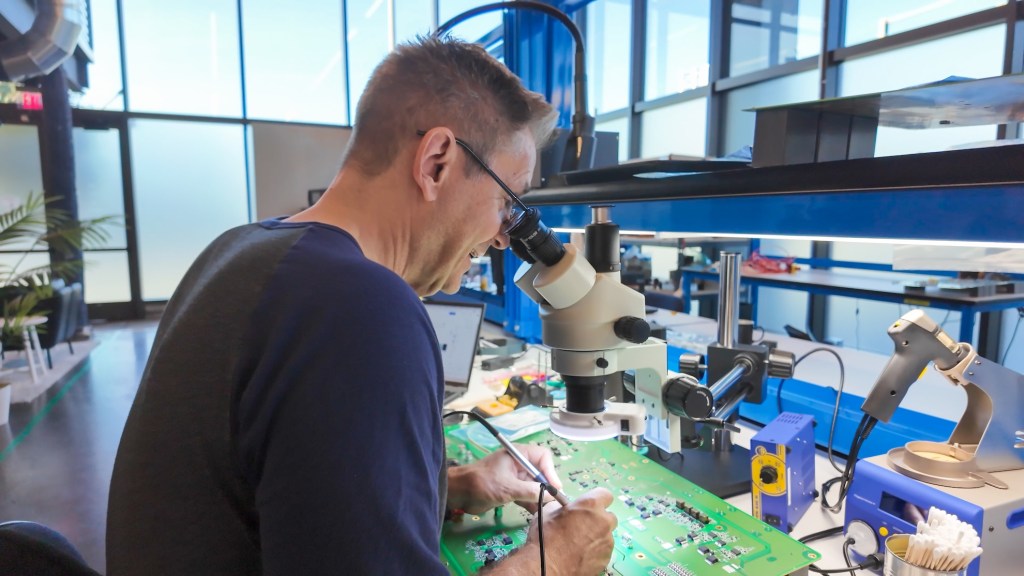
Recognizing the escalating energy demands of AI data centers, Redwood launched its energy storage division in June 2025. This strategic move was underscored by the rapid expansion of its San Francisco research and development lab, which quadrupled in size to a 55,000-square-foot facility and now employs nearly 100 professionals. This facility serves as the hub where engineers integrate hardware, software, and power electronics to develop energy storage systems tailored for data centers, AI computing, and other large-scale industrial applications.
Strategic Investments and Collaborations
To fuel this ambitious expansion, Redwood Materials secured a $425 million Series E funding round. Notably, tech giants Google and Nvidia participated in this round, signaling strong industry confidence in Redwood’s vision. Claire McConnell, Redwood’s Vice President of Business Development, highlighted the critical role of AI data centers in driving the company’s focus, while also acknowledging the potential applications of their systems in supporting renewable energy projects like solar and wind.
Addressing the Energy Challenges of AI Data Centers
The proliferation of AI data centers has introduced unprecedented challenges in energy consumption and grid connectivity. Developers often face prolonged timelines, sometimes exceeding five years, to establish grid connections, even as the demand for data centers intensifies. Redwood’s energy storage solutions aim to bridge this gap by providing reliable and efficient power sources, thereby enabling data centers to operate seamlessly without overburdening existing power grids.
Innovative Applications and Future Prospects
Redwood’s approach involves repurposing retired electric vehicle (EV) batteries to create energy storage systems. This not only extends the lifecycle of EV batteries but also offers a sustainable solution to meet the energy demands of AI data centers. For instance, in collaboration with Crusoe, a startup specializing in modular data centers, Redwood deployed a system comprising 805 retired EV batteries. This setup generates 12 megawatts of power with a capacity of 63 megawatt-hours, effectively powering a 2,000 GPU modular data center.
The success of such projects has attracted attention from hyperscalers—companies operating massive cloud computing data centers consuming hundreds of megawatts of power. Redwood is actively working on projects ranging from hundreds of megawatt-hours to multiple gigawatt-hours, indicating a significant scaling of their energy storage solutions to meet the growing demands of the AI industry.
Industry Context and Competitive Landscape
The AI data center boom has spurred various initiatives aimed at addressing the associated energy challenges. For example, Alphabet’s spin-off, Sidewalk Infrastructure Partners, launched Verrus, a data center concept built around battery microgrids to manage energy distribution efficiently. Similarly, companies like C2i Semiconductors are developing system-level power solutions to reduce energy losses within data centers.
Moreover, major tech companies are making substantial investments in AI infrastructure. Meta announced the construction of a 5-gigawatt AI data center named Hyperion, while OpenAI, in partnership with Oracle and SoftBank, is building five new AI data centers under the Stargate project, aiming to add 7 gigawatts of capacity.
Conclusion
Redwood Materials’ strategic expansion into energy storage positions the company at the forefront of addressing the critical energy needs of the burgeoning AI data center industry. By leveraging recycled EV batteries and securing substantial investments, Redwood is not only contributing to sustainable energy solutions but also playing a pivotal role in enabling the growth and efficiency of AI technologies.