World Labs Secures $1 Billion Funding, Including $200 Million from Autodesk, to Integrate AI-Generated 3D Environments into Design Workflows
World Labs, the innovative AI startup founded by renowned Stanford professor Fei-Fei Li, has successfully raised $1 billion in its latest funding round. This substantial investment includes a significant $200 million contribution from Autodesk, a leader in design and engineering software. Other notable participants in this round are AMD, Emerson Collective, Fidelity, and Nvidia.
Emerging from stealth mode in 2024 with an initial $230 million at a $1 billion valuation, World Labs has rapidly gained attention for its groundbreaking work in artificial intelligence. While the company has not disclosed its current valuation post-funding, recent reports suggest it was aiming for a $5 billion valuation.
The collaboration between World Labs and Autodesk is set to revolutionize the integration of AI-generated 3D environments into existing design workflows. By combining World Labs’ advanced AI models, capable of generating and reasoning about immersive 3D spaces, with Autodesk’s comprehensive suite of design tools, the partnership aims to enhance the capabilities available to designers and engineers. The initial focus will be on applications within the entertainment industry, exploring how these AI-generated environments can be utilized in media and gaming.
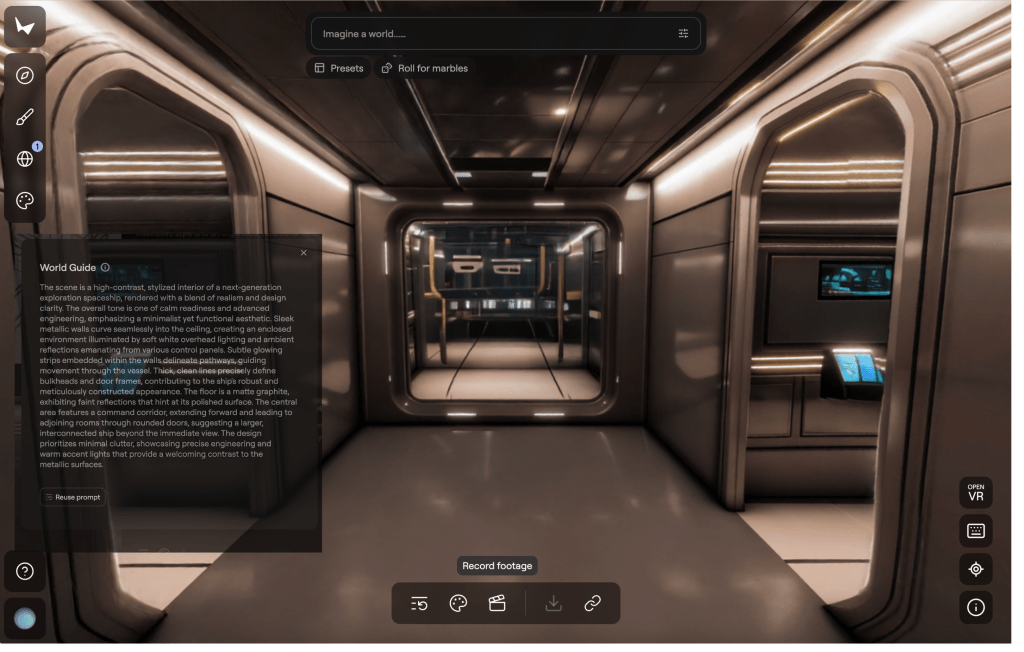
For World Labs, Autodesk’s investment serves as a strong endorsement of its commercial viability. The company’s first product, Marble, launched in November 2025, allows users to create editable and downloadable 3D environments. This tool has already demonstrated significant potential in transforming how designers and creators approach 3D modeling.
Autodesk, known for its extensive portfolio in 3D computer-aided design (CAD) software, plays a pivotal role in various industries, including architecture, engineering, construction, manufacturing, and entertainment. The investment in World Labs aligns with Autodesk’s strategic vision to incorporate advanced spatial AI into its core offerings, thereby enhancing the design and creation process for its users.
Fei-Fei Li expressed her enthusiasm for the partnership, stating, Autodesk has long helped people think spatially and solve real-world problems and, together, we share a clear purpose: building physical AI that augments human creativity and puts more powerful tools in the hands of designers, builders, and creators.
As part of the agreement, Autodesk will take on an advisory role for World Labs, with both companies collaborating at the research and model development levels. Daron Green, Autodesk’s chief scientist, mentioned that while the partnership is still in its early stages, there is potential for mutual integration of models in various settings. He envisioned scenarios where customers might begin with a world-model-based sketch in World Labs and then refine specific design aspects using Autodesk’s technology.
The collaboration is set to commence with a focus on media and entertainment applications. Many companies developing world models, including Google DeepMind and Runway, view gaming and interactive entertainment as initial markets for their technologies. Autodesk’s existing relationships with major media production companies and its experience in training models for character animation position it well to explore these new applications.
This partnership also supports Autodesk’s broader initiative to integrate more AI features across its software portfolio. The company is developing neural CAD, a new type of generative AI model trained on geometric data that can reason about components and entire systems. This model aims to generate functional 3D models with an understanding of real-world applications, moving beyond mere image generation.
By collaborating with World Labs, Autodesk seeks to extend its capabilities beyond individual design files toward more comprehensive digital representations of the physical world. Green anticipates that combining different AI systems, including large language models, world models, and neural CAD, will enhance design processes for Autodesk’s customers.
Fei-Fei Li emphasized the importance of this advancement, stating, If AI is to be truly useful, it must understand worlds, not just words. Worlds are governed by geometry, physics, and dynamics, and reconciling the semantic, spatial, and physical is the next great frontier of AI.
This significant funding and strategic partnership mark a pivotal moment in the evolution of AI integration into design workflows, promising to unlock new possibilities for creators and engineers across various industries.