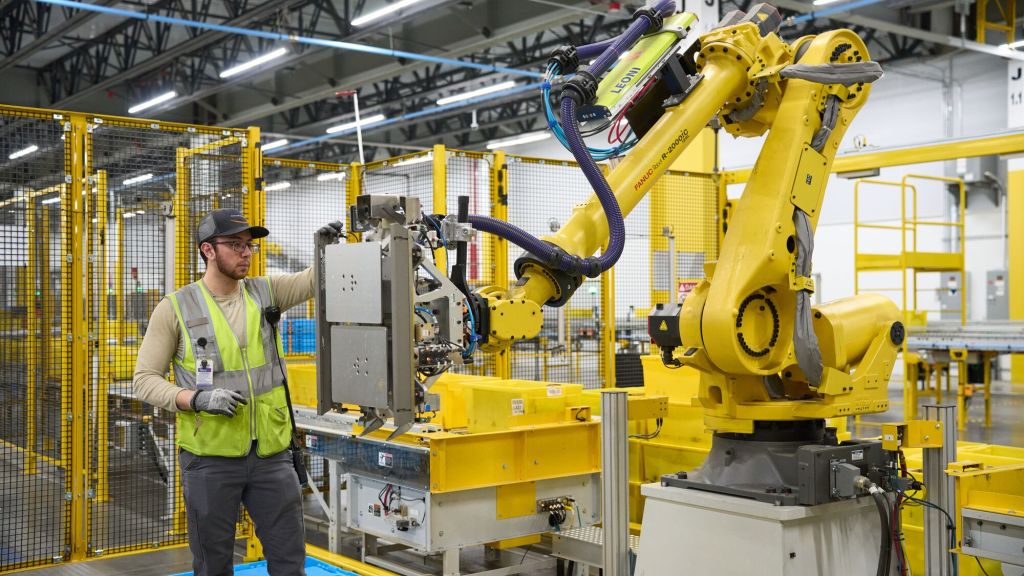
Amazon Discontinues Blue Jay Robotics Project After Brief Trial
Amazon has decided to terminate its Blue Jay warehouse robotics initiative, a mere few months following its initial introduction. The Blue Jay robot, characterized by its multiple arms designed for sorting and transporting packages, was unveiled in October and underwent testing at a South Carolina facility. Notably, Amazon developed Blue Jay in approximately one year, a significantly shorter timeframe compared to its previous robotic projects, a feat attributed to advancements in artificial intelligence.
According to Amazon spokesperson Terrence Clark, Blue Jay was introduced as a prototype, a detail not specified in the original press release. Clark emphasized that the core technologies developed for Blue Jay will be integrated into other robotic manipulation programs within the company. Employees who were part of the Blue Jay project are being reassigned to these new initiatives.
Clark stated, We’re always experimenting with new ways to improve the customer experience and make work safer, more efficient, and more engaging for our employees. In this case, we’re actually accelerating the use of the underlying technology developed for Blue Jay, and nearly all of the technologies are being carried over and will continue to support employees across our network.
In the previous year, Amazon also introduced the Vulcan robot, designed for use in warehouse storage compartments. Vulcan features two arms: one for rearranging and moving items within compartments, and another equipped with a camera and suction cups to grasp goods. This robot is capable of feeling the objects it interacts with, having been trained on data from real-world interactions.
Amazon’s journey into robotics began in 2012 with the acquisition of Kiva Systems, a company specializing in warehouse automation technology. This acquisition laid the groundwork for Amazon’s fulfillment operations, and by July of the previous year, the company had surpassed one million robots operating within its warehouses.