Helion Energy Achieves 150 Million Degrees Celsius in Fusion Reactor, Advancing Toward 2028 Commercialization Goal
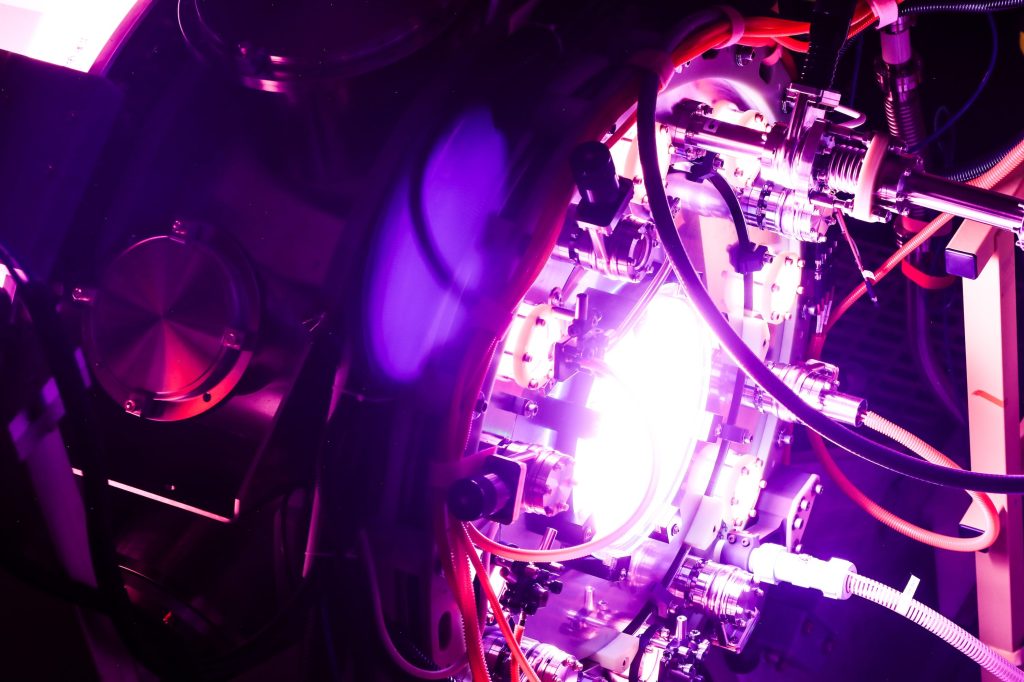
Helion Energy, a fusion energy startup based in Everett, Washington, has announced a significant milestone in its pursuit of commercial fusion power. The company’s Polaris prototype reactor has successfully achieved plasma temperatures of 150 million degrees Celsius, marking substantial progress toward the operational requirements of a commercial fusion power plant.
David Kirtley, Helion’s co-founder and CEO, expressed enthusiasm about this achievement, stating, We’re obviously really excited to be able to get to this place. This temperature milestone represents three-quarters of the 200 million degrees Celsius target that Helion believes is necessary for efficient commercial fusion operations.
In addition to reaching these extreme temperatures, Polaris is operating using a deuterium-tritium fuel mixture, a combination of two hydrogen isotopes. Kirtley noted that this development positions Helion as the first fusion company to utilize this specific fuel combination. He highlighted the impact of this advancement, stating, We were able to see the fusion power output increase dramatically as expected in the form of heat.
The fusion energy sector is witnessing a surge of investment and competition, with numerous companies striving to commercialize fusion power—a potentially limitless and clean energy source. Recent developments include Inertia Enterprises announcing a $450 million Series A funding round, Type One Energy in the process of raising $250 million, and Commonwealth Fusion Systems securing $863 million from investors such as Google and Nvidia. Helion itself raised $425 million last year from a group that included Sam Altman, Mithril, Lightspeed, and SoftBank.
While many fusion startups are targeting the early 2030s to deliver electricity to the grid, Helion has set a more ambitious timeline. The company has a contract with Microsoft to supply electricity starting in 2028. This power will be generated by a larger commercial reactor named Orion, which is currently under construction, rather than the Polaris prototype.
Helion’s reactor design employs a field-reversed configuration, differing from the more common tokamak design used by other companies like Commonwealth Fusion Systems. In Helion’s design, the reactor chamber resembles an hourglass. Fuel is injected and transformed into plasma at the wide ends, then accelerated toward each other by magnets. Upon merging, the plasmas reach initial temperatures between 10 million to 20 million degrees Celsius. Subsequent magnetic compression elevates the temperature to 150 million degrees Celsius, all occurring in less than a millisecond.
A distinctive feature of Helion’s approach is its method of energy extraction. Instead of converting fusion-generated heat into electricity via steam turbines, Helion harnesses the fusion reaction’s magnetic field to generate electricity directly. Each fusion pulse induces an electrical current in the reactor’s magnets, which can be harvested efficiently. This direct electricity recovery method aims to enhance efficiency compared to traditional approaches.
Over the past year, Helion has refined its reactor circuits to improve electricity recovery. Currently utilizing deuterium-tritium fuel, the company plans to transition to deuterium-helium-3 fuel in the future. This fuel choice is expected to produce more charged particles, which interact more effectively with the reactor’s magnetic fields, aligning with Helion’s direct electricity generation strategy.
Helion’s ultimate objective is to achieve plasma temperatures of 200 million degrees Celsius, a target higher than those of other fusion companies. Kirtley explained, We believe that at 200 million degrees, that’s where you get into that optimal sweet spot of where you want to operate a power plant.
When questioned about reaching scientific breakeven—the point where a fusion reaction generates more energy than it consumes—Kirtley emphasized Helion’s focus on electricity production rather than purely scientific milestones.
Given the scarcity of helium-3 on Earth, Helion plans to produce its own fuel by fusing deuterium nuclei to generate initial batches. During regular operations, while the primary power source will be deuterium-helium-3 fusion, some reactions will involve deuterium-deuterium fusion, producing helium-3 that can be purified and reused.
Kirtley expressed optimism about the fuel production process, stating, It’s been a pleasant surprise in that a lot of that technology has been easier to do than maybe we expected. He added that Helion has achieved high efficiencies in both throughput and purity of helium-3 production.
Currently, Helion is the only fusion startup utilizing helium-3 in its fuel. However, Kirtley anticipates that other companies may adopt this approach in the future and indicated openness to supplying helium-3 to them. He remarked, Other folks—as they come along and recognize that they want to do this approach of direct electricity recovery and see the efficiency gains from it—will want to be using helium-3 fuel as well.
In parallel with its experiments on Polaris, Helion is constructing Orion, a 50-megawatt fusion reactor designed to fulfill its contract with Microsoft. Kirtley emphasized that Polaris is a step toward scaled power plants, stating, Our ultimate goal is not to build and deliver Polaris. That’s a step along the way towards scaled power plants.