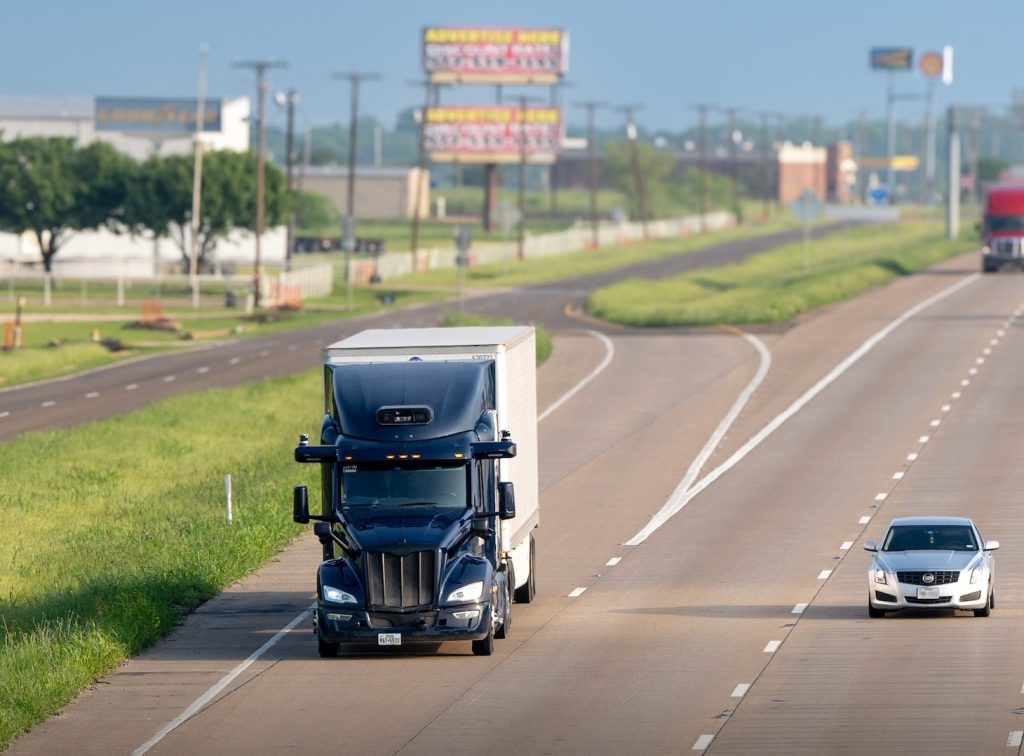
Aurora’s Driverless Trucks Redefine Long-Haul Freight Efficiency
Aurora Innovation has achieved a significant milestone in autonomous transportation by deploying self-driving trucks capable of completing a 1,000-mile journey between Fort Worth, Texas, and Phoenix, Arizona, without stops. This advancement not only surpasses the capabilities of human drivers but also introduces transformative potential for the logistics industry.
Unprecedented Efficiency in Freight Transport
Aurora’s driverless trucks complete the 1,000-mile route in approximately 15 hours. In contrast, human drivers are subject to federal regulations that limit driving to 11 hours within a 14-hour period, necessitating rest breaks and extending total transit times. These regulations are designed to ensure safety but inherently limit the efficiency of human-operated freight transport.
Chris Urmson, Aurora’s co-founder and CEO, highlighted the broader implications of this achievement during a recent earnings call: This represents more than a technological achievement. It is the dawn of a superhuman future for freight.
Economic Implications and Industry Impact
The ability to operate continuously without the constraints of human limitations offers substantial economic benefits. Aurora’s clients, including Uber Freight, Werner, FedEx, and Schneider, stand to gain from reduced transit times and increased reliability. Early adopters like Hirschbach have already recognized the value, noting potential reductions in delivery times by nearly half.
Aurora’s expansion across the Sun Belt region of the United States underscores its commitment to revolutionizing freight transport. The company currently operates driverless trucks on multiple routes, including:
– Dallas to Houston
– Fort Worth to El Paso
– El Paso to Phoenix
– Fort Worth to Phoenix
– Laredo to Dallas
This network expansion signifies Aurora’s transition from a technology developer to a commercial operator generating revenue from its autonomous routes.
Financial Performance and Growth Trajectory
Since launching its driverless commercial service in April 2025, Aurora has reported $1 million in revenue for the fourth quarter and $3 million for the year. While these figures are modest compared to the company’s net income loss of $816 million in 2025—a 9% increase from the previous year—they indicate measurable progress from 2024, when no revenue was recognized.
The company anticipates continued revenue growth as it scales operations. Currently, Aurora’s fleet comprises 30 trucks, with 10 operating autonomously. Plans are in place to expand the fleet to over 200 trucks by the end of the year. As of January 2026, these trucks have accumulated 250,000 driverless miles with a perfect safety record.
Technological Advancements and Future Plans
Aurora’s technological advancements have been pivotal in achieving these milestones. The company’s proprietary long-range lidar technology enables the trucks to detect objects in the dark more than 450 meters away, facilitating safe night-time operations. This capability is crucial for maintaining continuous operations and maximizing asset utilization.
Looking ahead, Aurora plans to deploy a fleet of driverless International Motors LT trucks without human observers in the second quarter. This move signifies a step toward fully autonomous operations. Additionally, the company is focusing on enhancing its self-driving software and developing a second-generation hardware kit to reduce costs and improve performance.
Industry Outlook and Competitive Landscape
Aurora’s progress reflects a broader trend in the autonomous vehicle industry, where companies are striving to commercialize self-driving technology. Competitors like Waymo Via, Kodiak Robotics, and TuSimple are also piloting autonomous freight services, particularly in Texas, a hotspot for such innovations.
The successful deployment of Aurora’s driverless trucks on long-haul routes not only demonstrates the viability of autonomous freight transport but also sets a precedent for the industry’s future. As these technologies continue to evolve, they promise to reshape the logistics landscape, offering increased efficiency, safety, and economic benefits.
Conclusion
Aurora Innovation’s achievement in deploying driverless trucks capable of completing extensive routes faster than human drivers marks a significant advancement in autonomous transportation. By overcoming regulatory and technological challenges, Aurora is paving the way for a future where autonomous vehicles play a central role in freight logistics, offering unprecedented efficiency and reliability.