The Harsh Realities of Orbital AI Economics
The concept of deploying artificial intelligence (AI) data centers into Earth’s orbit has transitioned from science fiction to a tangible goal for several tech visionaries. Elon Musk, CEO of SpaceX, has been at the forefront of this movement, drawing inspiration from Iain Banks’ science-fiction series that envisions a universe dominated by sentient spacecraft.
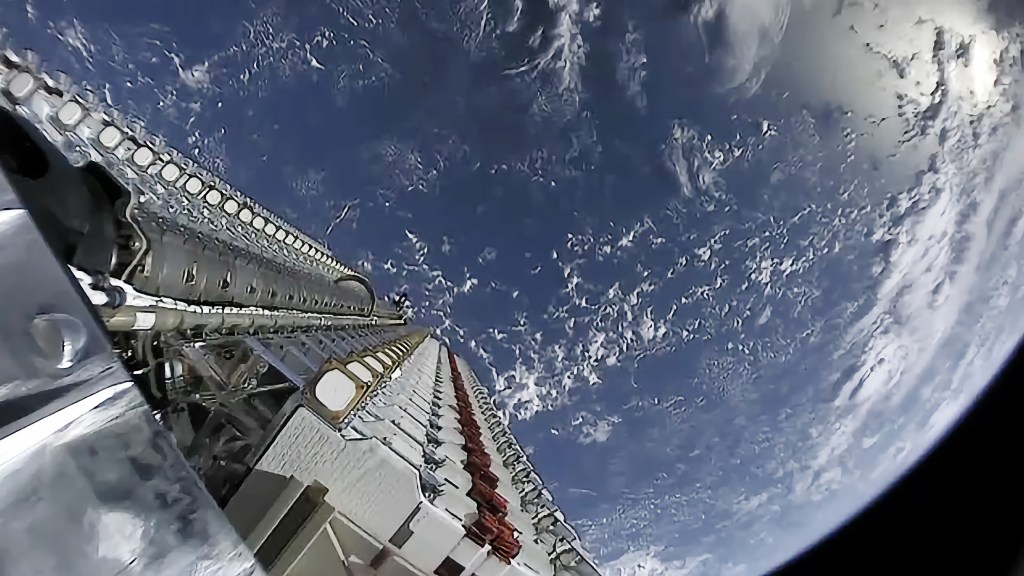
SpaceX has recently sought regulatory approval to construct solar-powered orbital data centers. These centers would be distributed across a constellation of up to a million satellites, collectively providing an estimated 100 gigawatts of computing power. Musk has even suggested that some of these AI satellites could be constructed on the moon. In a recent podcast with Stripe co-founder John Collison, Musk stated, By far the cheapest place to put AI will be space in 36 months or less.
Musk is not alone in this endeavor. The head of compute at xAI has reportedly wagered with a counterpart at Anthropic that by 2028, 1% of global computing will be conducted in orbit. Google, which holds a significant stake in SpaceX, has announced Project Suncatcher, aiming to launch prototype vehicles by 2027. Additionally, the startup Starcloud, backed by Google and Andreessen Horowitz with $34 million in funding, has filed plans for an 80,000-satellite constellation. Even Amazon’s Jeff Bezos has acknowledged space-based AI as the future.
However, the transition from terrestrial to orbital data centers presents significant economic challenges. Andrew McCalip, a space engineer, has developed a comparative analysis between ground-based and orbital data centers. His findings indicate that a 1-gigawatt orbital data center could cost approximately $42.4 billion—nearly three times the expense of its terrestrial counterpart. This disparity is primarily due to the substantial upfront costs associated with manufacturing satellites and launching them into orbit.
To make orbital data centers economically viable, advancements are required across multiple domains:
1. Launch Costs: The expense of transporting payloads into space remains a significant barrier. While SpaceX’s reusable Falcon 9 has reduced costs to approximately $3,600 per kilogram, further reductions are necessary. Project Suncatcher’s white paper suggests that achieving costs closer to $200 per kilogram—an 18-fold improvement—could make space-based data centers competitive with terrestrial ones.
2. Satellite Manufacturing: The production cost of satellites is another critical factor. Current Starlink satellites cost nearly $1,000 per kilogram. To make orbital data centers feasible, these costs must be halved. SpaceX’s experience with Starlink has demonstrated the potential for economies of scale, suggesting that mass production could drive down costs.
3. Satellite Design: Orbital data centers require satellites equipped with large solar arrays, advanced thermal management systems, and high-capacity laser communication links. These components add complexity and cost to satellite design and manufacturing.
4. Energy Costs: On Earth, data centers spend between $570 to $3,000 per kilowatt annually, depending on local energy prices and system efficiency. In contrast, the energy provided by current Starlink satellites costs approximately $14,700 per kilowatt per year. Significant reductions in satellite and component costs are necessary to make orbital energy competitive.
In summary, while the vision of orbital AI data centers is compelling, the economic realities present formidable challenges. Substantial technological advancements and cost reductions are essential to make this vision a practical and competitive alternative to terrestrial data centers.