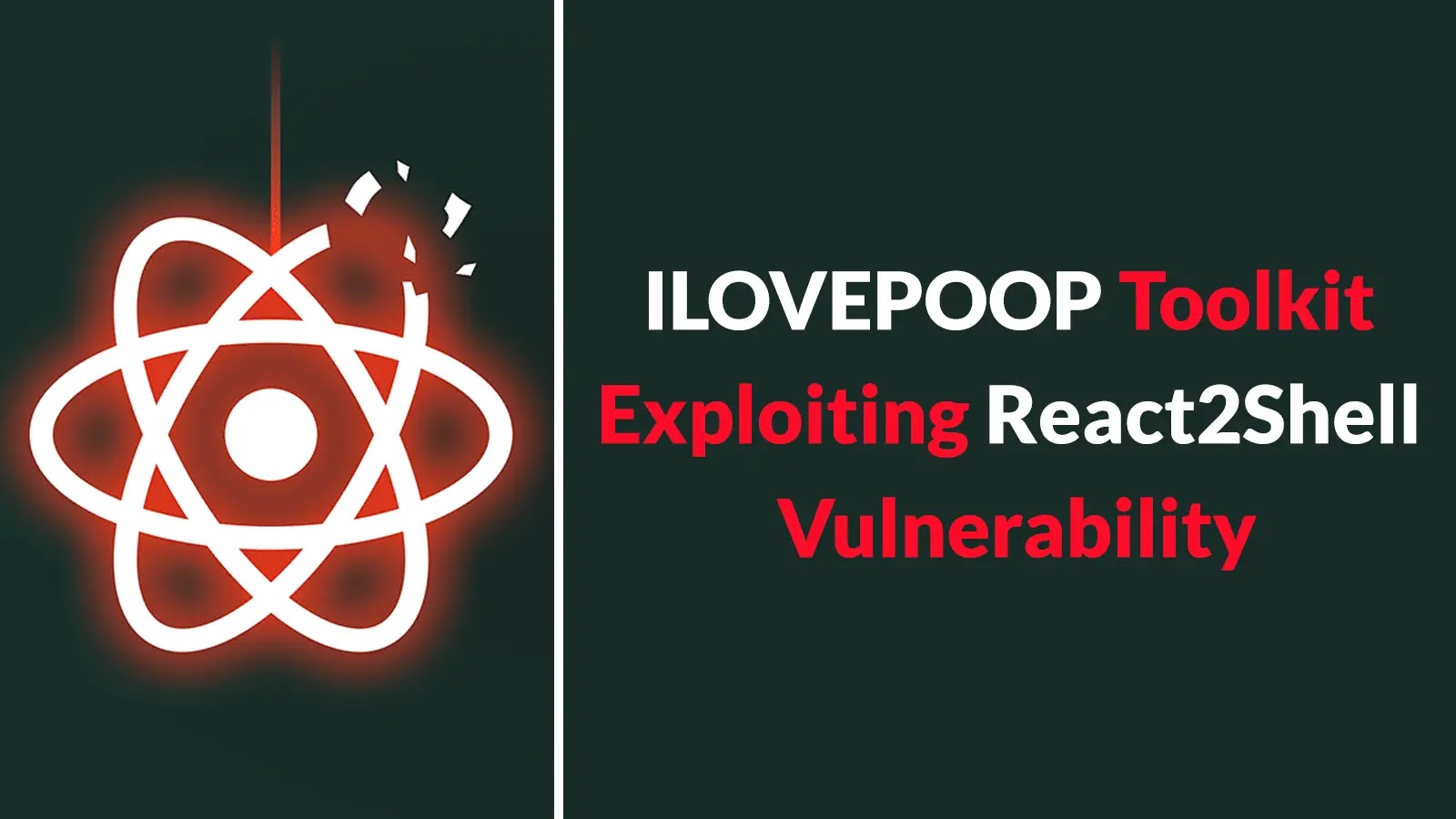
ILOVEPOOP Toolkit: A New Threat Exploiting React2Shell Vulnerability to Deploy Malicious Payloads
The cybersecurity community is currently grappling with a critical vulnerability known as React2Shell (CVE-2025-55182), which has emerged as a significant threat to applications built with Next.js and React Server Components. Disclosed publicly on December 4, 2025, this flaw enables unauthenticated attackers to execute arbitrary code on vulnerable servers, posing a severe risk to organizations worldwide.
Rapid Exploitation Post-Disclosure
Within just 20 hours of the vulnerability’s disclosure, threat actors initiated exploitation attempts targeting internet-facing systems. These attacks primarily involve malicious HTTP POST requests directed at specific server routes such as `/_next/server` and `/_next/flight`. By manipulating the serialization process of server components, attackers can inject unauthorized commands directly into the application’s runtime environment. The initial wave of attacks was characterized by extensive scanning activities aimed at identifying and compromising exposed infrastructures before defensive measures could be implemented.
Introduction of the ILOVEPOOP Toolkit
A significant portion of these malicious activities has been attributed to a sophisticated framework known as the ILOVEPOOP toolkit. Despite its crude nomenclature, this toolkit operates through a centralized infrastructure, primarily anchored by two high-traffic servers located in the Netherlands. Telemetry data indicates that these nodes have interacted with millions of global endpoints, signaling a massive effort to map and exploit vulnerable networks across various sectors, including Software as a Service (SaaS), retail, and government.
Mechanics of the ILOVEPOOP Toolkit
The ILOVEPOOP toolkit is distinguished by its unique and consistent attack signature, which simplifies detection for vigilant defenders. It utilizes a cluster of nine distinct scanner nodes that rotate their operations to maintain persistence and evade static blocklists. A hallmark of this toolkit is the inclusion of specific, non-standard HTTP headers in every exploit attempt, most notably `X-Nextjs-Request-Id: poop1234` and `Next-Action: x`. These markers serve as digital fingerprints, linking thousands of disparate attacks back to a single operator or group.
Furthermore, the toolkit employs a rigorous scanning methodology, systematically probing six specific Next.js paths to test for susceptibility. It often begins with generic reconnaissance against login pages before escalating to complex React Server Actions payloads involving prototype pollution. The infrastructure is highly centralized, with the two primary Netherlands IPs (193.142.147.209 and 87.121.84.24) acting as the command hubs. Additionally, the toolkit has demonstrated unusual versatility, with observed attempts to deliver React2Shell payloads via POP3 protocols, likely to bypass standard web filters. However, blocking these core nodes and filtering for the ilovepoop header patterns remains the most effective method to neutralize the immediate threat.
Recommended Mitigation Strategies
To defend against the ILOVEPOOP toolkit and similar exploitation attempts, security teams should urgently implement the following measures:
1. Patch Affected Installations: Immediately update all Next.js installations to the latest versions that have addressed the React2Shell vulnerability.
2. Configure Web Application Firewalls (WAF): Set up WAF rules to reject requests containing the identified malicious headers (`X-Nextjs-Request-Id: poop1234` and `Next-Action: x`).
3. Block Malicious IP Addresses: Implement network-level blocks for the known Netherlands-based exploit servers (193.142.147.209 and 87.121.84.24) to disrupt the toolkit’s primary communication channels.
4. Monitor Network Traffic: Continuously monitor network traffic for signs of scanning activities and unauthorized access attempts, particularly those targeting Next.js paths.
5. Educate Development Teams: Ensure that development teams are aware of the vulnerability and the importance of secure coding practices to prevent similar flaws in the future.
By proactively implementing these strategies, organizations can significantly reduce the risk posed by the React2Shell vulnerability and the ILOVEPOOP toolkit, thereby safeguarding their digital assets against potential exploitation.