Enhancing Mobile Security: How Samsung Knox Prevents Network Breaches
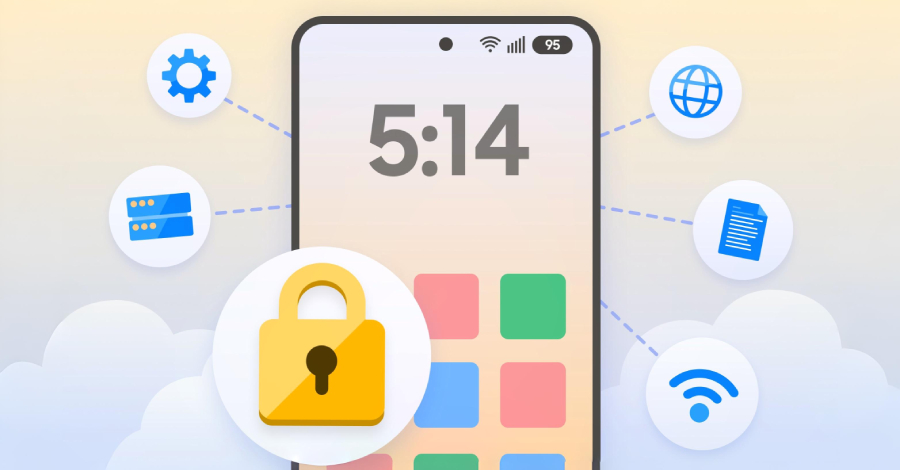
In today’s digital landscape, mobile devices have become integral to business operations, necessitating advanced security measures tailored to their unique usage patterns. Traditional network security solutions, while effective for conventional endpoints, often fall short when applied to mobile environments. Samsung Knox addresses this gap by offering specialized tools designed to fortify mobile device security.
Granular Control with Samsung Knox Firewall
Conventional mobile firewalls typically offer binary options—either allowing or blocking traffic—without providing detailed insights into network activities. This limitation hampers the enforcement of nuanced security policies and complicates incident investigations.
Samsung Knox Firewall introduces a more refined approach by enabling IT administrators to implement per-application network controls. This means that each application can have customized network access rules based on its specific risk profile. For instance, a confidential document viewer can be restricted to access only designated IP addresses, while collaboration tools can be confined to approved domains.
A standout feature of Knox Firewall is its comprehensive logging capability. When a user attempts to access a blocked domain, the system records detailed information, including the application’s package name, the blocked domain or IP address, and a timestamp. This level of detail significantly streamlines threat hunting and incident response processes, reducing investigation times from days to mere hours.
Additionally, Knox Firewall supports both IPv4 and IPv6 filtering, offers domain and sub-domain controls, and operates in both per-application and device-wide modes. Integrated directly into the device’s architecture, it avoids the performance issues and deployment complexities often associated with third-party firewalls.
Implementing Zero Trust Network Access
The traditional perimeter-based security model is increasingly inadequate in the face of evolving cyber threats. Modern security strategies require continuous evaluation of device health, user identity, and contextual factors—not just at the point of login but throughout the session.
Samsung Knox’s Zero Trust Network Access (ZTNA) framework embodies this modern approach by adhering to Zero Trust principles. Notably, it integrates seamlessly with existing VPN infrastructures, enhancing rather than replacing them.
The Knox ZTNA framework employs host-based micro-segmentation to isolate network traffic by application and domain. This segmentation minimizes the attack surface and restricts lateral movement within the network in the event of a device or application compromise.
Key features of the Knox ZTNA framework include:
– Split DNS Tunneling: Balances security and performance by directing specific traffic through secure tunnels while allowing other traffic to use standard routes.
– Context-Rich Metadata: Utilizes detailed information such as application package names, signatures, and versions to enforce precise access policies.
– Dynamic Policy Evaluation: Continuously assesses device and application contexts to make real-time access decisions.
– Privacy-Aware Traffic Handling: Respects both enterprise and user privacy boundaries, ensuring that security measures do not infringe on personal data.
Crucially, the Knox ZTNA framework is designed for real-world environments, working alongside existing VPN and mobile threat defense tools without necessitating a complete overhaul of current systems. This compatibility allows organizations to adopt Zero Trust principles at their own pace, providing precise access control and a reduced attack surface.
The Integration Advantage of Samsung Knox
Samsung Knox is more than a collection of security tools; it functions as a cohesive system where threat signals are shared across the device, enabling real-time adaptive protections. For example, a phishing alert can trigger new firewall rules or even initiate a hardware-backed lockdown, demonstrating Zero Trust principles in action.
Built into Samsung Galaxy devices, Knox eliminates the need for multiple agents, vendors, and complex integrations. It is SOC 2 certified, GDPR-ready, and fully compatible with leading Mobile Device Management (MDM), Unified Endpoint Management (UEM), and Security Information and Event Management (SIEM) platforms, ensuring seamless operation within existing security infrastructures.
In an era where mobile devices serve as primary entry points to corporate networks, ensuring their security is paramount. Samsung Knox provides a comprehensive solution that not only protects mobile devices but also enhances overall network security by integrating advanced features like granular firewall controls and Zero Trust Network Access.