Inside Physical Intelligence: The Startup Revolutionizing Robotics with AI
In the heart of San Francisco, a discreet building marked only by a subtle pi symbol houses Physical Intelligence, a startup poised to redefine the robotics landscape. Co-founded by Sergey Levine, an associate professor at UC Berkeley, the company is on a mission to develop advanced AI systems that empower robots to perform complex tasks with human-like dexterity.
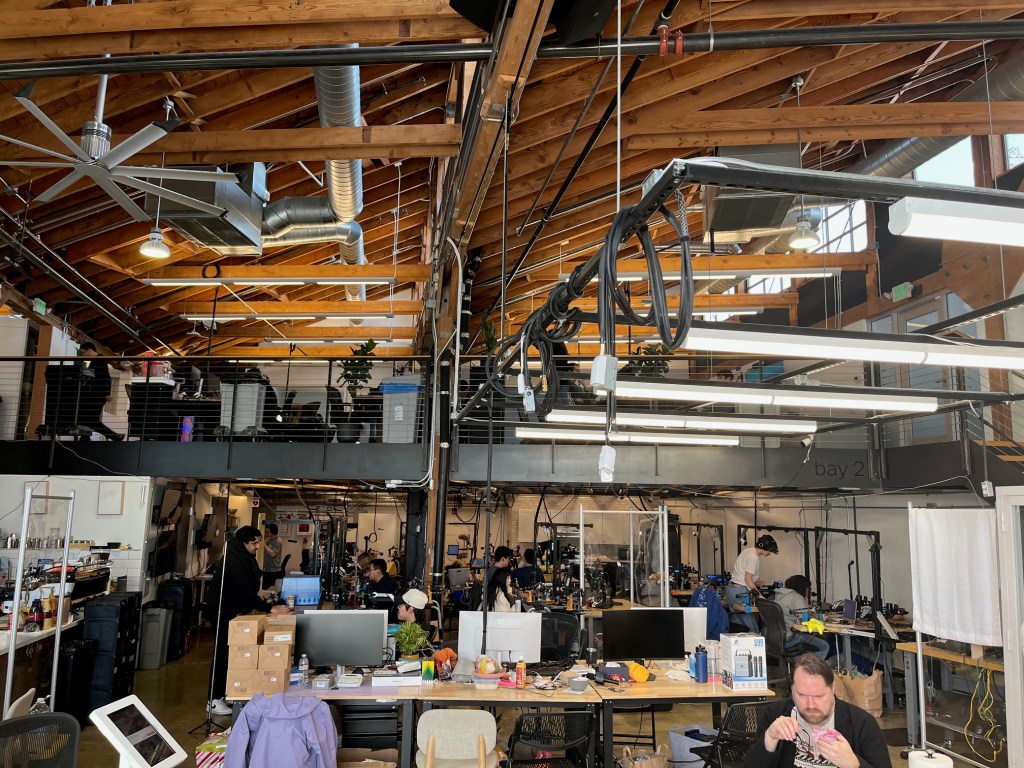
Upon entering the facility, visitors are greeted by a bustling environment devoid of traditional corporate formalities. The expansive space is filled with long wooden tables cluttered with monitors, robotic components, and wires. Robotic arms are actively engaged in various tasks: one attempts to fold a pair of black pants, another strives to turn a shirt inside out, and a third efficiently peels a zucchini, aiming to deposit the shavings into a designated container.
Levine describes their work as akin to ChatGPT, but for robots. The process involves collecting data from these robotic stations, which is then used to train general-purpose robotic foundation models. These models are subsequently tested and refined through continuous iterations. For instance, the zucchini-peeling robot is evaluated on its ability to generalize the peeling task to different vegetables, such as apples or potatoes, that it hasn’t encountered before.
The company also operates test kitchens equipped with standard hardware to expose robots to diverse environments and challenges. An espresso machine, for example, serves as a training tool for robots to learn the intricacies of coffee preparation. This approach underscores Physical Intelligence’s commitment to developing versatile AI systems capable of adapting to various real-world scenarios.
The hardware utilized by Physical Intelligence is intentionally cost-effective. The robotic arms, priced around $3,500, could be produced in-house for less than $1,000. This affordability allows the company to focus resources on enhancing the intelligence of these machines, demonstrating that sophisticated AI can compensate for less expensive hardware.
Physical Intelligence’s innovative approach has attracted significant attention and investment. Lachy Groom, a former Stripe executive and prominent investor, has been instrumental in supporting the company’s growth. Groom’s investment portfolio includes several successful startups, such as Moxie, which assists nurses in launching medspas, and Formation Bio, a company leveraging AI to accelerate drug development. His involvement with Physical Intelligence highlights the startup’s potential to make a substantial impact in the robotics industry.
The company’s focus on developing AI systems that enable robots to perform a wide range of tasks has far-reaching implications. By creating adaptable and intelligent robots, Physical Intelligence aims to address labor shortages, enhance productivity, and improve safety across various industries. Their work represents a significant step toward integrating advanced robotics into everyday life, making tasks that were once considered uniquely human achievable by machines.
As Physical Intelligence continues to refine its technology, the startup stands at the forefront of a new era in robotics. By combining affordable hardware with cutting-edge AI, they are paving the way for robots that can seamlessly integrate into diverse environments, performing tasks with a level of skill and adaptability previously unseen in the field.