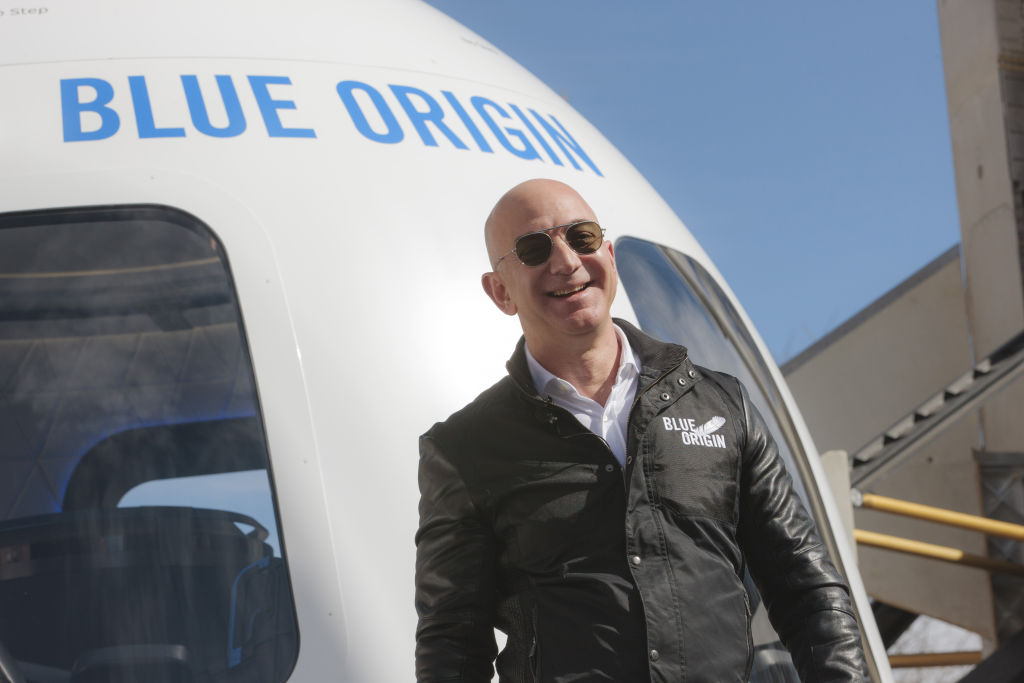
Article Title: Blue Origin Halts Space Tourism to Prioritize Lunar Missions
In a strategic shift, Blue Origin, the aerospace company founded by Jeff Bezos, has announced a suspension of its space tourism operations for a minimum of two years. This decision aims to reallocate resources toward upcoming lunar missions, aligning with national objectives to establish a sustained human presence on the Moon.
Since 2021, Blue Origin’s New Shepard rocket has facilitated suborbital flights, offering passengers brief experiences of weightlessness beyond the Kármán line—the internationally recognized boundary of space. Over five years, the program has successfully conducted 38 flights, transporting 98 individuals and over 200 scientific payloads.
The pause in space tourism comes as Blue Origin prepares for the third launch of its New Glenn mega-rocket, scheduled for late February. Initially intended to carry the company’s robotic lunar lander, the Blue Moon MK1, this mission will instead deploy a satellite for AST SpaceMobile into low-Earth orbit. The Blue Moon MK1 is currently undergoing testing at NASA’s Johnson Space Center in Texas, with a lunar launch date yet to be determined.
This strategic realignment is influenced by renewed governmental emphasis on lunar exploration. President Donald Trump has urged NASA to expedite the return of astronauts to the Moon before the conclusion of his second term, opening opportunities for private companies like Blue Origin to contribute to these missions. The company stated, The decision reflects Blue Origin’s commitment to the nation’s goal of returning to the Moon and establishing a permanent, sustained lunar presence.
Blue Origin’s New Shepard program has previously faced operational challenges. In 2022, a booster malfunction led to an uncrewed flight anomaly, resulting in a temporary suspension of flights. Operations resumed in late 2023 after thorough investigations and corrective measures.
The company’s focus on lunar missions is further underscored by its recent achievements with the New Glenn rocket. In November 2025, Blue Origin successfully landed the New Glenn booster on a drone ship in the Atlantic Ocean during its second launch attempt. This mission also deployed twin NASA spacecraft destined for Mars, marking significant progress in the company’s capabilities for deep-space missions.
By prioritizing lunar exploration, Blue Origin aims to play a pivotal role in the next chapter of human space exploration, contributing to the establishment of a sustainable presence on the Moon and beyond.