Article Title: WhatsApp Refutes Lawsuit Allegations, Affirms Message Privacy Through End-to-End Encryption
WhatsApp, the globally renowned messaging platform, has recently come under legal scrutiny with a class-action lawsuit alleging that its parent company, Meta Platforms, has been accessing users’ end-to-end encrypted messages. The lawsuit, filed on January 23, 2026, in the U.S. District Court for the Northern District of California, claims that Meta misleads over 2 billion WhatsApp users by promoting unbreakable end-to-end encryption while allegedly storing and analyzing chat contents post-delivery. Plaintiffs from countries including Australia, Brazil, India, Mexico, and South Africa assert that WhatsApp grants employee access to these messages through internal tools, citing unnamed whistleblowers as sources. However, these allegations lack concrete technical evidence such as code samples or logs.
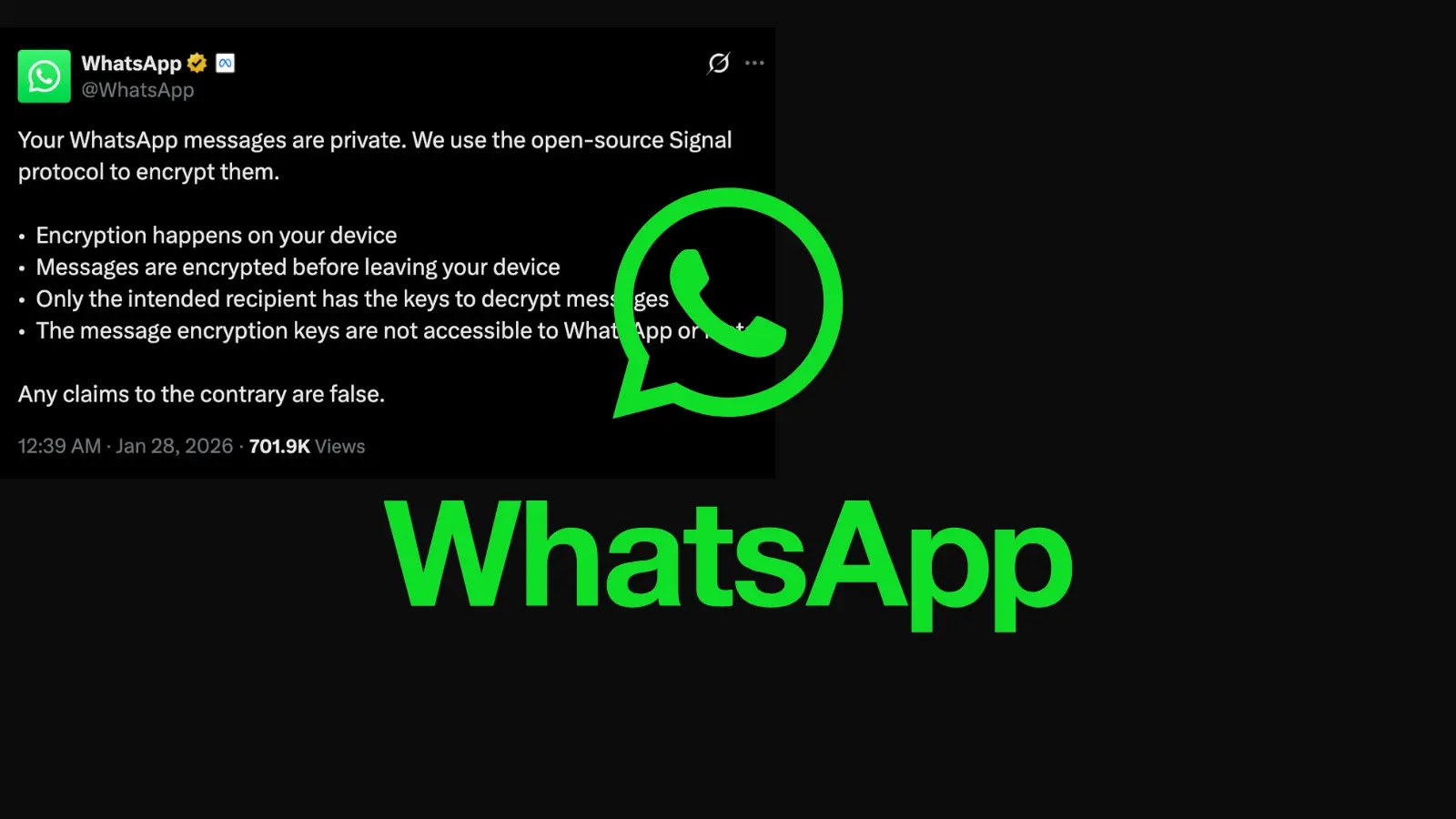
In response, WhatsApp has vehemently denied these claims, labeling them as categorically false and absurd. The company emphasizes its commitment to user privacy through the implementation of the open-source Signal protocol, which ensures that messages are encrypted on the user’s device before transmission. According to WhatsApp, only the intended recipient possesses the keys to decrypt these messages, making it impossible for WhatsApp or Meta to access the content. The company has also indicated plans to seek sanctions against the plaintiffs’ counsel, describing the lawsuit as a frivolous work of fiction.
The Signal protocol employed by WhatsApp is a robust encryption standard that provides forward secrecy and post-compromise security through the Double Ratchet algorithm. This protocol utilizes Curve25519 for key exchange, AES-256 in CBC mode for payload encryption, and HMAC-SHA256 for integrity verification. These technical measures ensure that even if a server is compromised, past communications remain secure. Independent audits since 2016 have confirmed the absence of backdoors in WhatsApp’s encryption implementation. However, it’s noteworthy that optional cloud backups, such as those on iCloud, may store unencrypted copies of messages if enabled by the user.
This lawsuit brings to the forefront ongoing debates about the limitations of end-to-end encryption, particularly concerning metadata collection and backup practices. While the current allegations lack substantiated evidence of content breaches, they underscore the importance of transparency and trust in digital communication platforms. Security experts recommend that users enable encrypted backups and utilize VPNs to enhance metadata protection. Additionally, the scrutiny faced by proprietary implementations like WhatsApp highlights the value of fully open-source alternatives, such as the Signal app, in fostering trust and security.
As the legal proceedings unfold, they may prompt WhatsApp to provide greater transparency in its privacy practices and reports. Nonetheless, the mathematical rigor of the Signal protocol continues to support WhatsApp’s claims against unsubstantiated allegations of unauthorized access.