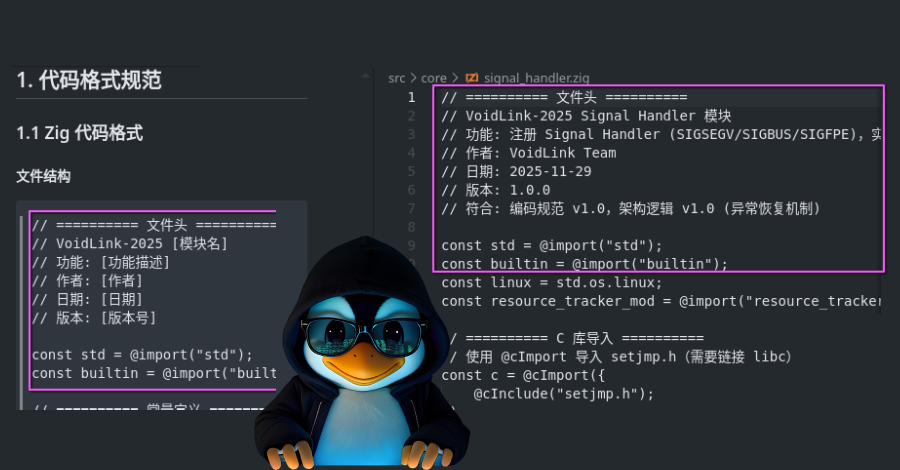
AI-Generated VoidLink Malware Framework Emerges as a New Threat to Linux Systems
In a groundbreaking development within the cybersecurity landscape, researchers have uncovered VoidLink, a sophisticated Linux malware framework predominantly developed using artificial intelligence (AI). This discovery marks a significant shift in malware creation, highlighting the potential for AI to expedite the development of complex malicious software.
Origins and Development
VoidLink’s inception traces back to late November 2025, with evidence suggesting that a single developer, utilizing AI assistance, crafted the framework. Check Point Research identified operational security lapses by the malware’s author, providing insights into its developmental origins. By early December 2025, VoidLink’s codebase had expanded to over 88,000 lines, underscoring the rapid development facilitated by AI.
The development process employed a Spec Driven Development (SDD) approach, where the developer outlined specifications, created a plan, divided tasks, and then utilized an AI agent to implement them. This method enabled the transformation of conceptual ideas into a functional tool within an accelerated timeline.
Technical Composition and Features
Written in the Zig programming language, VoidLink is designed for prolonged, stealthy access to Linux-based cloud environments. Its architecture suggests a focus on evading detection and maintaining persistence within targeted systems. Notably, the malware exhibits:
– Systematic Debug Output: Consistent formatting across all modules indicates AI-generated code.
– Placeholder Data: Use of generic data like John Doe in response templates, typical of AI training examples.
– Uniform API Versioning: Consistent use of versioning (e.g., BeaconAPI_v3) across modules.
– Comprehensive JSON Responses: Template-like responses covering all possible fields.
These characteristics suggest that a skilled developer leveraged AI to accelerate development, generating boilerplate code, debug logging, and JSON templates, while providing the security expertise and architectural design.
Operational Security and Development Insights
Investigations revealed internal planning materials written in Chinese, detailing sprint schedules, feature breakdowns, and coding guidelines. These documents, exhibiting hallmarks of AI-generated content—well-structured, consistently formatted, and meticulously detailed—were likely used as execution blueprints for the AI model to build and test the malware.
The developer utilized a coding agent known as TRAE SOLO to execute tasks, as evidenced by TRAE-generated helper files found alongside the source code on the developer’s server. This approach underscores the efficiency and speed with which AI can facilitate the development of complex malware frameworks.
Implications for Cybersecurity
The emergence of VoidLink signifies a paradigm shift in malware development. While AI and large language models (LLMs) may not introduce entirely new capabilities to threat actors, they significantly lower the barrier to entry, enabling individuals to rapidly develop and deploy sophisticated malware. This evolution poses challenges for cybersecurity defenses, as traditional detection methods may struggle to keep pace with AI-accelerated threats.
Eli Smadja, group manager at Check Point Research, emphasized the significance of this development:
VoidLink represents a real shift in how advanced malware can be created. What stood out wasn’t just the sophistication of the framework, but the speed at which it was built. AI enabled what appears to be a single actor to plan, develop, and iterate a complex malware platform in days—something that previously required coordinated teams and significant resources.
Current Status and Observations
As of now, the exact purpose of VoidLink remains unclear, and no real-world infections have been observed. However, its existence serves as a stark reminder of the evolving threat landscape and the need for adaptive cybersecurity measures to counteract AI-assisted malware development.
Conclusion
The discovery of VoidLink underscores the dual-edged nature of AI in cybersecurity. While AI offers powerful tools for defense, it also provides adversaries with means to expedite and enhance malware creation. This development necessitates a reevaluation of current security strategies and the adoption of AI-driven defenses to effectively combat emerging threats.