Top 10 Injection Attacks in 2026: Risks and Mitigation Strategies
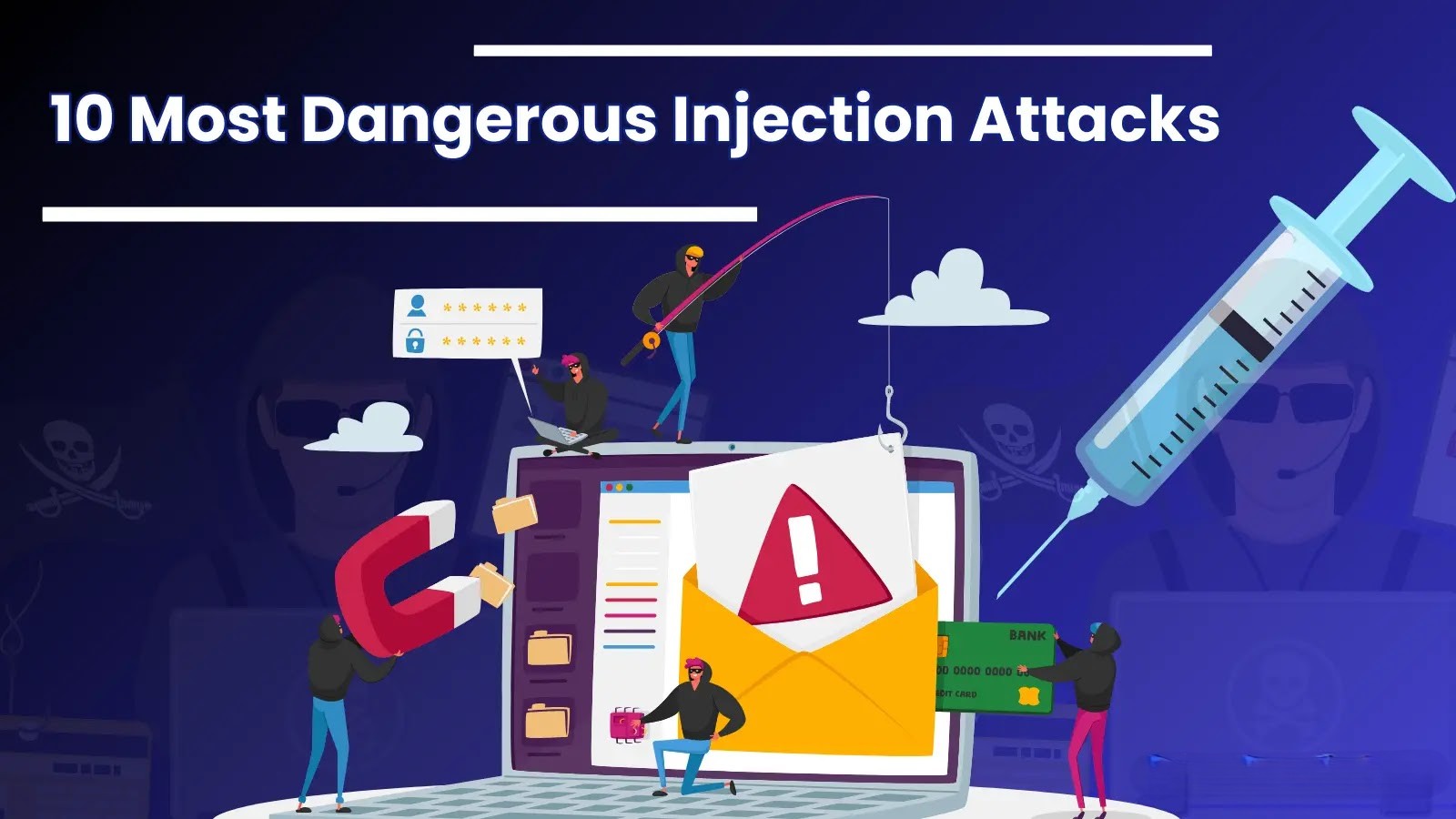
Injection attacks continue to pose significant threats to web applications, allowing malicious actors to exploit vulnerabilities by inserting harmful code into systems. Understanding these attacks is crucial for implementing effective defenses. Below are the ten most dangerous injection attacks identified in 2026, along with their associated risks and mitigation strategies.
1. Code Injection
Overview: Code injection involves inserting arbitrary code into a program, which the system then executes. This can lead to unauthorized actions and system compromise.
Risks:
– Unauthorized access to sensitive data
– System crashes or malfunctions
– Potential for further exploitation
Mitigation:
– Implement strict input validation
– Use parameterized queries
– Regularly update and patch systems
2. SQL Injection
Overview: SQL injection targets databases by inserting malicious SQL code into queries, potentially allowing attackers to manipulate or access data.
Risks:
– Unauthorized data retrieval or modification
– Data loss or corruption
– Compromise of entire database systems
Mitigation:
– Use prepared statements and parameterized queries
– Employ stored procedures
– Regularly audit and sanitize database inputs
3. Command Injection
Overview: Command injection allows attackers to execute arbitrary commands on the host operating system via vulnerable applications.
Risks:
– Full system compromise
– Data exfiltration
– Service disruptions
Mitigation:
– Avoid using system calls with user input
– Implement strict input validation
– Use least privilege principles for application processes
4. Cross-Site Scripting (XSS)
Overview: XSS attacks involve injecting malicious scripts into web pages viewed by other users, leading to unauthorized actions or data theft.
Risks:
– Session hijacking
– Defacement of websites
– Phishing attacks
Mitigation:
– Sanitize and validate all user inputs
– Implement Content Security Policy (CSP)
– Use frameworks that automatically escape XSS
5. XPath Injection
Overview: XPath injection exploits vulnerabilities in applications that construct XPath queries from user input, allowing unauthorized access to XML data.
Risks:
– Unauthorized data access
– Data manipulation
– Potential for further system exploitation
Mitigation:
– Use parameterized XPath queries
– Validate and sanitize user inputs
– Limit error messages to avoid information disclosure
6. Mail Command Injection
Overview: This attack involves injecting commands into mail server processes, potentially allowing unauthorized email sending or server control.
Risks:
– Spam distribution
– Phishing campaigns
– Compromise of mail server integrity
Mitigation:
– Sanitize and validate all email-related inputs
– Use secure mail server configurations
– Monitor mail server logs for suspicious activity
7. CRLF Injection
Overview: CRLF (Carriage Return Line Feed) injection involves inserting CRLF characters into HTTP headers, potentially leading to HTTP response splitting.
Risks:
– Cache poisoning
– Cross-user defacement
– Session fixation
Mitigation:
– Sanitize and validate all user inputs
– Use libraries that handle HTTP headers securely
– Implement proper output encoding
8. Host Header Injection
Overview: This attack manipulates the Host header in HTTP requests, potentially leading to cache poisoning or bypassing security controls.
Risks:
– Unauthorized access to internal applications
– Phishing attacks
– Cache poisoning
Mitigation:
– Validate the Host header against a whitelist
– Use strict transport security policies
– Monitor and log all HTTP headers
9. LDAP Injection
Overview: LDAP injection exploits vulnerabilities in applications that construct LDAP queries from user input, allowing unauthorized access or modification of directory services.
Risks:
– Unauthorized access to sensitive information
– Data manipulation
– Potential for further system exploitation
Mitigation:
– Use parameterized LDAP queries
– Validate and sanitize all user inputs
– Implement least privilege access controls
10. XML External Entity (XXE) Injection
Overview: XXE injection involves exploiting vulnerabilities in XML parsers to process external entities, potentially leading to data disclosure or server-side request forgery.
Risks:
– Disclosure of internal files
– Denial of Service (DoS)
– Server-side request forgery
Mitigation:
– Disable external entity processing in XML parsers
– Use less complex data formats like JSON
– Regularly update and patch XML libraries
Conclusion
Injection attacks remain a prevalent threat in 2026, exploiting various vulnerabilities to compromise systems and data. Implementing robust input validation, using parameterized queries, and adhering to secure coding practices are essential steps in mitigating these risks. Regular security assessments and staying informed about emerging threats will further enhance an organization’s defense against injection attacks.