Unveiling the Backbone of Industrial-Scale Pig Butchering Scams: Service Providers’ Role
Cybersecurity experts have recently exposed the critical role of certain service providers in enabling large-scale pig butchering scams, a form of online fraud that combines elements of romance scams and investment schemes. These providers offer comprehensive tools and infrastructure, effectively fueling the pig butchering-as-a-service (PBaaS) industry.
The Rise of Industrial-Scale Scam Centers
Since at least 2016, Chinese-speaking criminal organizations have established massive scam operations across Southeast Asia. These operations are often situated in special economic zones dedicated to fraudulent investment and impersonation activities. Thousands of individuals are lured with promises of lucrative employment, only to have their passports confiscated and be coerced into executing scams under threats of violence. INTERPOL has described these networks as human trafficking-fueled fraud on an industrial scale.
Service Providers: The Engine Behind the Scams
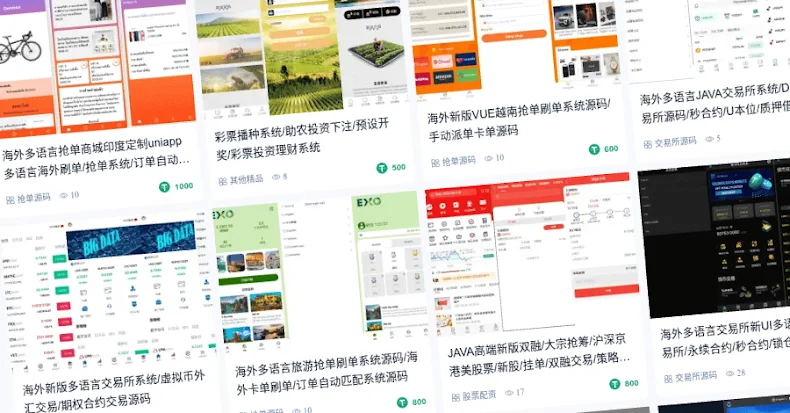
A pivotal element in the proliferation of pig butchering scams is the emergence of service providers that equip these criminal networks with the necessary tools to conduct social engineering operations, launder stolen funds, and evade law enforcement. According to a report by Infoblox, large scam compounds like the Golden Triangle Economic Zone (GTSEZ) are now utilizing ready-made applications and templates from PBaaS providers. This shift has significantly lowered the barrier to entry, allowing operations that once required technical expertise and substantial infrastructure to be purchased as off-the-shelf services.
Penguin Account Store: A Case Study
One notable actor in this ecosystem is the Penguin Account Store, also known as Heavenly Alliance and Overseas Alliance. Operating under a crimeware-as-a-service (CaaS) model, Penguin offers a range of fraud kits, scam templates, and datasets containing stolen personal information of Chinese citizens. The group also sells account data from various popular media platforms, including Twitter, Tinder, YouTube, Snapchat, Facebook, Instagram, Apple Music, OpenAI ChatGPT, Spotify, and Netflix.
These credentials are likely obtained through information-stealing logs sold on the dark web. However, it remains unclear whether Penguin operates the stealers themselves or acts as a broker for other threat actors. Prices for pre-registered social media accounts start as low as $0.10, increasing based on registration date and authenticity.
In addition to these services, Penguin provides bulk pre-registered SIM cards, stolen social media accounts, 4G or 5G routers, IMSI catchers, and packages of stolen images (referred to as character sets) used to deceive victims. The group has also developed a Social Customer Relationship Management (SCRM) platform named SCRM AI, enabling scam operators to automate victim engagement on social media.
Furthermore, Penguin advertises BCD Pay, a payment processing platform linked directly to the Bochuang Guarantee (博创担保自). BCD Pay is an anonymous peer-to-peer (P2P) solution similar to HuiOne, with deep roots in the illegal online gambling sector.
The Role of CRM Platforms in PBaaS
Another critical component of the PBaaS economy is the use of customer relationship management (CRM) platforms, which offer centralized control over multiple agents. UWORK, a provider of content and agent management tools, offers pre-made templates for creating investment scam websites. Many of these scam offerings claim integration with legitimate trading platforms like MetaTrader, lending an air of credibility by displaying real-time financial information.
These fraudulent websites often include a Know Your Customer (KYC) panel that prompts victims to upload proof of identity. Administrators configure the websites through dedicated panels, granting them a comprehensive view of the operation and the ability to create profiles for agents who interact directly with victims.
The admin panel provides all necessary tools to run a pig butchering operation, including multiple email templates, user and agent management, profitability metrics, and records of chats and emails. The management of agents is highly complex, with agents potentially acting as affiliates of one another.
Mobile Applications: Expanding the Reach
PBaaS suppliers have also been found to provide mobile applications for Android and iOS platforms. These apps are distributed as APK files and, in some cases, are released directly on app marketplaces while masquerading as innocuous news apps. The trading panel is revealed only when a user enters a specific password in the search bar, effectively concealing the app’s true functionality.
Website templates, including hosting, can cost as little as $50. A comprehensive package, encompassing a website with admin access, VPS hosting, mobile app, access to a trading platform, incorporation of a front company in a tax haven to mask activities, and registration with the relevant local financial regulator, can start at around $2,500.
The Global Impact and Response
Sophisticated Asian crime syndicates have created a global shadow economy from their safe havens in Southeast Asia. PBaaS provides the mechanisms to scale an operation with relatively little effort and cost.
The disclosure of these service providers’ roles comes amid a broader landscape of cyber threats. For instance, a recent study by DNS threat intelligence firm Infoblox revealed that the vast majority of parked domains—domain names that are mostly expired or dormant, or common misspellings of popular websites (typosquatting)—are being used to redirect visitors to sites that serve scams and malware.
In large-scale experiments, it was found that over 90% of the time, visitors to a parked domain would be directed to illegal content, scams, scareware, antivirus software subscriptions, or malware. This underscores the pervasive nature of online fraud and the importance of vigilance in the digital realm.
Conclusion
The exposure of service providers fueling industrial-scale pig butchering fraud highlights the complex and organized nature of modern cybercrime. By offering comprehensive tools and infrastructure, these providers lower the barrier to entry for criminal operations, enabling widespread and scalable scams. Addressing this issue requires a concerted effort from law enforcement, cybersecurity professionals, and the public to dismantle these networks and protect potential victims from falling prey to such schemes.