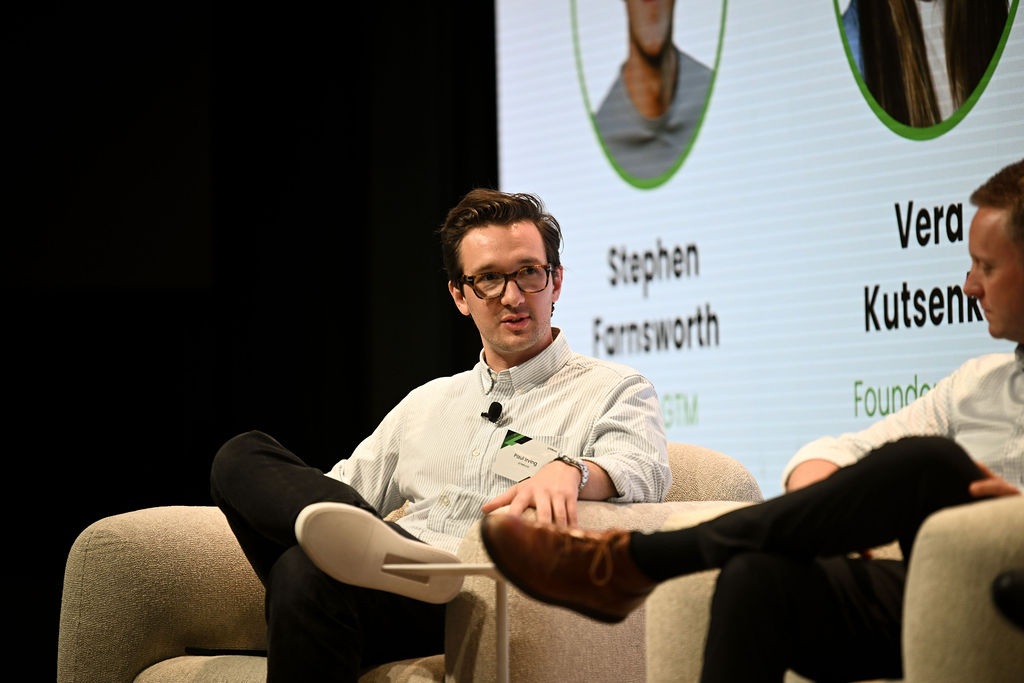
GTMfund’s Innovative Approach to Distribution in the AI Era
In the rapidly evolving landscape of artificial intelligence (AI), the ease of developing software products has significantly increased. However, many well-funded startups struggle to gain traction despite having exceptional products. This paradox is addressed by Paul Irving, Partner and Chief Operating Officer at GTMfund, who emphasizes that an overemphasis on product development at the expense of distribution excellence is a critical misstep. GTMfund operates on the principle that in the AI era, effective distribution strategies serve as the ultimate competitive advantage.
Traditional go-to-market (GTM) strategies often prescribe a uniform approach to hiring and scaling, which may have been effective during the era of conventional enterprise Software as a Service (SaaS). However, in the densely populated, AI-driven startup environment of 2025, such strategies are insufficient. The acceleration of innovation cycles means that achievements that once took years can now be realized in mere months. Consequently, Irving and the GTMfund team advise their portfolio companies to focus on differentiating themselves through innovative distribution methods rather than solely through product features.
Irving articulates this perspective by stating, The aperture for how you build your go-to-market or revenue engine and the decisions you make to get there have never had more unique and specific pathways depending on your company. This highlights the necessity for startups to develop customized GTM strategies that align with their unique value propositions and target markets.
Drawing from his experience, Irving shares several actionable insights for startups:
1. Leverage AI for Data-Driven Distribution: Small teams can utilize AI to refine their data-driven approaches, enabling them to identify and engage their customer base through innovative channels.
2. Prioritize Distribution Channels: In the initial stages, founders should concentrate on a select few distribution channels rather than attempting to manage multiple avenues simultaneously.
3. Adopt a Thoughtful Hiring Approach: Recruitment should be strategic and tailored to the company’s specific needs, moving away from traditional hiring mindsets.
4. Build a Network of Trusted Advisors: Establishing relationships with experienced advisors can provide valuable guidance and open doors to new opportunities.
GTMfund’s investment philosophy favors startups that demonstrate creativity in reaching their unique customers over those that allocate substantial budgets to paid advertising or prematurely build large sales teams. Irving cites an example of a startup that actively participated in several relevant Facebook groups. By engaging with groups comprising approximately 1,000 members, where 700 were ideal customer profiles (ICPs), the startup effectively utilized these platforms as unique channels to acquire 40 to 60 new customers annually.
Irving emphasizes the importance of founders developing creative approaches to connect with their target customers, given the broad spectrum of GTM strategies available. He also underscores the significance of a robust network, noting that while GTMfund provides its portfolio companies with access to a vast network of operators, they focus on creating tailored connections that offer mutual value.
Reflecting on the collaborative nature of the venture-backed ecosystem, Irving observes, I think what’s wonderful about the venture-backed ecosystem more generally is people’s willingness to help. They know how hard it is to build a company. They know how low the likelihood of success is in the grand scheme of things, but people are always willing. If you come and you’re curious, you teach them something as part of that as well. People are usually willing to open up doors.
In summary, GTMfund advocates for a paradigm shift in the AI era, where startups prioritize innovative distribution strategies and leverage the supportive nature of the venture ecosystem to achieve sustainable growth.