Revolutionizing Home Design: How Drafted is Making Custom Homes Affordable with AI
Nick Donahue’s journey into the construction industry was practically predestined. With a father who built homes for major developers and a mother who sold to big-box builders across the East Coast, Donahue was immersed in the world of homebuilding from a young age. This early exposure sparked a curiosity about the prohibitive costs and lengthy timelines associated with custom home design. Why, he wondered, did creating a personalized home have to be so expensive and time-consuming?
Determined to find a solution, Donahue left North Carolina State University and moved to the Bay Area, a hub for innovation and technology. There, he founded Atmos, a startup aimed at streamlining the custom home design process through technology. Atmos participated in Y Combinator, secured $20 million in funding from notable investors like Khosla Ventures and Sam Altman, and assembled a team of designers supported by software to handle backend operations. The company grew to 40 employees, generated $7 million in revenue, and was responsible for designing $200 million worth of homes, successfully building 50 of them.
Despite these achievements, Donahue felt that Atmos had become an extremely operational business, resembling a glamorized architecture firm rather than a tech-driven solution. The reliance on human designers meant the company couldn’t fully leverage technology to reduce costs and time. Compounding the issue, rising interest rates led to clients abandoning their custom home projects due to affordability concerns. Consequently, Donahue made the difficult decision to shut down Atmos nine months ago.
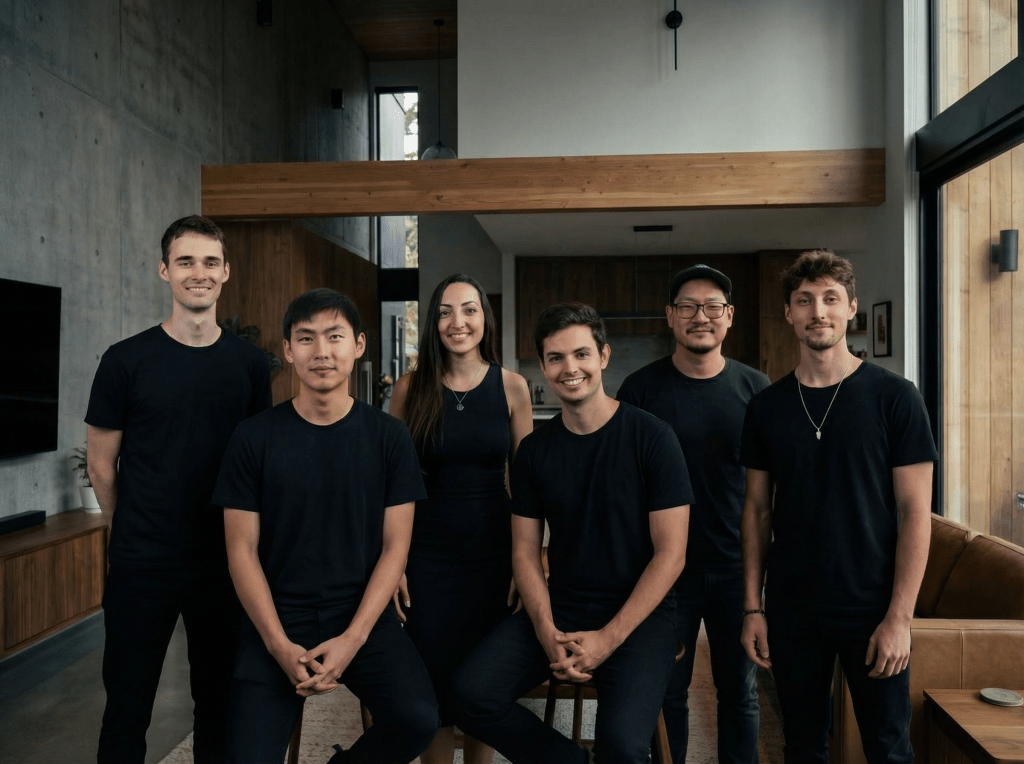
Undeterred, Donahue embarked on a new venture: Drafted. Launched nearly five months ago, Drafted is a lean operation with six employees, four of whom are former Atmos team members. The startup has already raised $1.65 million at a $35 million post-money valuation from investors including Bill Clerico of Convective Capital, Stripe’s Patrick Collison, Jack Altman, Josh Buckley, and NBA player Moses Moody.
Drafted’s core offering is an AI-driven platform that generates residential floor plans and exterior designs in minutes. Users input their requirements—such as the number of bedrooms and desired square footage—and the software produces five design options. If none are satisfactory, users can generate additional designs until they find one that meets their needs. This process eliminates the need for in-house designers and significantly reduces operational complexity.
The platform’s affordability is a key selling point. Traditional custom home design often involves hiring an architect, which can be expensive and time-consuming, or purchasing a template plan online, which offers limited flexibility. Drafted bridges this gap by offering customizable designs at template prices, with complete plans costing between $1,000 and $2,000.
Drafted’s AI model is trained on real house plans from homes that have been built and passed permitting, ensuring practical and compliant designs. The specialized model is also cost-effective to run, generating floor plans at a fraction of the cost associated with general-purpose AI models.
Currently, Drafted focuses on single-story homes, with plans to expand to multi-story designs and incorporate lot-specific features in the future. The potential market is substantial; of the one million new homes built in the U.S. each year, approximately 300,000 are custom-designed. By making custom design more accessible and affordable, Drafted aims to increase this number significantly.
Investor Bill Clerico, who led the recent funding round, believes that reducing the cost and time associated with custom home design will encourage more people to opt for personalized homes. He draws a parallel to Uber, which didn’t just replace taxis but expanded the market for on-demand car services. Similarly, Donahue envisions a future where everyone can have a custom-designed home tailored to their preferences.
However, challenges remain. The housing market has historically been resistant to disruption, and it’s uncertain whether the majority of Americans will prioritize customization over cost. Additionally, the question of competitive advantage arises. When asked about potential competitors replicating Drafted’s model, Donahue emphasizes the importance of brand and customer loyalty. He cites the example of Midjourney, an AI image-generation company that maintains a strong user base despite numerous competitors. By moving quickly and delivering exceptional customer experiences, Donahue believes Drafted can establish itself as the go-to platform for custom home design.
Since its public launch, Drafted has attracted approximately 1,000 daily users—a promising start for a young company. With Donahue’s deep understanding of the challenges in custom home design and the lessons learned from his previous venture, Drafted is well-positioned to make personalized home design more accessible and affordable for a broader audience.