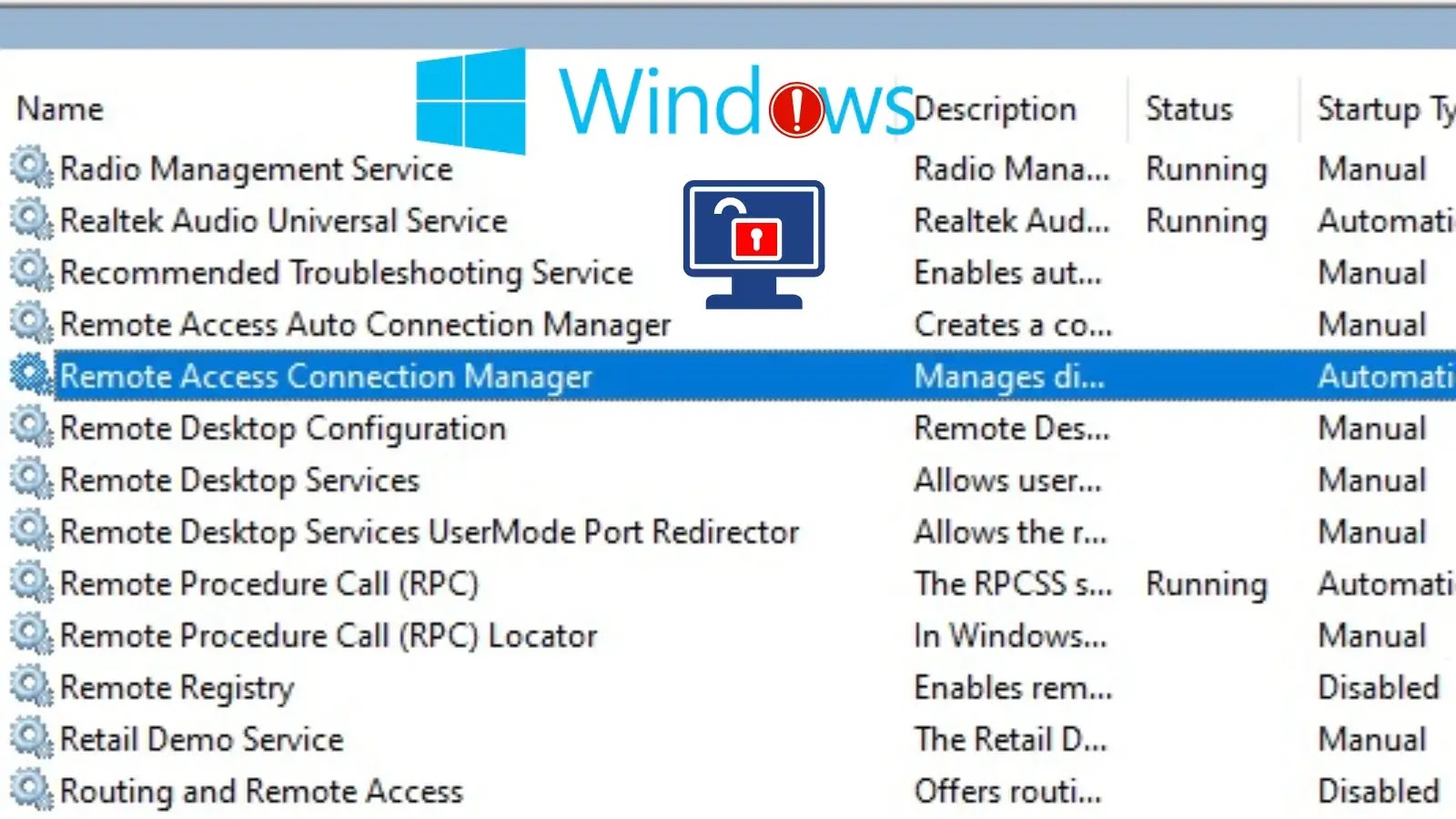
Critical Windows Remote Access Connection Manager Flaws Enable SYSTEM-Level Privilege Escalation
On December 9, 2025, Microsoft disclosed two significant vulnerabilities within the Windows Remote Access Connection Manager (RasMan) service, identified as CVE-2025-62472 and CVE-2025-62474. These flaws permit attackers with minimal user privileges to escalate their access to SYSTEM level, posing a substantial risk to affected systems.
Details of the Vulnerabilities:
– CVE-2025-62472: This vulnerability arises from the utilization of uninitialized resources within RasMan, leading to potential memory mismanagement. Such issues can be exploited to achieve privilege escalation. It has been assigned a Common Vulnerability Scoring System (CVSS) score of 7.8, categorizing it as Important.
– CVE-2025-62474: This flaw is due to improper access control mechanisms in RasMan. Attackers can leverage this weakness to bypass security protocols and gain elevated privileges. It also holds a CVSS score of 7.8 and is deemed Important.
Exploitation Conditions:
Both vulnerabilities necessitate local access and can be exploited by users with low-level privileges. Once initiated, the exploitation does not require further user interaction, making these vulnerabilities particularly concerning in environments where multiple users share systems or where compromised accounts exist.
Potential Impact:
Successful exploitation of either vulnerability grants attackers complete SYSTEM privileges—the highest level of access on Windows systems. This level of control allows for the execution of arbitrary code, installation of programs, modification of data, and creation of new accounts with full user rights.
Affected Systems:
The vulnerabilities impact a wide range of Windows versions, including:
– Windows Server 2008 through 2025
– Windows 10
– Windows 11
Specific build numbers and corresponding KB articles for each affected version are detailed in Microsoft’s official documentation.
Microsoft’s Response:
As of the announcement date, Microsoft has not reported any public disclosures or active exploitations of these vulnerabilities. The exploitability assessment rates CVE-2025-62472 as Exploitation More Likely, suggesting that the uninitialized resource vulnerability may be easier to weaponize. Conversely, CVE-2025-62474 is marked as Exploitation Less Likely. Both vulnerabilities are currently in the unproven exploit code maturity stage.
Mitigation Measures:
Microsoft released security updates addressing these vulnerabilities across all supported platforms on December 9, 2025. Organizations are strongly advised to prioritize the application of these patches, especially on systems that handle sensitive operations or support multiple users. Timely patching is crucial to mitigate the risks associated with these privilege escalation threats.
Recommendations for Organizations:
1. Immediate Patching: Apply the latest security updates provided by Microsoft to all affected systems without delay.
2. Access Control Review: Evaluate and reinforce access control policies to limit user privileges to the minimum necessary for their roles.
3. Monitoring and Detection: Implement robust monitoring to detect unusual activities that may indicate exploitation attempts, such as unexpected privilege escalations or unauthorized system changes.
4. User Education: Educate users about the importance of security practices, including recognizing phishing attempts and reporting suspicious activities.
Conclusion:
The disclosure of CVE-2025-62472 and CVE-2025-62474 underscores the critical need for organizations to maintain vigilant security practices. By promptly applying patches and adhering to recommended security measures, organizations can protect their systems from potential exploitation and maintain the integrity of their IT environments.